Mahalingaiah Lab
Advancing the scientific understanding of environmental, reproductive, and women’s health using digital platforms.
677 Huntington Avenue
Boston, MA 02115
Microplastics and Human Health: A Growing Body of Evidence
🗓️ Recent Events
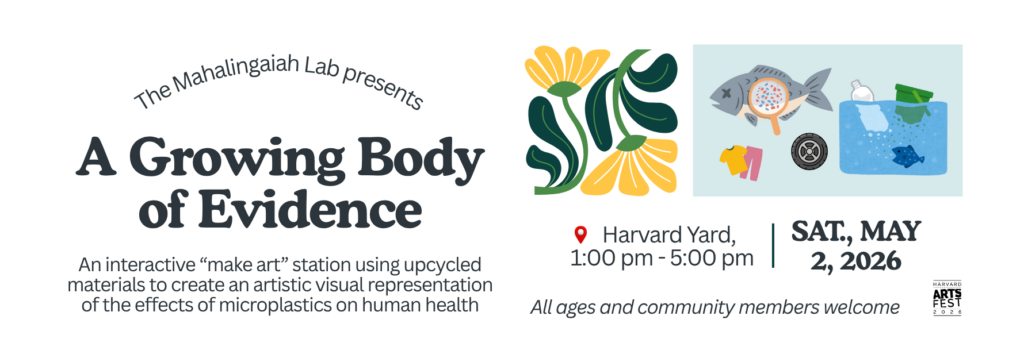
On Saturday May 2, 2026 (1-5 pm), the Mahalingaiah Lab led a free “science and art” exhibit entitled “A Growing Body of Evidence: Microplastics and Our Health” at Harvard Arts Fest in Harvard Yard.

At this station, participants stepped into an interactive experience that bridged environmental health science and the arts. Using upcycled fabric and reclaimed plastic from scientific research study materials, visitors of all ages helped to create a large visual representation highlighting recent findings about microplastics and human health. We invited participants to explore how even tiny pieces of plastic can have meaningful effects on our bodies and our planet.
Alongside the artwork, Mahalingaiah Lab scientists shared resources for those who want to learn more. All ages and community members were welcome to participate and discover the connections between our environment and our well-being.
💡 Featured Educational Resources
Microplastics and women’s health: what we’re learning from new research
Microplastics are turning up all over our bodies, from our lungs and brains to even the placenta during pregnancy. A new article in JAMA by scientists in the Mahalingaiah Lab and others at the Harvard Department of Environmental Health pulls together the latest research and makes a clear case that we need to take microplastics seriously, both as individuals and as a global community.
All About Microplastics: 5 Minute Video
A free, five minute video explains what everyone should know about microplastics.
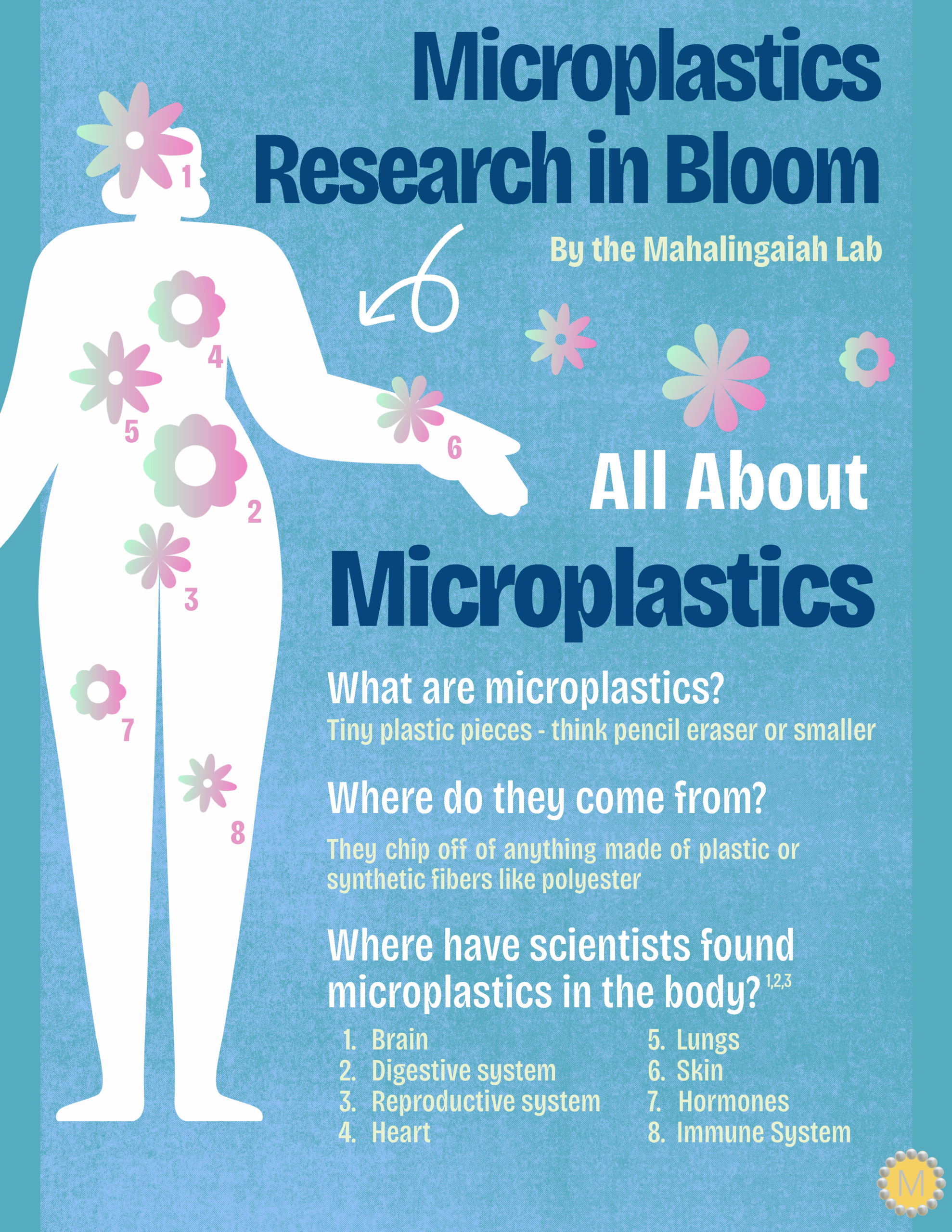
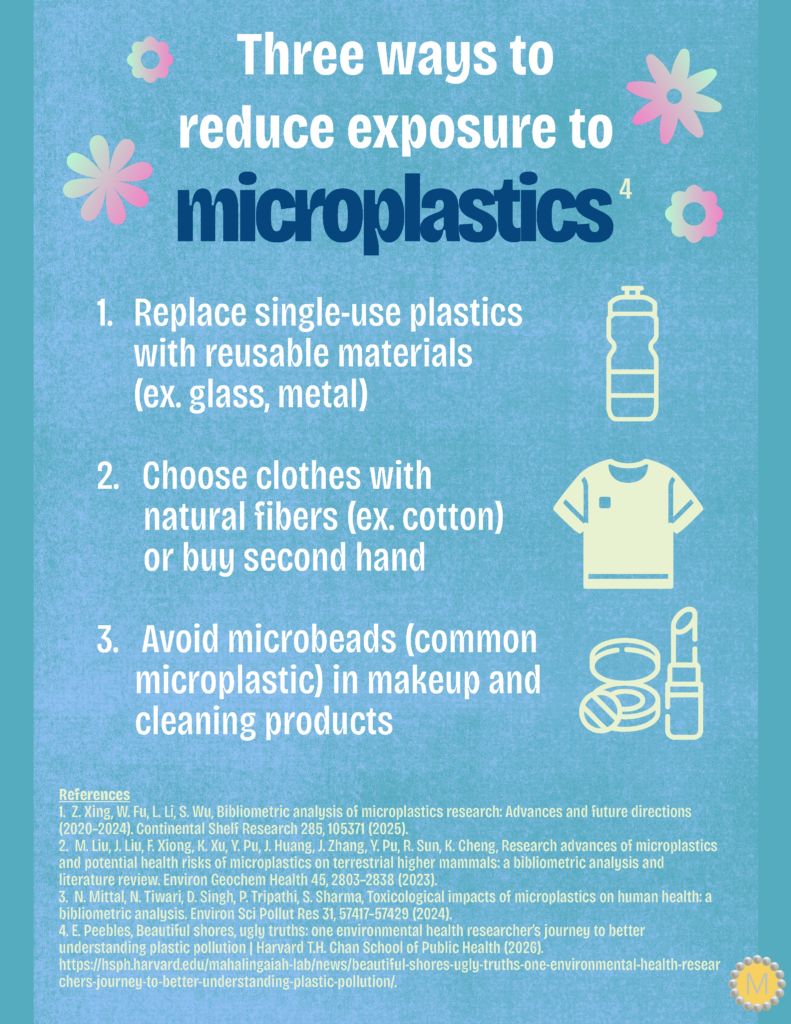
Microplastics infographic and tip sheet
A microplastics infographic and tip sheet by Mahalingaiah Lab’s Geena Lin explains key information everyone should know about microplastics and three ways to reduce your exposure.
🔬 Featured Scientific Publications
Research on microplastics advances science and human health. Check out featured Mahalingaiah Lab publications published in scholarly journals below.
JAMA, December 2025: This JAMA Insights article discusses rising detection of microplastics in human tissue and the importance of international cooperation to limit plastic pollution.
Semin Reprod Med., December 2024: This review examines the recent research investigating environmental exposures-air pollution, micro- and nanoplastics, heavy metals, and endocrine-disrupting chemicals-and PCOS in human and animal models, concluding with potential mechanisms, limitations, and considerations for future work.
Sci Total Environ., October 2022: Recent epidemiologic research shows many environmental chemicals exhibit endocrine disrupting effects on the female reproductive system. Few studies have examined exposure at reproductive organs. This study’s aim was to perform a preliminary untargeted metabolomic characterization of menstrual blood, a novel biofluid, to identify environmental toxins present in the endometrium and evaluate the suitability of this sample type for exposome research. Results showed chemical exposures linked to reproductive toxicity and endocrine disruption are present in menstrual blood, a sampling medium for the endometrium.
🔍 Enroll in a Scientific Study
Explore currently enrolling studies in the Mahalingaiah Lab.