Harvard Chan NIEHS Center for Environmental Health
The Harvard Chan National Institute of Environmental Health Sciences (NIEHS) Center for Environmental Health is a coordinated set of resources and facilities supporting environmental health research and training activities throughout the greater Boston area. The center promotes integration between basic and applied environmental science, and fosters collaborations that cross departmental and institutional boundaries.
Building 1-1402
News
-
Assessing football players’ health beyond neurodegenerative disease
Headlines about the health of American football players have largely focused on the potential link between head injuries and neurodegenerative diseases—in particular, chronic traumatic encephalopathy (CTE), a serious disease with no cure…

-
Center Sponsors PFAs Testing Kits in Maine
BOSTON, MA – Our Center recently awarded a $10,000 community action fund grant to Healthy Acadia, who will be partnering with MDI Biological Laboratory and the University of New England’s…
-
New pilot project to examine greenspace access and neurodegenerative disease
BOSTON, MA – Our Center has partnered with Biogen to award pilot project funding for a proposal that will investigate whether and how exposure to specific greenspaces may mitigate health…
-
Now Hiring: Community-Focused Postdoc Fellowship in Environmental Health
Job Board Title: Postdoctoral Fellowship in Environmental Health Location: Boston, MA Expiration Date *Now accepting applications until: Sept 15, 2023 Details: Job Description The Department of Environmental Health, Harvard TH…
-
Members discuss Canadian wildfires and health effects of air pollution
Several of our members were quoted in recent articles on the Canadian wildfires. Joseph Allen and Francesca Dominici were quoted in a Harvard Gazette article entitled “In the thick of it.” They…

-
2023 Center Retreat
Related Topics Last Updated Get the latest public health news
-
Healthy sleep may lower risk of Long COVID
Senior research scientist and Center Member Andrea Roberts and Center Director Marc Weisskopf were among the authors of a study published in Jama Network entitled “Multidimensional sleep health prior to SARS-CoV-2 infection and…

-
CEC Director Gary Adamkiewicz receives 2023 Harvard Chan teaching citation award
CEC Director Gary Adamkiewicz was selected as the recipient for the 2023 Teaching Citation Award, given by the Harvard T.H. Chan School to an instructor who has demonstrated excellence in teaching, as characterized by commitment, preparation, quality of presentation, time for questions, and other factors related to instruction. Awards are based on student course evaluations, particularly questions that assess teaching quality and teaching effectiveness.

-
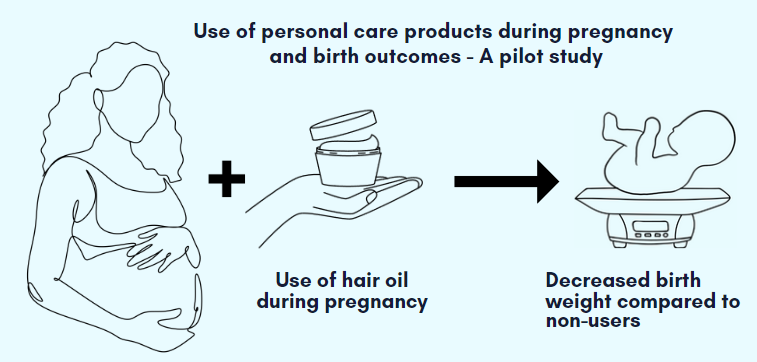
New study: Use of some personal care products during pregnancy, including hair oil, were related to birth outcomes
A new study from the Environmental Reproductive Justice Lab, led by Dr. Tamarra James-Todd, found that lower birth weight-for-gestational age (BW-for-GA) was reported among hair product users, with the strongest association observed for daily hair oil use. Use of liquid soaps, shampoos, conditioners were associated with longer infant length. Published in Environmental Research, Volume 225, May 2023.
-
Meet Our Members: Katherine von Stackelberg, ScD
This month, we chat with Dr. Katherine von Stackelberg, ScD, senior research scientist and director of research translation in the Department of Environmental Health at the Harvard T.H. Chan School….