Malaria is gaining ground—but researchers are developing promising new solutions
Malaria is both an ancient and modern scourge. It’s one of humanity’s oldest diseases, dating back millennia. But in 2024 it infected more than quarter billion people and killed 610,000—mostly young children. Over the decades, encouraging innovations to eliminate malaria have emerged, with many more in active development today. But so have new and daunting challenges that facilitate the disease’s spread around the world and make it harder to treat.
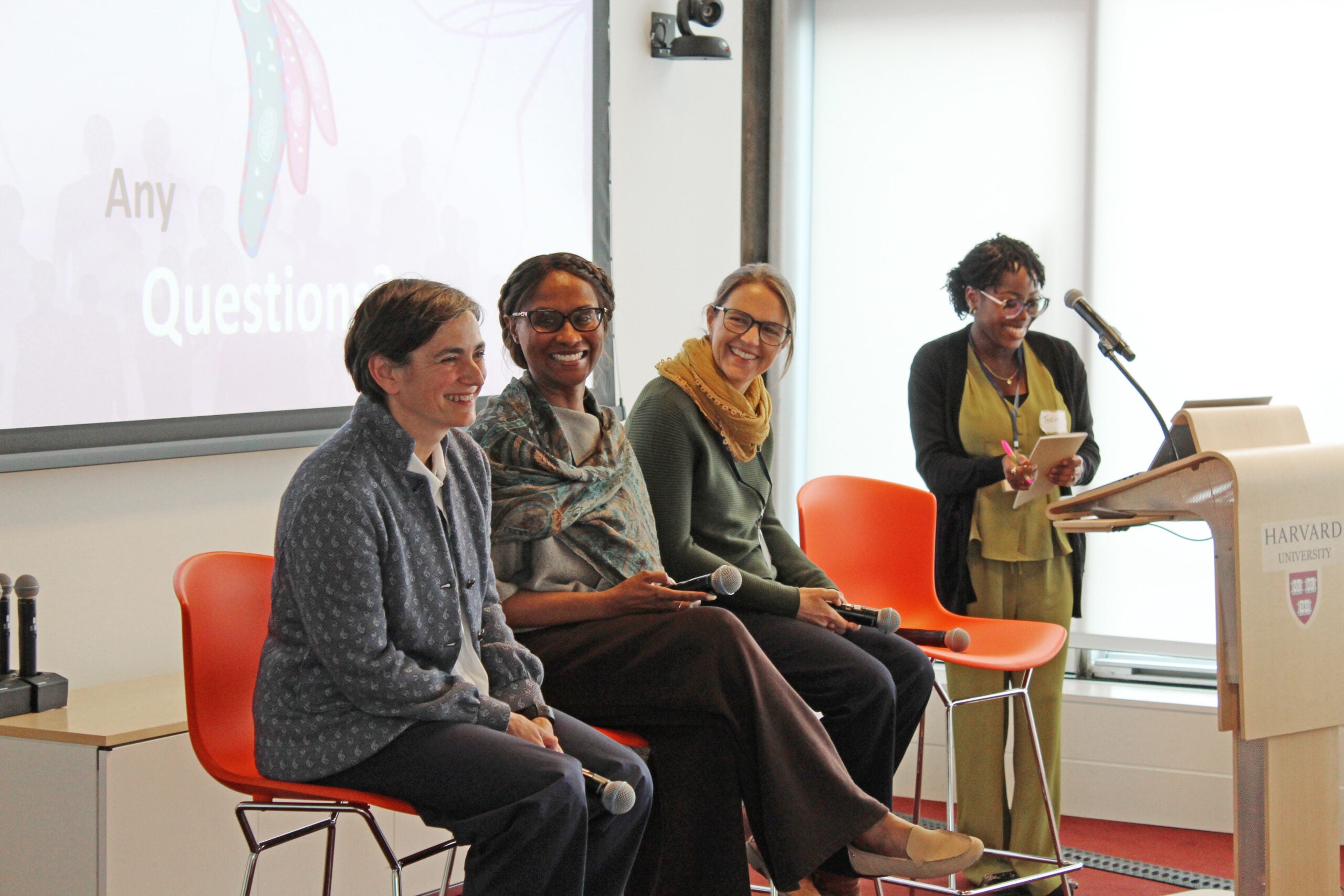
Malaria researchers at Harvard T.H. Chan School of Public Health and across the university discussed these topics at a May 15 symposium titled “Malaria in a Changing World: Past Lessons, Present Challenges, and Future Solutions.” The event drew more than 100 students, researchers, and faculty for a series of talks and Q&A sessions featuring experts focused on turning malaria into a disease of the past.
“It’s going to take all of us in our different corners to defeat malaria,” said one of the experts, Dyann Wirth, Richard Pearson Strong Professor of Infectious Diseases at Harvard Chan School. “We face many challenges, from the evolution of malaria-transmitting mosquitoes to threats to global health funding. But there are also lots of really interesting discoveries that make me optimistic that we’ve got malaria on the run.”
A history lesson
The symposium began with a set of three talks centered on the history of malaria, and how understanding the past can help today’s scientists and public health policymakers develop better elimination strategies.
Harvard Chan School’s Manoj Duraisingh, John LaPorte Given Professor of Immunology and Infectious Diseases, spoke about the biological origins of Plasmodium falciparum, the deadliest species of the parasite that causes malaria in humans. P. falciparum evolved from a parasite that causes malaria in gorillas, developing a gene that allowed it to also infect humans. Although this process happened roughly 50,000 years ago, Duraisingh explained that it’s still important to study it for the sake of vaccine development and to help answer a key question in today’s global fight against malaria: How might a new plasmodium parasite get transmitted to humans?
Megan Michel, a postdoctoral research fellow in Harvard’s Department of Human Evolutionary Biology, posed a related question: Once malaria was able to infect humans, how did it begin spreading so widely? She shared how she’s combining human history and cutting-edge lab techniques to find answers. Michel identifies and extracts the DNA of Plasmodium vivax—another malaria-causing parasite—and P. falciparum from the skeletons of ancient individuals, a process she compared to finding a needle in a haystack. Examining the DNA in the context of what’s known about those ancient individuals’ civilizations illuminates how human behavior helped spur malaria’s evolution and patterns of local, regional, and global transmission. This history is important to understand, Michel said, because it could be repeating itself today.
Wirth brought attendees to the more recent past in a presentation about malaria control efforts, starting with “the first time there was a concerted effort to eradicate malaria”: the 1960s. That decade, chloroquine, a drug to treat malaria, and DDT, an insecticide to kill mosquitoes, emerged, tools so effective that by the 1970s, the number of countries declared free of the disease reached 13. That number was the peak, however. Mosquitoes evolved to evade chloroquine and DDT, and since then have evolved further in the face of newer innovations.
“We’re at a crossroads, because our current treatments and insecticides, great as they are, are failing, as chloroquine and DDT did,” Wirth said. “Looking back at these old solutions can maybe tell us something.”
Current challenges
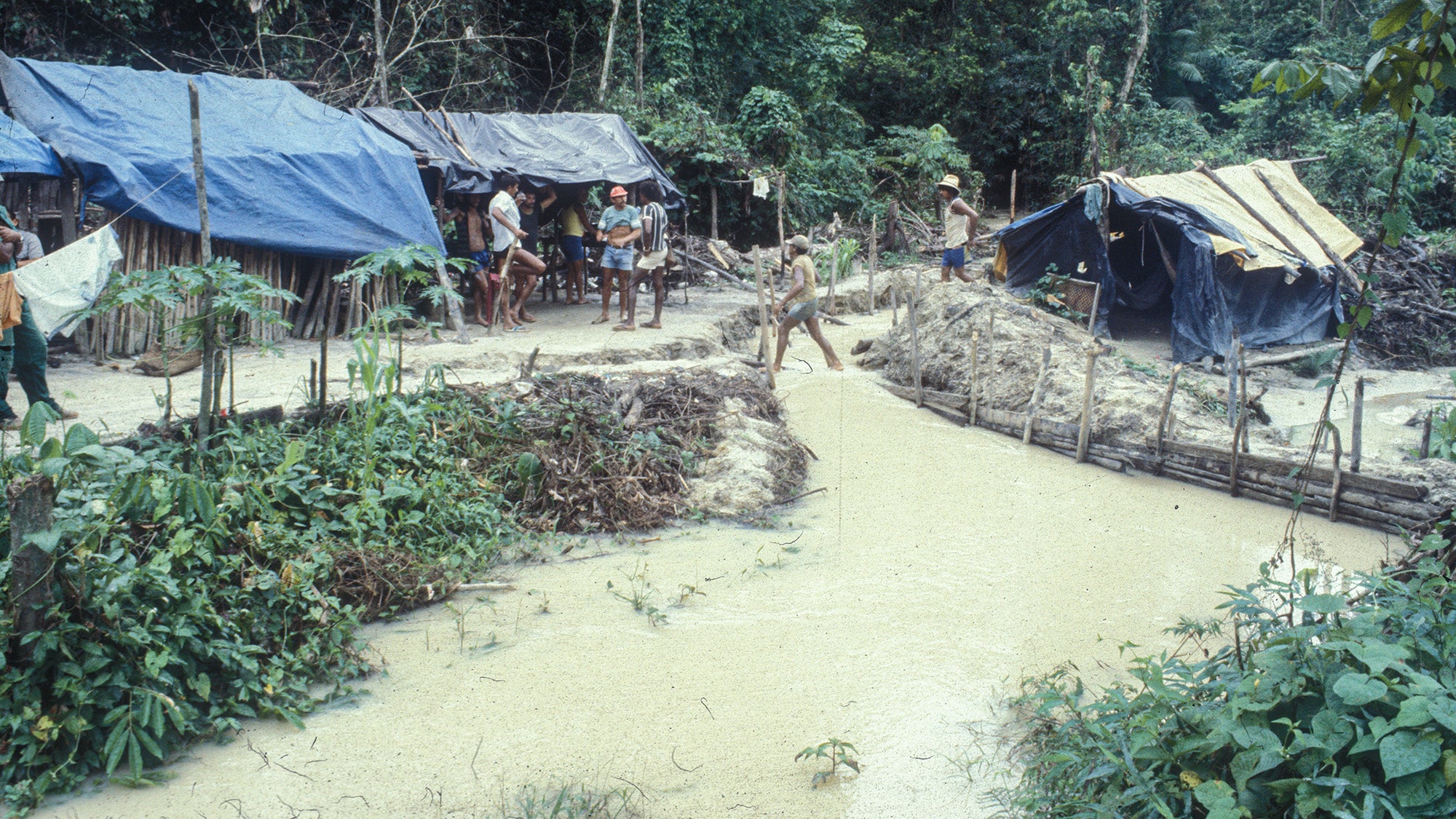
Marica Castro, Andelot Professor of Demography at Harvard Chan School, spoke about how environmental degradation and climate change are accelerating malaria’s spread. She used her native Brazil as a case study, sharing research about the impacts of deforestation and gold mining in the Amazon. One study found that a 1% increase in the monthly rate of deforestation in the region led to a 6.3% increase in malaria cases the following month. Another found that a 1% increase in the share of land dedicated to mining was associated with a 24% increase in monthly malaria cases.
Two additional presentations covered the links between malaria and human behavior. Harvard Chan School’s Daniel Neafsey, associate professor of immunology and infectious diseases, spoke about his lab’s research (led by Paulo Manrique, PhD ’26) into why malaria has surged in Mesoamerica since 2020. They used genomic sequencing of malaria parasites to disprove the theory that increased migration from Venezuela to the U.S. led to an increase in malaria cases in countries like Panama. The disease is rarely imported from one country to another, they found; instead, changing patterns of in-country mobility, involving higher levels of interface between medically served and underserved populations, are responsible for more malaria.
Fitsum Tadesse, lead scientist at the Armauer Hansen Research Institute in Ethiopia, talked about surging malaria in the country, where there were 9.7 million cases of the disease in 2024—up from 900,000 in 2019. He explained how human, environmental, and biological threats have converged to create conditions for the disease to proliferate. Across the Horn of Africa, mosquitoes are becoming more resistant to antimalarial drugs and insecticides, and malaria parasites have evolved and become harder to detect in rapid diagnostic tests. As the disease becomes harder to prevent, detect, and treat, it’s also spreading faster in the context of climate change and armed conflict, which has displaced millions of Ethiopians. These individuals, living in temporary shelters, are more vulnerable to mosquito bites; less able to access health care; and more mobile, potentially carrying malaria with them into new communities.
Promising solutions
Flaminia Catteruccia, Azza Idris, and Caroline Buckee gave talks on the newest innovations in development to treat, drive down, and eliminate malaria—even in the face of mounting obstacles.
Catteruccia, Irene Heinz Given Professor of Immunology and Infectious Diseases at Harvard Chan School, shared her lab’s efforts to overcome the challenge of mosquitoes’ growing resistance to insecticides.
“Insecticidal nets currently in use are helping—but it’s only a matter of time until mosquitoes evolve to render this solution less effective,” she said. Her lab has developed new antimalarial compounds to add to bed nets that will rid mosquitoes of malaria parasites—curing them, rather than killing them. “The mosquitoes become harmless,” she said, and without a threat to their survival aren’t pushed to evolve. The lab is currently testing the effectiveness of these next-generation bed nets in Burkina Faso and Ethiopia.
Idris, a pediatrician who specializes in pediatric infectious diseases at Harvard Medical School and Massachusetts General Hospital, spoke about monoclonal antibodies (mAbs) specially designed to prevent individuals from contracting malaria. A notable trial in Mali showed that a single mAb dose demonstrated 88% efficacy in protecting adults against malaria for six months, even through rainy season, when the disease is more prevalent. Additional studies have shown that mAbs are safe and effective for children—making them a highly promising tool for a disease that mostly kills children.
Idris also noted that studying how mAbs bind to malaria parasites to prevent infection could help advance malaria vaccine development.
It’s one thing to have solutions available; it’s another to know where, when, and how to use them effectively. Buckee, professor of epidemiology at Harvard Chan School, spoke about how mathematical modeling techniques can help governments predict and monitor malaria’s spread, then plan, implement, and monitor interventions.
“How do we help countries make smarter decisions with smaller budgets?” said Buckee, who’s currently on leave from Harvard Chan School to serve as deputy director of the Gates Foundation’s Institute for Disease Modeling. “It’s all about resource allocation. Mathematical modeling can help us understand drivers of malaria transmission, which can help us understand what interventions to choose and how they’re performing.”