Researchers launch new climate health projects with Wellcome support
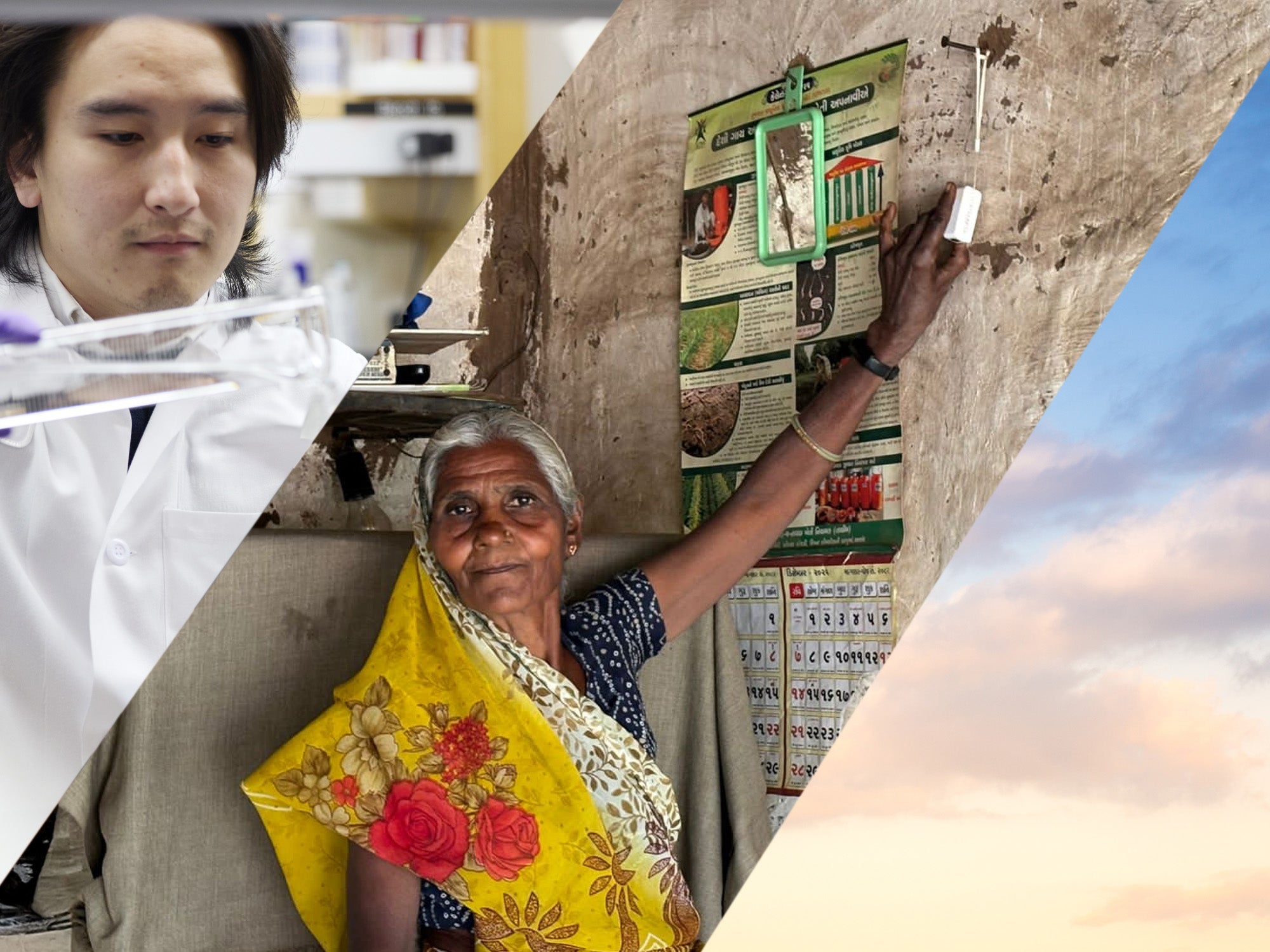
This year, researchers at Harvard T.H. Chan School of Public Health will begin new U.S. and India-based investigations into the health impacts of air pollution, heat, and climate change mitigation strategies. The projects, described below, are made possible by multi-million-dollar grants awarded by Wellcome, a London-based charitable foundation focused on enabling health research.
How air pollution drives disease
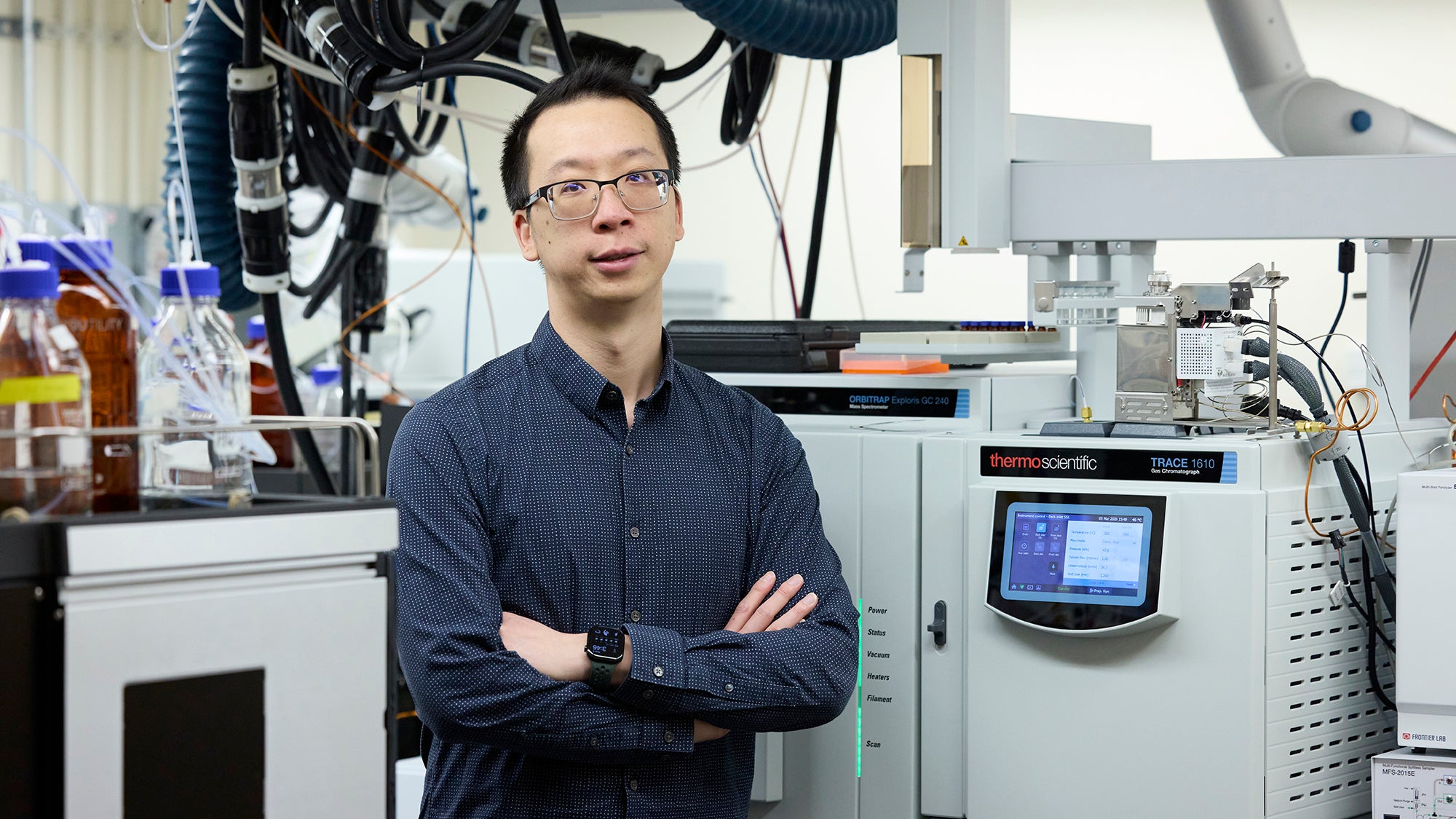
With a $4 million award, Mary Berlik Rice, Mark and Catherine Winkler Associate Professor of Environmental Respiratory Health and director of the Center for Climate, Health, and the Global Environment (Harvard Chan C‑CHANGE), will lead a new line of research investigating how air pollutants that are emitted by fossil fuel combustion affect health and what measures can best limit these impacts.
“We’re grateful to Wellcome for supporting this innovative research that will help us understand the body’s responses to specific pollutants at different levels of exposure,” Rice said. “Starting at the cellular level—pinpointing how pollutants drive diseases like asthma, cancer, and heart attacks—we’ll map out how communities across the U.S. are affected and develop evidence-based tools to inform climate mitigation strategies that can result in cleaner air and better health. “
Rice and the research team, which includes co-investigators Jin‑Ah Park, Joel Schwartz, Antonella Zanobetti, and Amruta Nori-Sarma, and collaborators Petros Koutrakis and Francesca Dominici, will conduct two projects. In the first, the researchers will collect source-specific fine particulate air pollution (PM2.5) from urban hotspots, recreate the polluted air in the lab, and expose it to 3D models that look and behave much like actual airways in the lung. The team will assess how the pollution may cause or worsen asthma, COPD, cancer, immune system disruption, and cardiovascular disease. In the second, the researchers will create detailed maps that estimate how much pollution people are breathing across the U.S. and calculate how different levels of exposure to these pollutants are linked to respiratory, cardiovascular, neuropsychiatric issues, and cancer risk. These estimates will inform a publicly available interactive tool guiding local and national U.S. policymakers on the effectiveness of climate mitigation measures.
“Ultimately, our goal is to provide clear mechanistic and population-level evidence that helps decisionmakers identify the best actions that can be taken today to improve air quality and health, and to reduce the risk of pollution-attributable disease in the years ahead,” Rice said.
How fighting climate change can improve health in India
Gaurab Basu, assistant professor in the Department of Environmental Health and a core faculty member at Harvard Chan C-CHANGE, will collaborate with researchers from C40 Cities and Ashoka University to study the health and socioeconomic co-benefits of climate change mitigation strategies in India, the world’s third-largest carbon dioxide emitter.
Powered by a $2.5 million grant from Wellcome, the researchers will conduct three projects that will support India’s goal of achieving net-zero decarbonization by 2070. First, they will collaborate with the National Institution for Transforming India, the government of India’s collaborating think tank, to develop the country’s first national-level climate health model. The aim is to forecast how various climate policies will impact health, energy security, and economic growth through 2070. Next, the researchers will analyze the effectiveness and health impacts of electricity-reduction interventions in the cities of Chennai and Delhi, and of clean cooking techniques in coal mining communities in the state of Jharkhand.
The researchers will provide the findings from these studies to lawmakers, equipping them with the evidence they need to guide electricity policies, discourage hazardous coal-based cooking, and take actions against climate change.
“Energy transition is among the most critical issues facing public health in India and around the world,” Basu said. “I’m thrilled to work with my research colleagues, and with community and policy stakeholders, to produce knowledge and resources that can inform policies that will improve and save lives. And I’m thrilled that we have Wellcome’s support to do so.”
How extreme heat impacts India’s informal women workers
With a $3 million grant from Wellcome, Satchit Balsari, associate professor in the Department of Global Health and Population, and Caroline Buckee, professor of epidemiology, will continue to lead ongoing research in India on how heat exposure affects the health, wellbeing, and livelihoods of women working in the informal economy. The study—called Community HATS (Heat Adaptation and Treatment Strategies in South Asia)—is poised to become the largest ever longitudinal evaluation of worker heat stress.
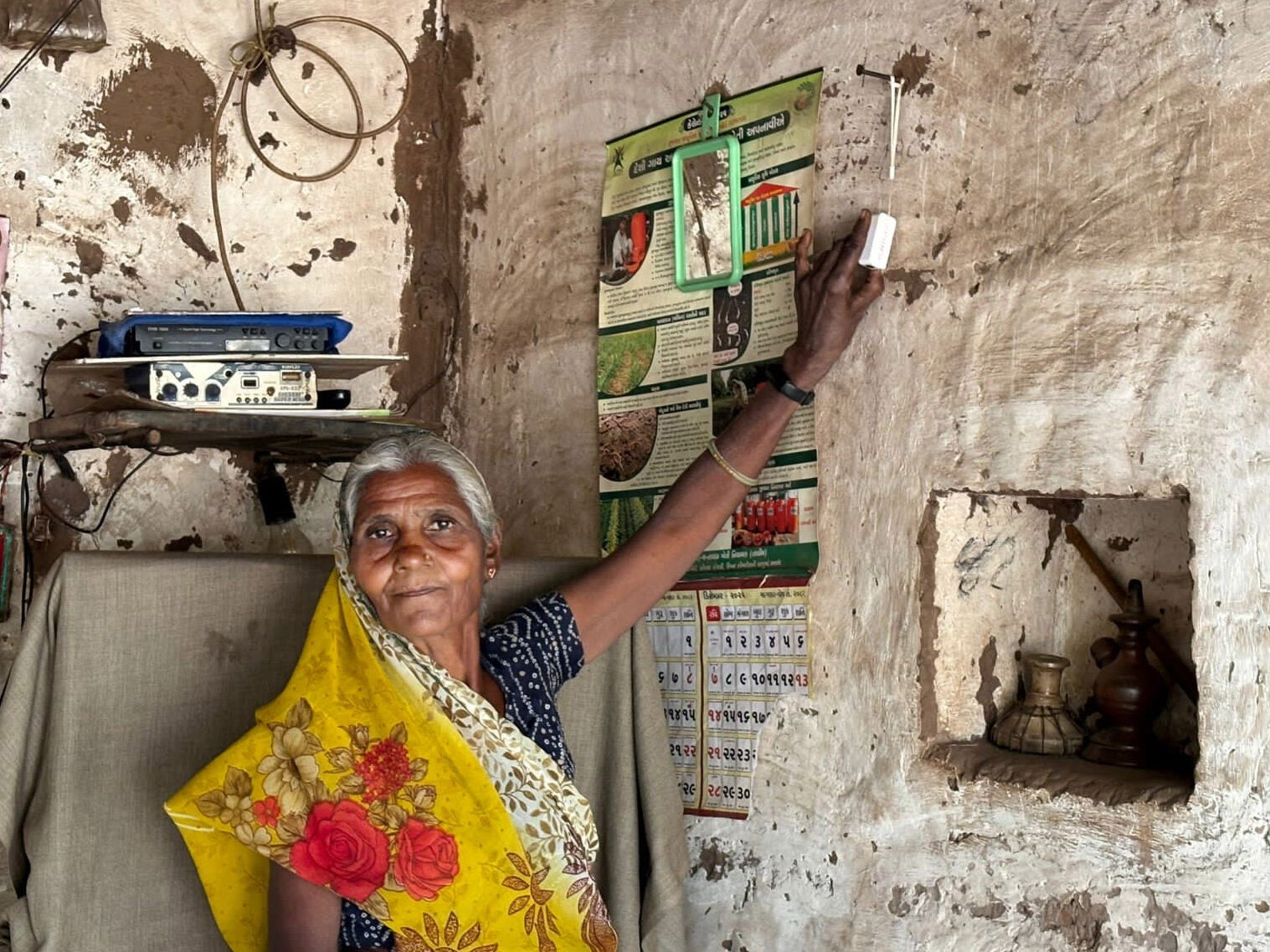
Balsari, Buckee, and researchers from across Harvard—including Harvard Chan School’s Gary Adamkiewicz, Robert Meade, and Tess Wiskel—conduct the study in collaboration with the Self Employed Women’s Association, a network of cooperatives and trade unions representing nearly four million of India’s informal women workers. These women commonly work for small daily wages in marketplaces, workshops, farms, or streets, and live in homes that are often poorly ventilated.
Women enrolled in the study receive wearable devices that track their heart rate and sleep for one year. The researchers also measure temperature and humidity in the women’s homes and workplaces and collect data on their wages and reproductive and mental health.
“We’re quantifying the impact of heat on the lived experiences of the poor, in stark contrast to prior work done in labs on athletes or the armed forces, or in work settings for short periods of time,” Balsari said. “What we’re most proud of is how the women workers themselves co-designed the study in direct response to their needs, and how they drive data collection, quality control, and information dissemination.”
Community HATS is set to run for over two years, at which point it will have collected roughly 9.5 million distinct observations among more than 800 women. The researchers aim to compile all of these observations into a first-of-its-kind, open access database and accompanying toolkit, which will allow communities anywhere in the world to measure the efficacy of heat adaptation interventions, like cooling roofs or new building materials, before deploying them at scale.
“Wellcome is enabling us to substantively expand our work,” Balsari said. “The study will inform local and global thresholds for triggering worker protections, heat action plans, and even innovative financial instruments like parametric heat insurance products, which trigger hazard pay on extremely hot days.”