Living near trees linked with lower heart disease risk in cities
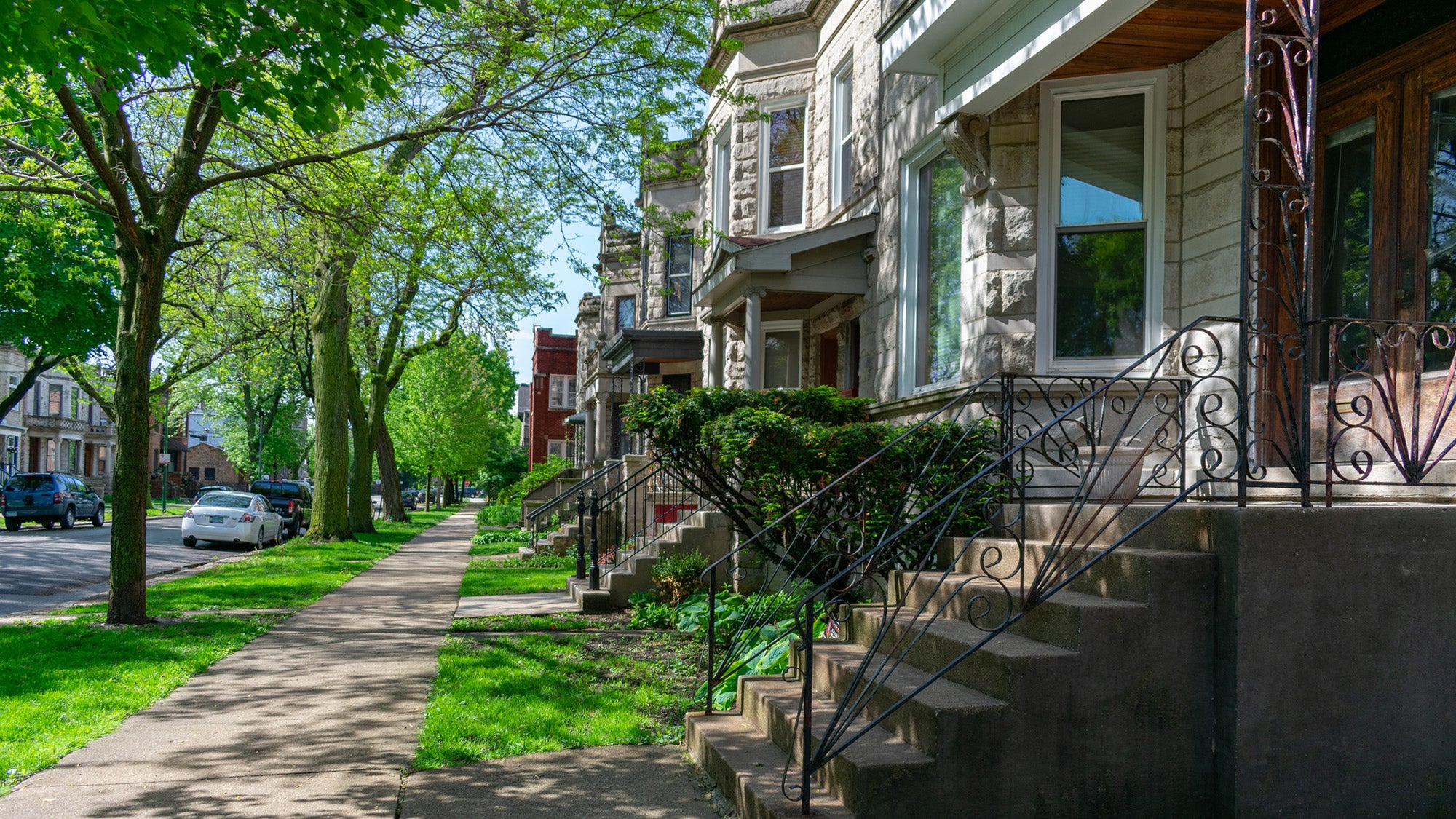
Living in cities that have more trees—and less grass and shrubs—was linked with decreased risk of heart disease, according to a new study co-authored by researchers from Harvard T.H. Chan School of Public Health.
The multi-institutional study led by researchers from the University of California, Davis appears in the February issue of Environmental Epidemiology.
“Our findings suggest public health interventions should prioritize the preservation and planting of tree canopies in neighborhoods,” first author Peter James, adjunct associate professor of environmental health at Harvard Chan School, said in a Jan. 21 article from UCDavis Health.
Researchers analyzed more than 350 million street view images from urban areas across the U.S.—showing neighborhood environments from the vantage point of what a pedestrian would see—to estimate the percentages of trees, grasses, and other greenery in each area. They then linked those findings to 18 years’ worth of health data from nearly 89,000 women in the Nurses’ Health Study, determining the type and percentage of greenery within roughly 500 meters of each participants’ home address.
Living in urban areas with a higher percentage of visible trees was associated with a 4% decrease in cardiovascular disease (CVD), the study found. But areas with a higher percentage of grass were associated with a 6% increase in CVD, and areas with other types of vegetation, such as bushes or shrubs, were linked with a 3% increase in CVD.
The authors speculated that grass and shrubs’ link with higher CVD risk could be due to the use of pesticides, air-quality impacts from mowing, lower cooling capacity than trees, and lower capacity to filter noise and air pollution.
“The research opens a promising new avenue: improving cardiovascular health through community-level environmental changes rather than relying solely on individual lifestyle choices,” said co-author Eric Rimm, professor in Harvard Chan School’s Departments of Epidemiology and Nutrition. “Heart disease has such an enormous impact on the Western world that even moving the needle slightly towards earlier prevention can make a meaningful difference.”
Other Harvard Chan School co-authors included Jaime Hart, Francine Laden, and Brent Coull.
Read the UCDavis Health article: Trees—not grass and other greenery—associated with lower heart disease risk in cities
Read a HealthDay article: Trees—But Not Grass Or Other Greenery—Good For Urban Dwellers’ Heart Health