Measuring the toll of extreme heat on workers’ health
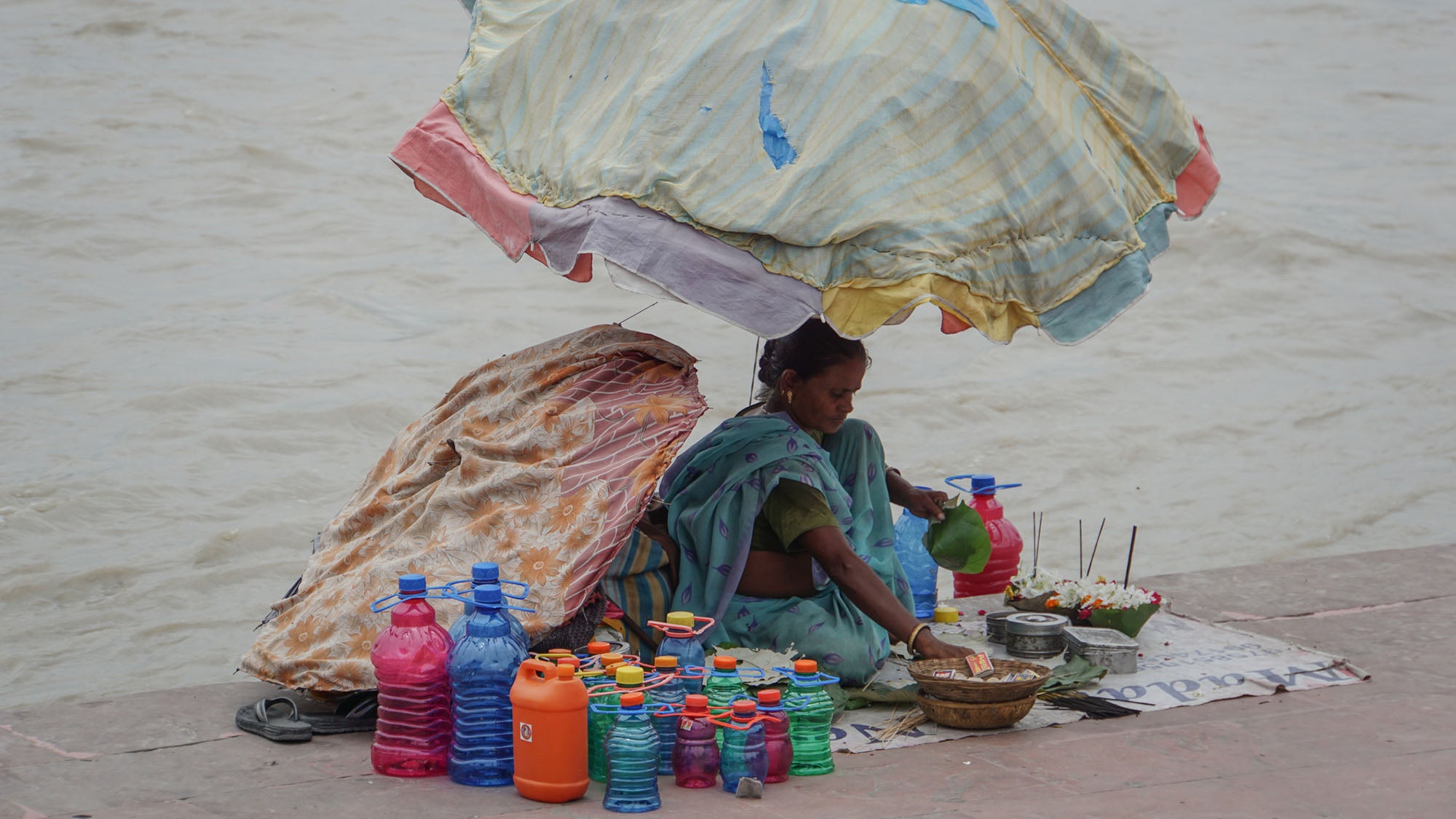
Billions of workers around the world are exposed to extreme heat every year, which puts them at risk of illness, poor mental health and wellbeing, and death. A study led by researchers from Harvard T.H. Chan School of Public Health is working to quantify the impact of working in extreme heat and humidity in order to help identify interventions that truly make a difference.
Led by Satchit Balsari, Caroline Buckee, Gary Adamkiewicz, and Robert Meade, the Community Heat Adaptation and Treatment Strategies (CommHATS) study worked with the Self Employed Women’s Association in India to recruit women workers including farmers, home-based artisans, and street vendors. Along with taking blood tests and surveys, participants wear wrist sensors to measure their daily heat and humidity exposure over the course of 13 months.
In a Sept. 19 Ideas piece in Time, Balsari said that early findings of the study show that, on hot days, people are experiencing wage losses, shortened sleep spans, and high levels of cardiac stress.
“In our study, we find that the cost of our collective inaction is already being borne by those whose lives are already stressed,” Balsari wrote. “The human spirit is resilient, and perhaps life goes on. But in this warming world, life is compromised and diminished. Millions may still live through extreme heat and not yet enter the death counts, but they cannot thrive.”
Read the Time Ideas piece: What 1,000 Women Workers Can Teach Us About Surviving Extreme Heat and watch the embedded documentary One Hot Day.
Learn more:
Researchers launch new climate health projects with Wellcome support (Harvard Chan School news)