The Harvard Chan National Institute of Environmental Health Sciences (NIEHS) Center for Environmental Health is a coordinated set of resources and facilities supporting environmental health research and training activities throughout the greater Boston area. The center promotes integration between basic and applied environmental science, and fosters collaborations that cross departmental and institutional boundaries.
Do you need funding to examine a pressing environmental health research question? If so, the Harvard Chan NIEHS Center for Environmental Health Pilot Project Program can help! Apply by AUGUST 14 for funding of up to $30,000!
Scholarships are available for this two-day intensive course featuring lectures on key concepts in solution-oriented, community environmental health research. Open to the Harvard community, apply by June 17!
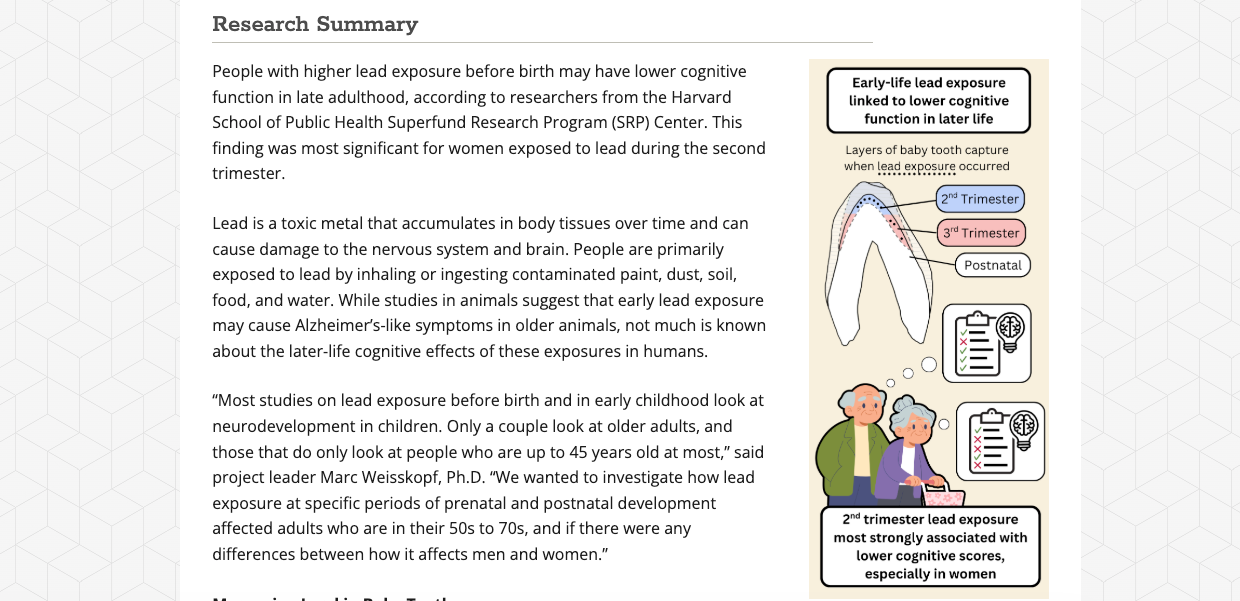
People with higher lead exposure before birth may have lower cognitive function in late adulthood, according to researchers from the Harvard School of Public Health Superfund Research Program (SRP) Center. This finding was most significant for women exposed to lead during the second trimester.
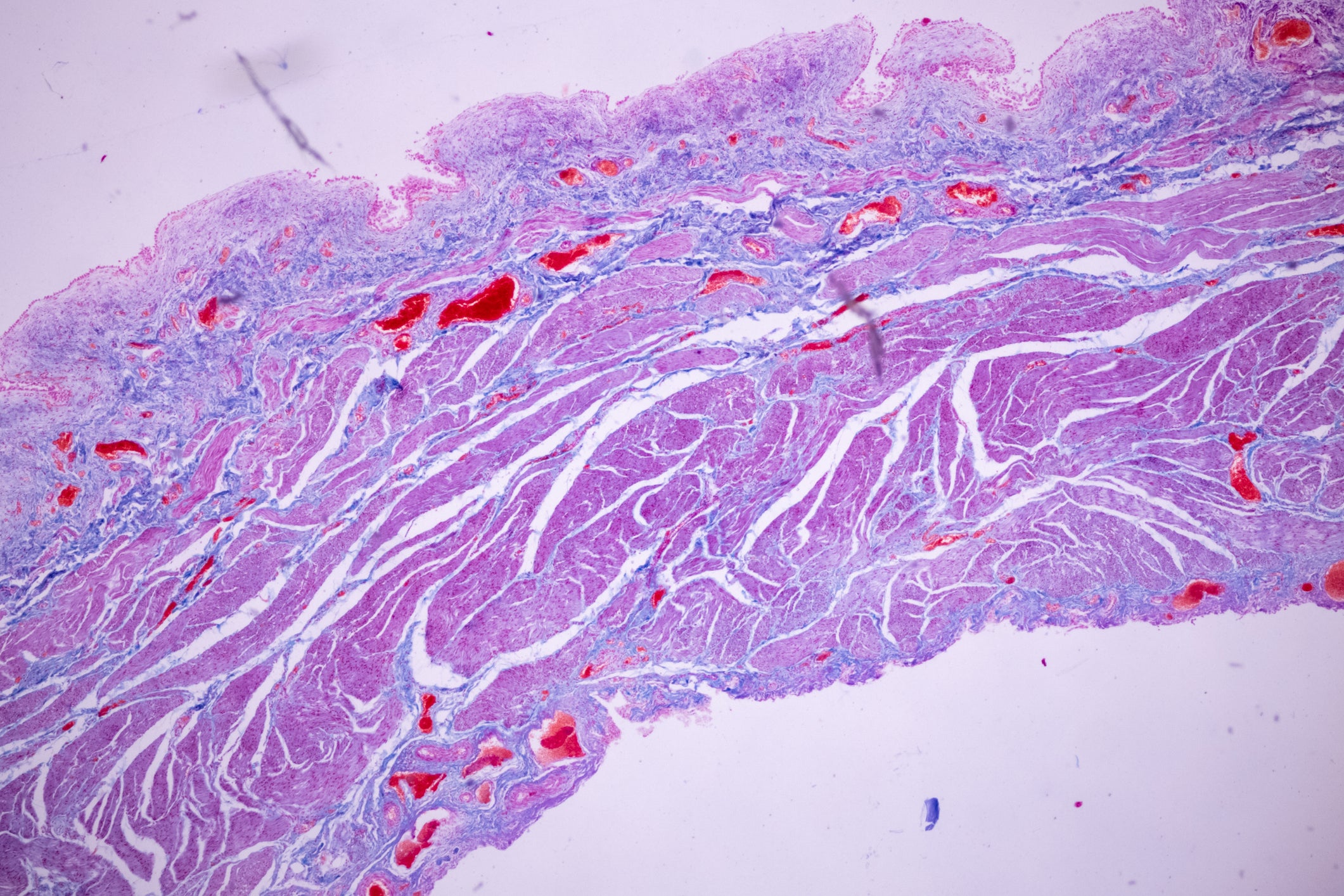
Harvard Chan School findings on stillbirth and placental protein imbalance suggest new potential pathways to prevent stillbirth, especially in low-resource settings.
Read our February newsletter! We’re highlighting new research on potential respiratory toxicity of a short-chained PFAS and associations between prenatal lead exposure and adult cognition, and advertising upcoming events, including registration for CEEDS training.
Prenatal lead exposure, specifically during the second trimester, was associated with lower cognitive test scores later in life, according to a new Harvard Chan School study.
A year after the devastating Los Angeles-area wildfires, Harvard Chan researchers who have been assessing the disaster’s health impacts are taking stock of what they’ve learned, and of the work that lies ahead.
Read our January newsletter! We’re highlighting the winners of our flash funding competition for Community Action Funds, the 1st Annual LA Fires Research Conference, new CE courses, and upcoming seminars!
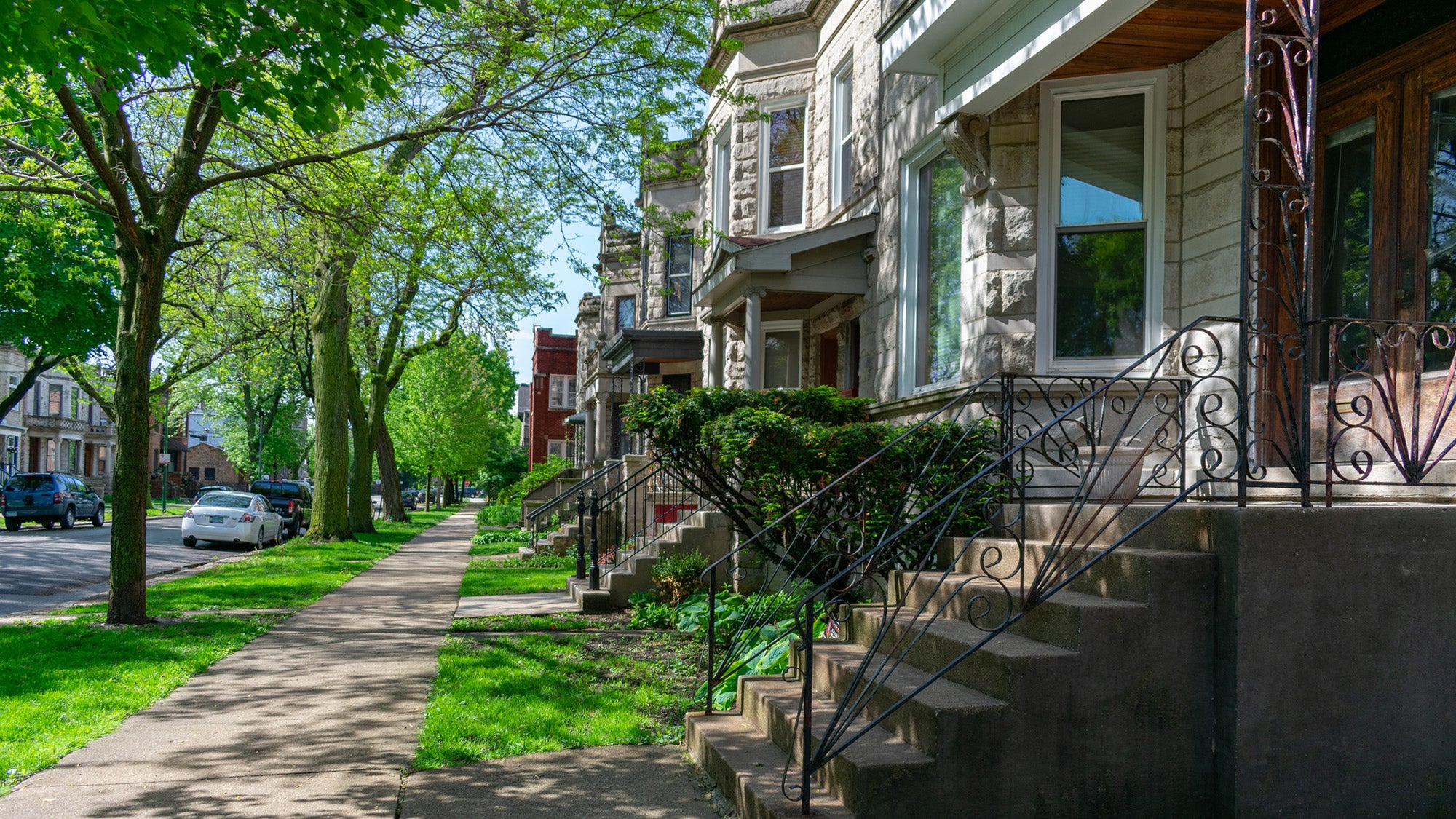
Living in cities that have more trees—and less grass and shrubs—was linked with decreased risk of heart disease, according to a new study co-authored by researchers from Harvard Chan School.