Medicaid work requirements—and ‘medical frailty’ exemption—put health coverage in jeopardy
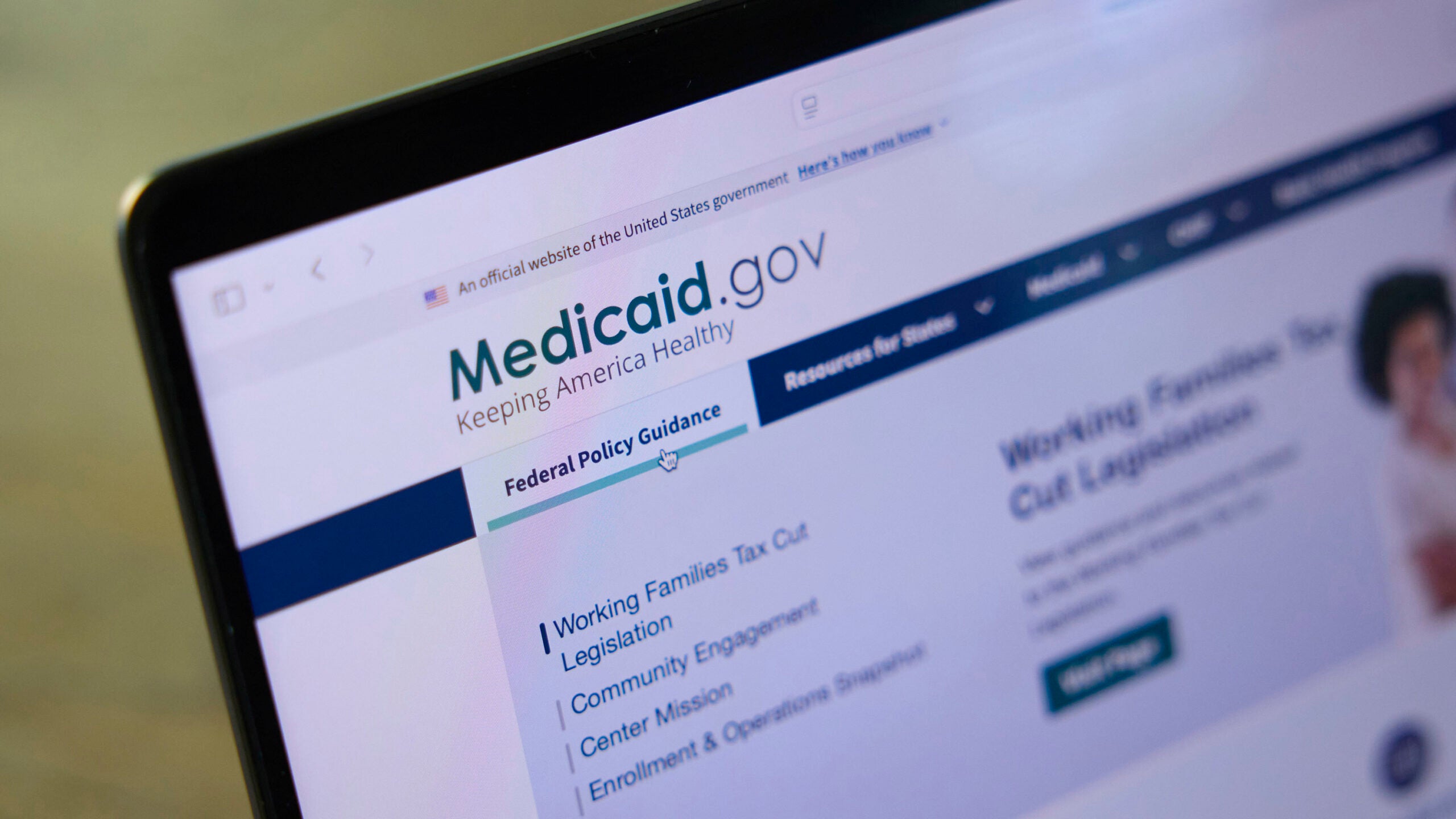
Since the passage of the “One Big Beautiful Bill Act” in July 2025, state policymakers have been awaiting guidance from the Centers for Medicare and Medicaid Services (CMS) on how to implement one of the legislation’s most significant policy changes: the introduction of work requirements to Medicaid, the joint federal/state program that provides health insurance to low-income adults and families, people with disabilities, pregnant people, and seniors.
On June 1, CMS released its rules on how states should implement the new requirements, which stipulate that enrollees must prove they’re working, in job training, or volunteering 80 hours per month; in school at least part-time; or eligible for certain exemptions. One such exemption is for “medical frailty”—if an enrollee has a medical condition serious enough that the new requirements shouldn’t apply to them. Most policymakers were ready to interpret this to mean that any enrollee with a serious condition, such as HIV, cancer, or heart disease, should have their coverage protected regardless of their ability to work. But in a surprise to many, CMS indicated that states can only apply the frailty exemption to enrollees whose medical conditions are so severe as to impair their ability to comply with the work requirements.
While federal officials say this regulation will help remove “waste, fraud, and abuse” from Medicaid, many experts say the new, narrowed definition of medical frailty is vague and much more challenging to prove, and could create administrative hurdles leading to unnecessary losses of health coverage among those most likely to suffer adverse health outcomes.
Harvard T.H. Chan School of Public Health’s Adrianna McIntyre, assistant professor of health policy and politics, and Benjamin Sommers, Huntley Quelch Professor of Health Care Economics, share more about the medical frailty exemption and other ways Medicaid patients may be impacted by the new work requirements, which states must implement by January 1, 2027.
Q: To determine if Medicaid applicants or enrollees are medically frail and exempt from work requirements, states will have to consider not just their diagnosis, but whether that diagnosis is serious enough to inhibit their ability to meet the requirements. This came as a surprise to many state policymakers, who were expecting to develop a list of health conditions and exempt anyone with that diagnosis. What’s your reaction?
Sommers: We can expect for this CMS regulation to be litigated, as many people think that their way of defining “medically frail” is a misinterpretation of the “One Big Beautiful Bill Act” and the way it introduced the work requirements and exemptions. The law doesn’t say that Medicaid enrollees with serious medical conditions should be exempt only if they can’t work. Presumably, Congress exempted them because they’re sick and are at higher risk for illness or even death if they go without health insurance. It’s the same thing for other groups exempted under this law: People who are pregnant or parents of kids under 14, for instance, can clearly work, yet will retain their Medicaid coverage even if they don’t. That’s because Congress didn’t want to risk coverage losses in these groups, just like we should not want people with cancer, heart disease, and other serious conditions losing Medicaid under this policy.

So I think this will end up being fought in the courts. For now, however, this is the regulation, and states have to try to figure out how to implement it—how to determine if someone’s health condition is serious enough to merit exemption, and how to access the information to make that determination. To assess someone’s medical frailty, the new CMS rules mention looking at not just diagnosis, but also health care use and the severity of their condition. It’s possible some states will be able to access this kind of data, even given how late they were notified of the regulation and how little time they have to set up the right systems to implement it. There may be some opportunity to identify and exempt the highest risk folks with chronic conditions and high health care needs. But states are really scrambling, in a matter of months, to put systems in place to make these determinations. They may not be able to now, or ever, depending on their access to data—meaning for many Medicaid enrollees, it’ll be up to them to prove medical frailty.
Q: How would someone prove medical frailty?
McIntyre: In 2027, Medicaid enrollees will be able to self-attest that they meet the criteria for medical frailty. We don’t know how that will look yet, though, and it will likely vary state by state. You can imagine the simplest version of the attestation process being a checkbox—all someone needs to do is tick a box on an online or paper application to mark that they are medically frail and should therefore be exempt from work requirements. You can imagine a more complicated version being, tick the box and tell us what diagnosis you think makes you medically frail. If a person wrote down diabetes, is that sufficient? Or do they have to write something about the severity of their diabetes?
In 2028, the process gets more complicated, as there will have to be documentation accompanying self-attestations for every Medicaid enrollment cycle, which lasts six months. Some states may have the necessary data to produce that documentation themselves, but others may require a doctor’s note or some other proof generated by a patient or their provider.

I suspect there will be quite a bit of latitude around attestations in this first year, as an acknowledgment that states are facing a tall, if not impossible, order to set up complex systems in a short amount of time. That being said, even the simplest version of self-attestation is going to be a burden on people and will very likely result in coverage losses. We know that when folks are asked even just to check a box, many of them lose their benefits, because they don’t know if they should check it or not or they’re unaware there is a form they need to complete at all. And the more complicated or detailed the administrative task becomes, the higher the risk of coverage loss. Six months is not a lot of time to get in to see a doctor, much less to get the medical documentation you may need. The last time I made a primary care appointment, I felt fortunate that it only took me two and a half months to see someone.
Sommers: Our study of Arkansas’ experience implementing Medicaid work requirements in 2018 showed large coverage losses even without any documentation required. People simply had to go to an online portal and check a box, and only about a quarter did. Most people who managed to keep their coverage did so via automatic renewal, because the state had data on them. Self-attestation is an important escape valve when such data isn’t available—but it’s a high hurdle. Around 18,000 people lost their Medicaid coverage in Arkansas. In the case of people with serious medical conditions and the new federal restrictions, we’re talking about sick people who arguably are most in need of that coverage.
Q: What about Medicaid enrollees who aren’t exempt from work requirements? How will they prove that they’re adhering?
McIntyre: Similar to those seeking the medical frailty exemption, in 2027 workers will be able to self-attest to meeting work requirements, then in 2028 will have to provide documentation, such as pay stubs. States will have some wage data they can use to automatically enroll and re-enroll working people in Medicaid. And to fill in gaps, they can pay commercial vendors, the Equifaxes of the world, for their employment data. None of these datasets are complete, however. They exclude much of the low-income working population. They don’t capture gig workers or folks who are self-employed. We should be worrying about coverage losses among these individuals, because their continued Medicaid coverage depends on them completing and submitting forms. And again, we know from Arkansas how rarely even simple check-the-box tasks are fulfilled. Layering on paperwork just makes that worse.
Sommers: In terms of sheer numbers, probably the most important question to ask is: To what extent are states going to be able to automatically keep enrolled all the people that they know are already working? We did some research into coverage loss during Medicaid unwinding—the process through which states re-evaluated their Medicaid rolls after the expiration of the pandemic-era continuous coverage provision in 2023—and found hugely different rates of automatic renewals across states. Depending on the state and the capacity of its system, we saw tenfold differences in the share of Medicaid beneficiaries who were disenrolled for procedural reasons—not because they no longer qualified for the program, but because their qualifications couldn’t be proven on an automated basis, and they didn’t know or weren’t able to provide backup paperwork.
McIntyre: It’s worth mentioning that, in this same line of research, we conducted a survey of people who lost their Medicaid coverage during unwinding and found that a quarter of them didn’t know about the loss until they went to seek care. Most of them were at the pharmacy trying to pick up medications when they found out they were no longer insured. A big problem we observed during unwinding and Arkansas’ experiment with work requirements was that most people were simply not aware of Medicaid policy changes. You can’t check a box if you don’t know it’s there. The states that do well at covering people are the ones that can automate as much of this process as possible. In states that can’t—and for Americans whose lives aren’t tidy and easily captured by data—we should be anticipating a lot of confusion around Medicaid going forward, and significant coverage losses.
We must be clear-eyed about the reason the federal government decided to introduce work requirements. It’s not about waste, fraud, or abuse—it’s because kicking people out of Medicaid saves money.
Benjamin Sommers, Huntley Quelch Professor of Health Care Economics
Q: To what extent will coverage losses reflect successful elimination of “waste, fraud, and abuse” from Medicaid, one of the stated goals of the work requirements, including the medical frailty exemption?
Sommers: Objective estimates show that fraudulent enrollment in Medicaid is quite low—far lower than the coverage losses being projected. These losses are mostly about people not being able to navigate the system, because policy has shifted to say that if someone can’t fill out paperwork every six months, they should lose their health insurance, lose access to the care they need, and suffer accordingly. We must be clear-eyed about the reason the federal government decided to introduce work requirements. It’s not about waste, fraud, or abuse—it’s because kicking people out of Medicaid saves money.
Learn more:
New Medicaid work rules could lead to greater-than-expected coverage losses, administrative hurdles (Harvard Chan School news)
Medicaid work requirements begin in Nebraska amid fears that many will lose coverage (Harvard Chan School news)
Medicaid cuts: What’s at stake (Harvard Chan School news)
How Medicaid cuts could lead to loss of coverage for millions (Harvard Chan School news)