A career promoting evidence-based decision-making, in health policy and beyond
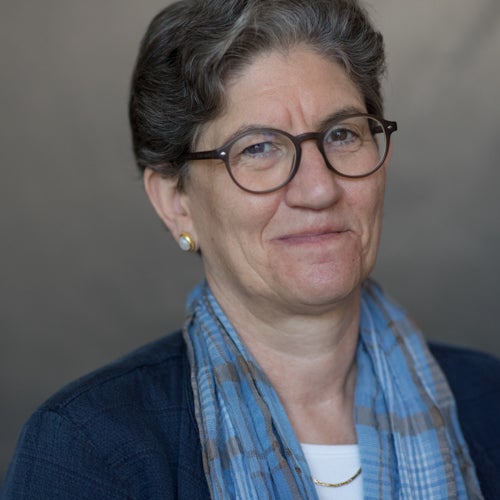
Harvard T.H. Chan School of Public Health’s Lisa Robinson is an expert in benefit-cost analysis—calculating and comparing a project or policy’s costs and its positive impacts. For decades, she has led assessments of the benefits, costs, and other impacts of environmental, health, and safety policies in the U.S. and globally. In an Aug. 20 profile in the journal Risk Analysis, she shared her path to becoming a leader at the intersection of economic evaluation and public health, and why she finds her work “endlessly interesting.”
Robinson, deputy director of the Center for Health Decision Science (CHDS) and core faculty member in the Center for Climate, Health, and the Global Environment, teaches, trains, and mentors Harvard Chan School students on how to perform benefit-cost analyses and other economic evaluations. Beyond that, she also has provided guidance on how to use these techniques to federal agencies such as the Environmental Protection Agency and the Department of Health and Human Services, and has had her work used by other federal entities, including the Department of Homeland Security, the Department of Transportation, and the U.S. Consumer Product Safety Commission.
Coming from a civically engaged family, Robinson was interested in public policy and social welfare from a young age. A fortuitous application—and acceptance—to earn a master’s degree in public policy from Harvard Kennedy School set her on the path to working in government, where, Robinson said, she often felt “shock” at the “arbitrariness of major policy decisions” made by officials who lacked “understanding of what the policy entailed or the evidence that did, or did not, support it.”
That experience continues to drive Robinson’s work in academia, where, according to the profile, she focuses on “contributing to, and promoting, more evidence-based decision-making.”
Robinson named several Harvard Chan School colleagues as important influences, including James Hammitt, Ole Norheim, Kari Nadeau, Mary Rice, Francine Laden, and Sue Goldie, director of the CHDS. Goldie, who appointed Robinson to be deputy director in 2020, called her “an extraordinary community leader,” one who stepped up during the COVID-19 pandemic to ensure the Center’s work, collaborations, and culture continued virtually.
Even with an already storied career, Robinson said she’s not quite ready to step away from her work as a researcher, teacher, and leader. “When I am asked when I might retire, I joke that it will be perhaps a year from today, no matter when today is,” she said. “But every time I start to think about slowing down, new exciting and interesting work emerges, and I am eager to dive in.”
Read the Risk Analysis profile: Lisa Robinson: Benefit–Cost Analyses for Evidence-Based Decisions