What Happens When the Screen Goes Off? Lessons on Digital Wellness from Mississippi

Twambo Nambao is a Winokur Fellow and DrPH candidate.
“But what will they do instead?”
That question stayed with me.
I came to Mississippi as a Winokur Fellow with the Children’s Foundation of Mississippi to explore social media use among children and adolescents. They were interested in understanding how digital media affects children’s health and well-being and what families, schools, communities, and public health practitioners might do to encourage healthier relationships with technology.
I arrived with many of the concerns that often shape conversations about children and screens: How much time are children spending online? How is social media affecting their sleep, mental health, relationships, and learning? What can parents do? What should schools do?
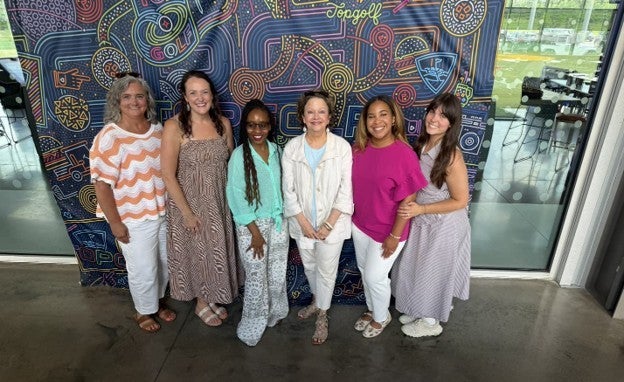
During my field experience, I listened to people who encounter these questions from very different perspectives. Parents, educators, clinicians, community members, public health leaders, and others helped me see different parts of the same picture. My journey began in Tupelo, MS where I joined Dr. Michael Rich, the ‘Mediatrician,’ in meeting community stakeholders and participating in local media conversations to listen, learn, and better understand how families and communities were navigating children’s media use. Conversations in Tupelo revealed that children’s media use was intertwined with family routines, school technology, mental health, and rapidly changing digital platforms.
But one conversation shifted my thinking in a particularly important way. A community member spoke about families with limited financial resources and the difficulty of finding alternatives to screens for their children. It is easy to say that children should spend less time on phones, social media, or video games. But what happens after the screen goes off?
For some families, the answer might be soccer practice, swimming lessons, summer camp, music classes, or other organized activities. But those opportunities often cost money. Transportation may be needed. Parents may work long hours. And in some communities, families may have limited access to parks, playgrounds, recreation centers, or other safe places where children can simply go and play.
Suddenly, I was no longer thinking only about screen time. I was thinking about opportunity.
As a physician and public health practitioner, I am accustomed to identifying health concerns and asking what intervention might change the behavior. That training is valuable, but my experience in Mississippi challenged me to look beyond the individual child.
Telling a family that their child needs less screen time may be reasonable advice. But advice alone does not create a park. It does not pay for summer camp. It does not provide transportation to soccer practice. It does not shorten a parent’s working hours. And it does not change the fact that a child’s friends may all be interacting online.
I began to understand digital wellness differently. It is not simply about the presence or absence of screens. It is also about the presence or absence of meaningful alternatives. That realization made digital wellness an equity issue for me.
Children do not experience the digital world under equal circumstances. Families differ in income, time, transportation, neighborhood environments, access to recreation, and many other resources that influence how children spend their time. Asking children to make healthier choices without considering those conditions risks placing responsibility on individuals for circumstances they may have limited power to change.
My time in Mississippi also taught me that responsibility cannot sit with parents alone.
- Schools are part of the system. They increasingly depend on technology for learning, while also navigating concerns about distraction and social interaction. They can create opportunities for sports, arts, clubs, physical activity, and creative learning.
- Communities are part of the system. Safe parks, libraries, recreation centers, and affordable activities expand what children can choose to do away from screens.
- Public institutions are part of the system because decisions about infrastructure and investment shape the environments in which families raise children.
- Technology companies are part of the system too. Children are not simply exercising individual willpower; they are interacting with products designed to capture and maintain attention.
And children themselves must be part of the conversation. Social media is not experienced only as a risk. For young people, digital spaces can also mean friendship, entertainment, creativity, learning, and belonging. Adults cannot design meaningful solutions without listening to how children understand their own digital lives.
Perhaps that was my greatest lesson from Mississippi: no single person I met had the entire answer. Different members of the community helped me see different pieces of the system. My responsibility as a learner was not to arrive with a solution, but to listen closely enough to allow those perspectives to challenge my assumptions.
That is also what community-engaged learning asks of us: to recognize that expertise does not reside only in universities or professional titles. The Community Engaged Learning program at Harvard Chan emphasizes learning from community knowledge and leadership, reflecting on how our own identities and assumptions shape engagement, and connecting those lessons to larger questions of equity, partnership, and systems.
The conversations this summer are just the beginning. I plan to continue working with the Children’s Foundation of Mississippi to build on what we have learned and explore how these insights can be translated into practical approaches to digital wellness. One area I am particularly interested in developing further is creating opportunities to hear directly from children and adolescents. I have also been invited to return to Mississippi as a speaker at the Children’s Foundation of Mississippi’s conference next year. This will provide another opportunity to continue the conversation, share what we are learning, and explore how communities can move from understanding the problem toward identifying what they can do together.
I came to Mississippi asking how we might help children use social media differently. I leave with a broader question: How do we create communities in which healthy digital choices are possible?
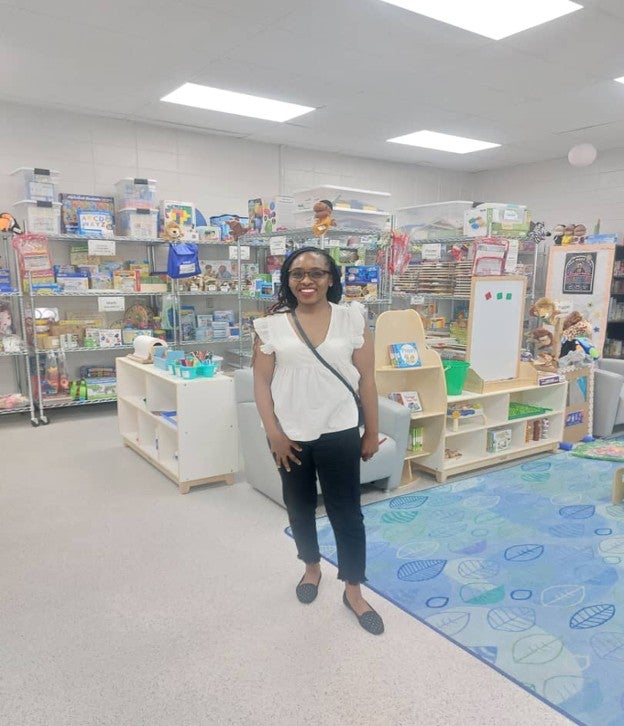
I do not yet have a complete answer. Perhaps I am leaving with better questions than the ones I brought with me. But I now understand that healthier digital childhoods will require more than asking children to change. They will require families, schools, communities, public health practitioners, policymakers, and young people themselves to think together about the environments we are creating around children.
Telling a child to put down a screen is the easy part. Building a world worth putting the screen down for is the harder and more important public health task.