What a Widow and a Five-Year-Old Taught Me About Revolution
Farwa Akbari is a Rose Service Learning Fellow and MPH candidate in the Health and Social Behavior field of study.
I didn’t expect the person who’d redefine “revolution” for me this summer to be a five-year-old girl with a bucket of wet cement.
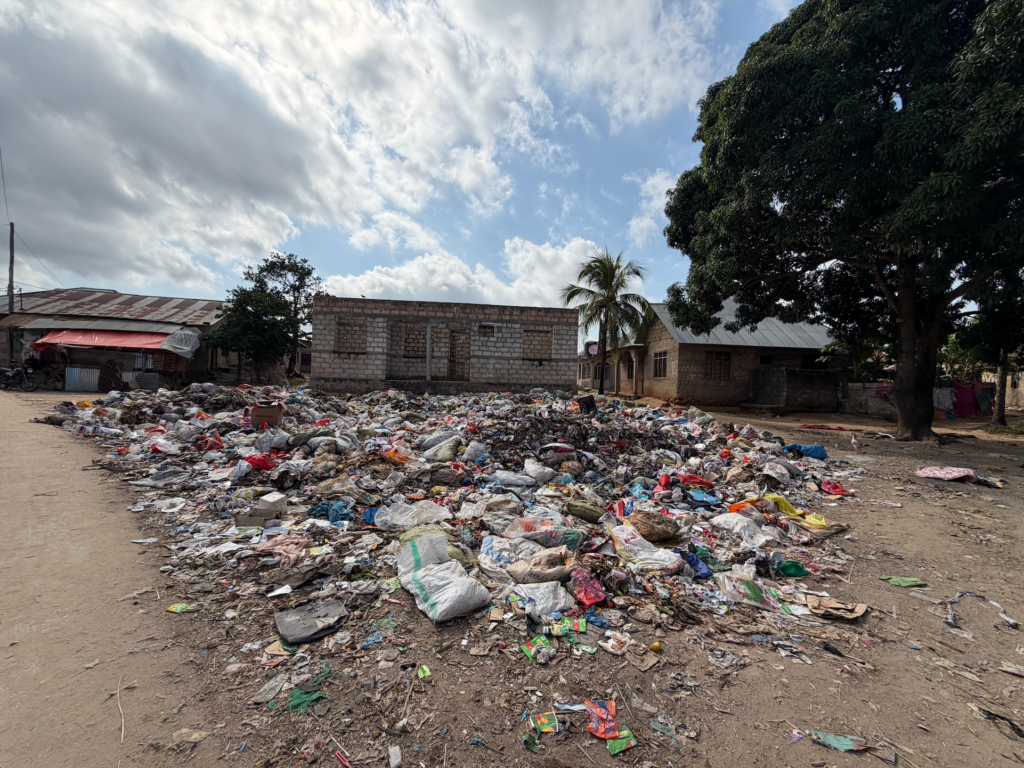
We met her in Mtoni Chem Chem, a community in Zanzibar, Tanzania, where climate change and aging infrastructure collide daily. Walking through the neighborhood, we saw cracked homes from erosion, a water pipe someone had patched with cloth because there was nothing else on hand, and a toilet chamber sitting uncomfortably close to the community’s water supply. Children played in pools of wastewater nearby — to them, it was just water to splash in. To us, it was a transmission pathway we’d spent weeks trying to quantify in survey data.
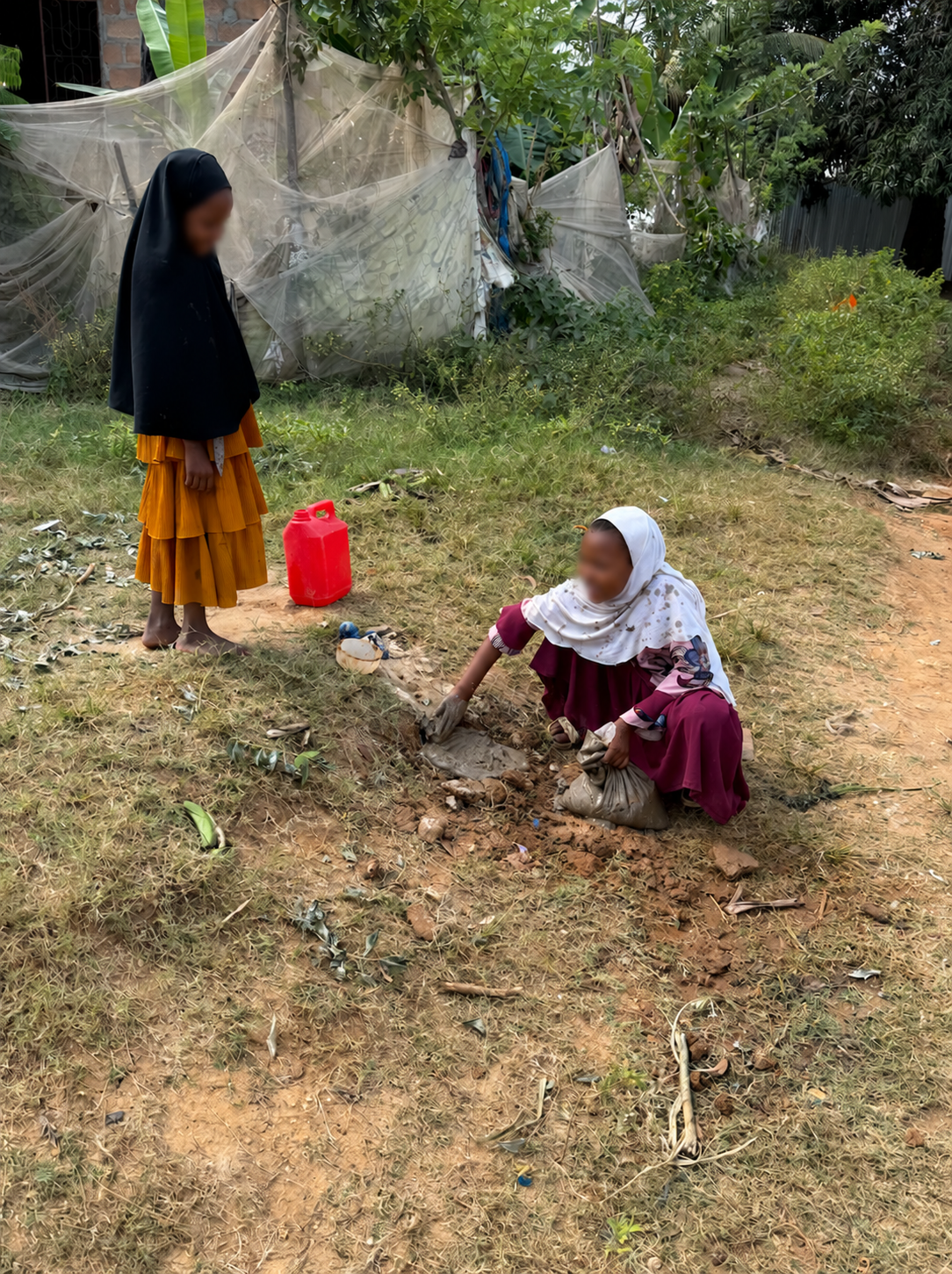
And then there was the five-year-old girl, “Khadija”: she’d collected leftover cement from a nearby construction site and used it to build a small drinking basin for her family’s chickens, because she wanted them to have clean water. Nobody assigned her that task. Nobody funded it. She just noticed a gap and closed it, with whatever materials were around.
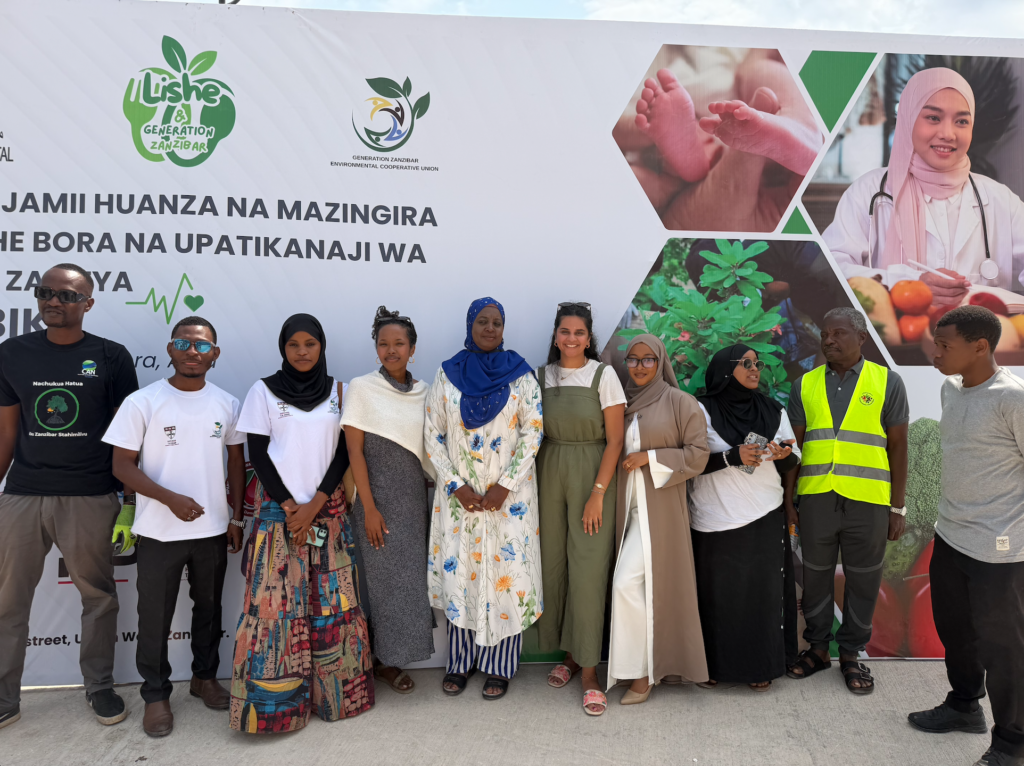
This summer, with support from the Rose Service Learning Fellowship, I worked with the Mayor’s Office of Zanzibar and the Generation Zanzibar Environmental Cooperative Union (GZECU), a youth-led organization partnering with the city on its Zero Waste Campaign. My work looks at how waste management and environmental change shape infectious disease risk (cholera, malaria, and other illnesses) tied to contaminated water and standing waste. I spent the practicum trying to understand that problem through survey instruments and household interviews. A five-year-old, unprompted, solved much of the problem for me.
A few days earlier, in Monduli, I’d met someone solving a much larger version of the same problem, with the same scarcity of tools. “Asma” is a widow and mother of six who has spent years trying to keep her neighborhood clean. Years ago, she helped start a community waste collection initiative. At its peak, around forty people showed up to do the physically demanding work of clearing waste from a neighborhood with no official collection point. Without reliable transportation, proper equipment, or a functioning site to bring the waste to, the effort collapsed under its own weight. Today, only about ten collectors remain.
“The real challenge is not the willingness of people to clean,” she told us. “The challenge is having the tools and support to do it.”
She named what the work had cost her: the physical toll of the labor, the strain on her health, the impossible math of supporting six children alone with no childcare and no income safety net. And still, when we asked whether she’d do it again if given the chance, she didn’t hesitate.
“I love to make my environment clean,” she said. And then, with something that sounded less like exhaustion and more like conviction: “This is a day for revolution in waste collection.”
I keep coming back to the word she chose. Revolution. Not cleanup. Not project. Revolution — as if she already knows this is bigger than trash, and she’s right. It is about health. It is about dignity. It is about whether her sons and grandchildren inherit a neighborhood that makes them sick or one that doesn’t.
Before this summer, I think I would have put Asma and the girl with the chicken basin into different categories: one an adult stakeholder to interview, the other a charming anecdote to mention in passing. Being there made that distinction feel almost embarrassing. They’re doing the same work, looking at a system that has failed to provide basic infrastructure, and instead of waiting for someone else to fix it, they’re building something (a basin, a collection route) out of whatever they have.
That’s something I keep having to unlearn. I came to Zanzibar expecting to study a problem and hand back solutions. What I’ve actually spent most of my time doing is listening to people who were already solving pieces of it, often for years before I arrived, with none of the institutional support that made my presence here possible in the first place. Our own survey data reflects this in its own quieter way as families and government were named almost equally often as the ones currently managing waste, which isn’t really a story about whose job it is. It’s a story about who’s already doing the job without being asked, and who could do so much more with real support behind them.
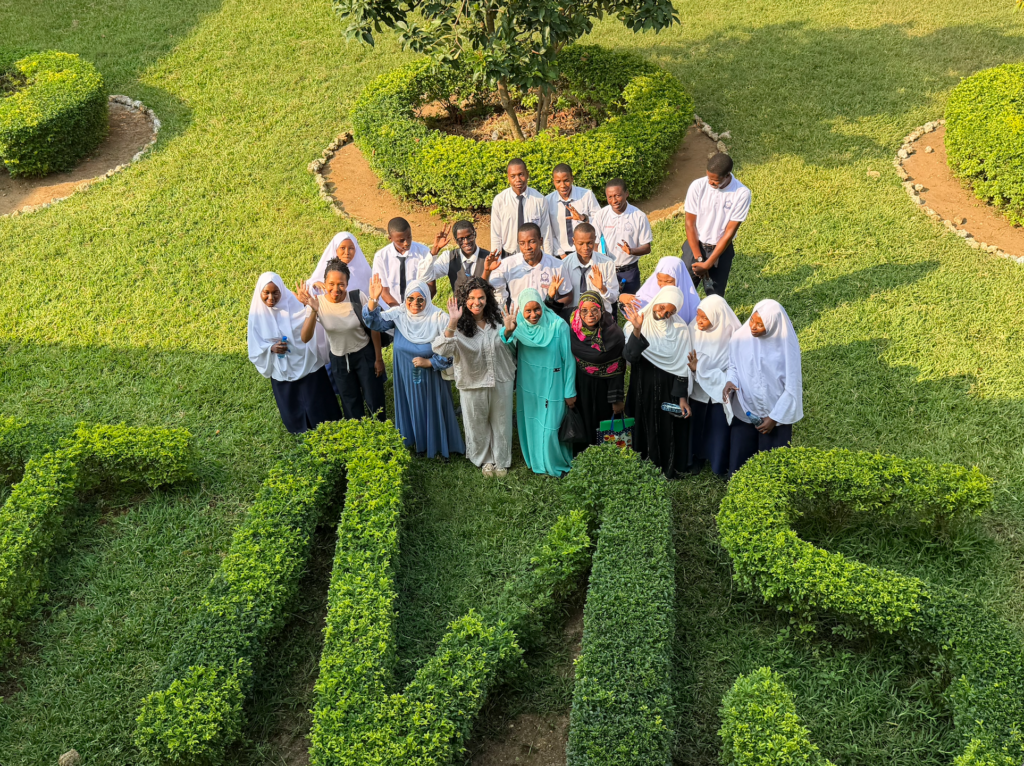
Asma asked for tools, transportation, and protective equipment: not charity, just the basic infrastructure that would let her community’s existing willingness turn into something sustainable. Students at a nearby secondary school put it more simply, standing in a garden they’d built themselves out of an abandoned, waste-filled lot: “Everything in the world is connected. The environment gives us so much, so we have to protect it.” The five-year-old with a bucket of cement, the widow calling for revolution, and the school garden full of teenagers aren’t waiting for permission. They’re waiting for a partner who takes their vision as seriously as they do.
Hearing this directly, standing there as Asma named her exhaustion and her conviction in the same breath has changed what I think my job in public health actually is. I came into this field assuming my value would be technical: better surveys, sharper recommendations. What I’m carrying into the rest of my training, and into my career, is a different starting question — who is already leading here, and how do I earn a place beside them, rather than in front of them.
A note on names: “Asma” and “Khadija” are pseudonyms used to protect the identities of the individuals described in this story, including a minor.