Radiological Emergency Management: Regulations, Planning, Response, and Recovery
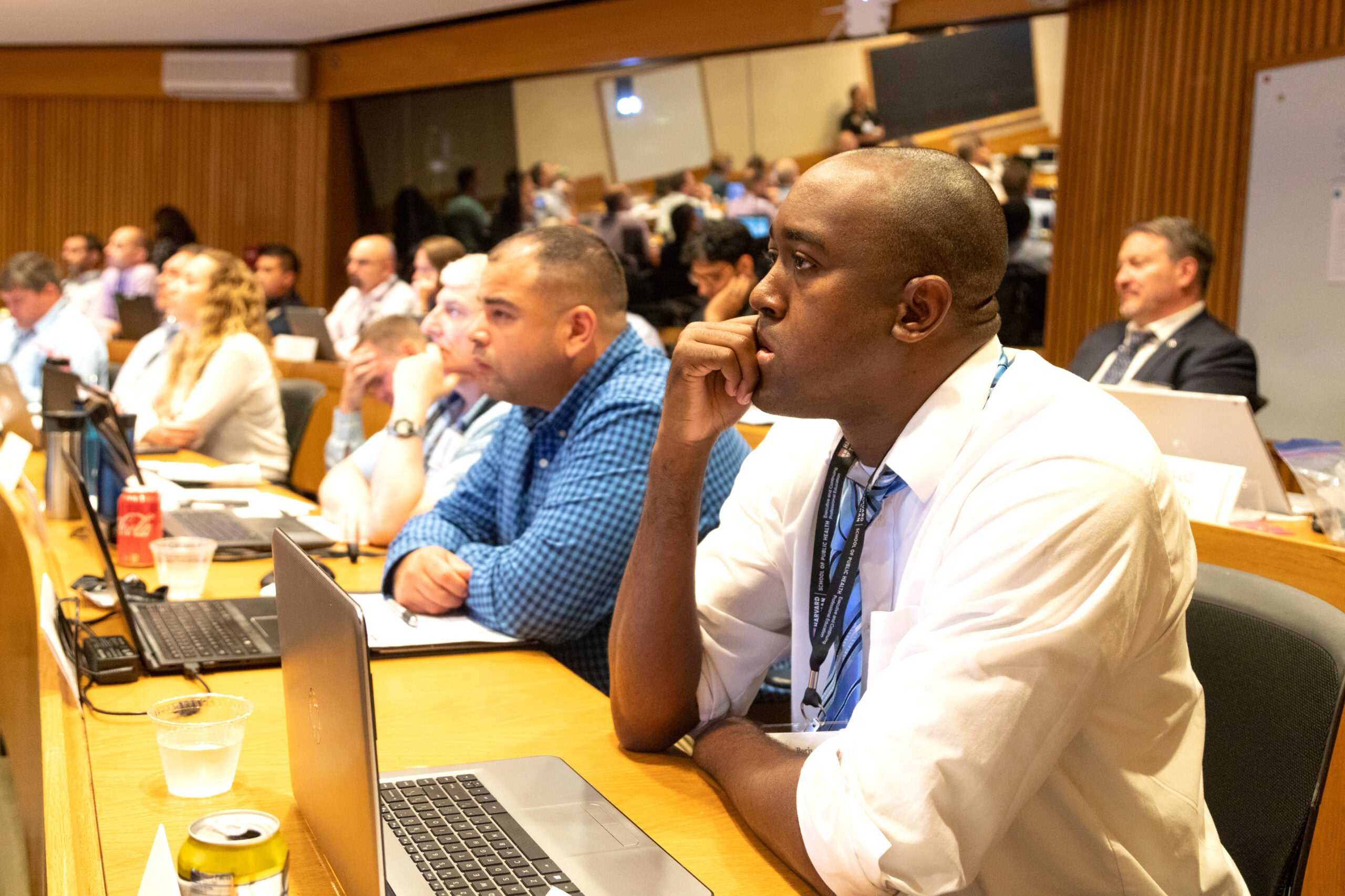
Program Overview
Date: November 2–6, 2026
Location: Harvard T.H. Chan School of Public Health in Boston, MA
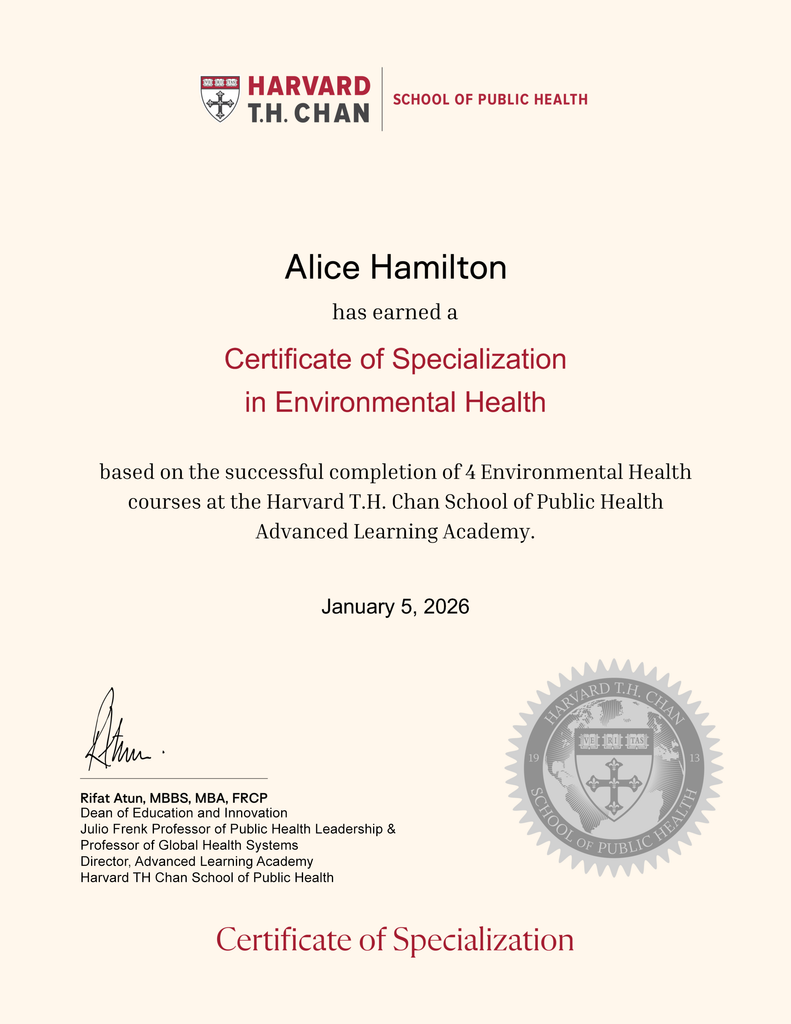
Certificate of Specialization eligibility:
Prepare, Respond, and Lead in Radiological Emergencies
Radiological Emergency Management: Regulations, Planning, Response, and Recovery brings together industry experts, government professionals, and renowned academic faculty in radiation protection and emergency management to provide you with skills and strategies to effectively plan for and respond to radiological emergencies at the federal, state, local, or individual facility level. This program is unique in bringing together stakeholders from across agencies, functions, and backgrounds for an intensive look at effective planning, response, and recovery from emergencies involving radioactive materials.
After sessions on radiation fundamentals and regulatory requirements, this program will provide skills and strategies for communicating about radiological emergencies, medically managing casualties of incidents involving radioactive material, managing terrorism actions, and supporting other organizations during these crises. Several interactive class activities and case studies provide additional learning and hands-on experience.
This dynamic course offers an effective combination of lectures, case studies, and class participation activities conducted by knowledgeable and experienced instructors who are leaders in their fields. This program will enhance your capabilities and allow you to provide more efficient and effective oversight of radiological emergency management and response efforts.
Program Details
- Review and understand basic radiological principles, applications, and effects
- Receive guidance, strategies, and updates from applicable radiological emergency planning and response government agencies
- Understand the need for, and application of, protective action guides in emergency planning and response
- Learn how local, state, and federal agencies can assist in radiological planning and response
- Understand radiological emergency planning as it applies to current nuclear power plants, future nuclear power plants, radiological medical emergencies, and radiological terrorism events
- Learn how the news and social media will report on your radiological emergency and how to prepare and successfully respond to that intense visibility
- Actively participate in two radiological event simulations covering techniques used for a technical response and for news and social media response
- Apply the knowledge learned to comprehensively review and upgrade your current radiological emergency planning
Participants in this course will include radiological, regulatory, and other professionals brought together by their commitment to protecting public health. This program is a unique opportunity to meet with and discuss radiological emergency management from the perspective of the many stakeholders involved in radiological emergency planning, response, and recovery. Participants will have many networking opportunities to interact with the lecturers and with their peers. Both novice and experienced personnel will benefit greatly from this program.
This course is designed for personnel involved in radiological emergency planning, response, or recovery in the public, private, or nonprofit sectors. Health physicists, public safety professionals, and first responders will also find this program very beneficial. Participants— both U.S. and non-U.S.—from the following organizations will also benefit greatly from the curriculum:
- Defense or military organizations
- Departments of health
- Environmental health & safety (EHS) groups
- Homeland security and emergency management agencies
- National Laboratories
- Nuclear power generation—current and future plants
- Nuclear or energy-industry regulatory bodies
- State and local emergency agencies
- State and local radiation control agencies
- Private organizations involved with radioactive materials
From Our Alumni
“Every emergency planner, nuclear public affairs officer, or anyone involved in nuclear, non nuclear, or terrorism mitigation should attend this course. It offers an abundance of information that can assist in management of radiological and non-radiological events and crisis communication.”
—Hank Ramsey, Radiation Safety Officer, U.S. Navy
Program Logistics
All Times are Eastern Time (ET).
| Monday, November 2, 2026 | ||
|---|---|---|
| 7:30–8:00 am | Check-In | |
| 8:00–9:15 am | Goldman, Short | Welcome, Introductions, Orientation, IT Setup |
| 9:15–10:30 am | Short | Refresher: Radiation and Radioactivity |
| 10:30–11:00 am | Break | |
| 11:00 am–12:00 pm | Short | Refresher: Biological Effects and Risks of Radiation |
| 12:00–12:45 pm | Lunch | |
| 12:45–2:45 pm | The Federal Framework for Emergency Planning | |
| 2:45–3:15 pm | Break | |
| 3:15–4:30 pm | 20-20 Hindsight Strategies for NPP Accidents | |
| 4:30–5:30 pm | Goldman | How to Speak, Eat, and Drive like a Bostonian! (optional) | Tuesday, November 3, 2026 |
| 7:45–8:00 am | Announcements/Day Review | |
| 8:00–8:30 am | Becker | Social, Psychological, and Behavioral Issues |
| 8:30–10:30 am | Hamilton, Becker | Managing Terrorist Incidents Involving Radioactive Materials |
| 10:30–11:00 am | Break | |
| 11:00 am–12:00 pm | Hamilton | Medical Management of Radiological Casualties |
| 12:00–12:45 pm | Lunch Break | |
| 12:45–3:00 pm | Hamilton, Becker | Planning for Recovery from a Radiological Terrorism Incident: Wide Area Resiliency and Recovery Program (WARRP) |
| 3:00–3:30 pm | Break | |
| 3:30–5:30 pm | Hamilton, Becker | Class Participation Exercise, Radiological Event: Technical Response | Wednesday, November 4, 2026 |
| 7:45–8:00 am | Announcements/Day Review | |
| 8:00–10:00 am | Nuclear Power Plant Emergency Preparedness Planning and Response | |
| 10:00–10:30 am | Break | |
| 10:30–11:45 am | The Nuclear Renaissance: Emergency Planning for Small Modular Reactors | |
| 11:45 am–12:30 pm | Lunch Break | |
| 12:30–2:30 pm | Becker | Community Recovery Challenges After a Radiation Emergency: Learning from the Fukushima Dai-ichi Accident |
| 2:30–3:00 pm | Break | |
| 3:30–5:30 pm | Tour of MIT Reactor Facility and Radiological Labs | Thursday, November 5, 2026 |
| 7:45–8:00 am | Announcements/Day Review | |
| 8:00–9:00 am | EPA and FDA Protective Action Guides (PAGs), Recovery, Tools | |
| 9:00–10:30 am | NRC Emergency Planning | |
| 10:30–11:00 am | Break | |
| 11:00 am–12:00 pm | Key Planning Factors | |
| 12:00–12:45 pm | Lunch | |
| 12:45–1:45 pm | Tools and Resources to Support Rad. Emergency Response | |
| 1:45–3:00 pm | Responder RDD / IND Protocols | |
| 3:00–3:30 pm | Break | |
| 3:30–4:30 pm | Nuclear Detonation: Planning Guidance | |
| 4:30–5:30 pm | Nuclear Detonation: Aftermath Communications | Friday, November 6, 2026 |
| 7:45–8:00 am | Announcements/Day Review | |
| 8:00–9:45 am | Your Radiological Event: What the News and Social Media are Going to Do to You! | |
| 9:45–10:15 am | Break | |
| 10:15 am–12:00 pm | Goldman | Successful Radiological Event Communications |
| 12:00–12:45 pm | Lunch Break | |
| 12:45–3:00 pm | Goldman | Class Participation Exercise, Radiological Event: Media Response |
| 3:00–3:30 pm | Course Summary and Graduation |
This agenda is subject to change.
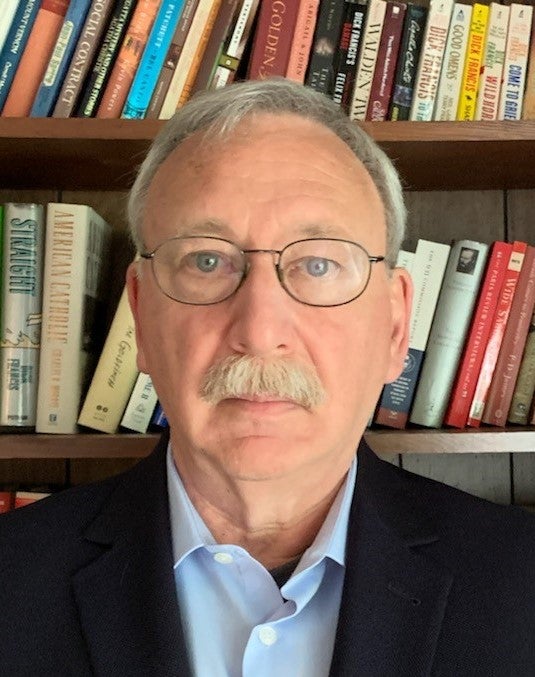
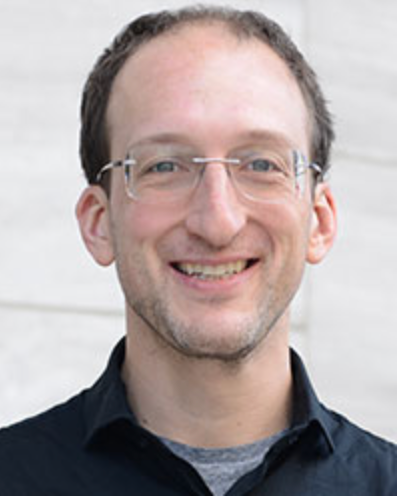
Current faculty, subject to change
Steven M. Becker
Professor of Epidemiology, Biostatistics, and Environmental Health
Old Dominion University
Steven B. Goldman
Instructor
Harvard T.H. Chan School of Public Health
Ian Scott Hamilton
Chief, Diagnostic Physics, Corporate RSO
Baylor Scott & White Healthcare
Angela Ellen Leek
Founder/Principal Health Physicist
Quantum Radiation Solutions
Michael Philip Short
Class of ’42 Associate Professor of Nuclear Science and Engineering Associate Director, Plasma Science and Fusion Center
Nuclear Science and Engineering
Massachusetts Institute of Technology
November 2026
The Inn at Longwood Medical
342 Longwood Avenue
Boston, MA 02115
TEL: (617) 731-4700 FAX:
$249/night + 16.45% tax
For anyone visiting Boston’s Longwood Medical and Academic Area, there's no better place to stay than The Inn at Longwood Medical. A 5 minute walk to the Program, this inviting hotel in Boston, MA provides safe, comfortable, and convenient accommodations and facilities. Our long history of hosting medical professionals, patients, and their families means we know how to provide you with everything you need for a pleasant stay. Enjoy the comforts of home and the convenience of an ideal location at Longwood Hotel in Boston, MA.
Additional amenities included in rate:
- Complimentary access to Fitness Center
- Complimentary access to High-Speed Internet in Guest Rooms
- Complimentary In-Room Keurig Coffee
- Waived Hotel Facility Fee
A limited number of rooms have been reserved at a reduced rate until October 12, 2026. These rooms are available on a first-come, first-served basis. Please be advised that hotels in the Boston area can sell out very quickly. We recommend making your hotel reservation as soon as you receive registration and payment confirmation. Please mention group code HREM1126 and Harvard T.H. Chan School of Public Health to receive the special rate.
Harvard T.H. Chan School of Public Health will grant 3.2 Continuing Education Units (CEUs) for this program, equivalent to 32 contact hours of education. Participants can apply these contact hours toward other professional education accrediting organizations.
The American Academy of Health Physics will grant 36 Continuing Education Credits for completion of this course.
All credits subject to final agenda.
Take this program to earn a Certificate of Completion, or complete multiple to earn the Environmental Health Certificate of Specialization.
Certificate of Specialization
Earn an Environmental Health Certificate of Specialization
Take this program to earn a Certificate of Completion, or take 3 to earn a Certificate of Specialization. Learn more here.