Invasive malaria-carrying mosquito widens spread in Africa
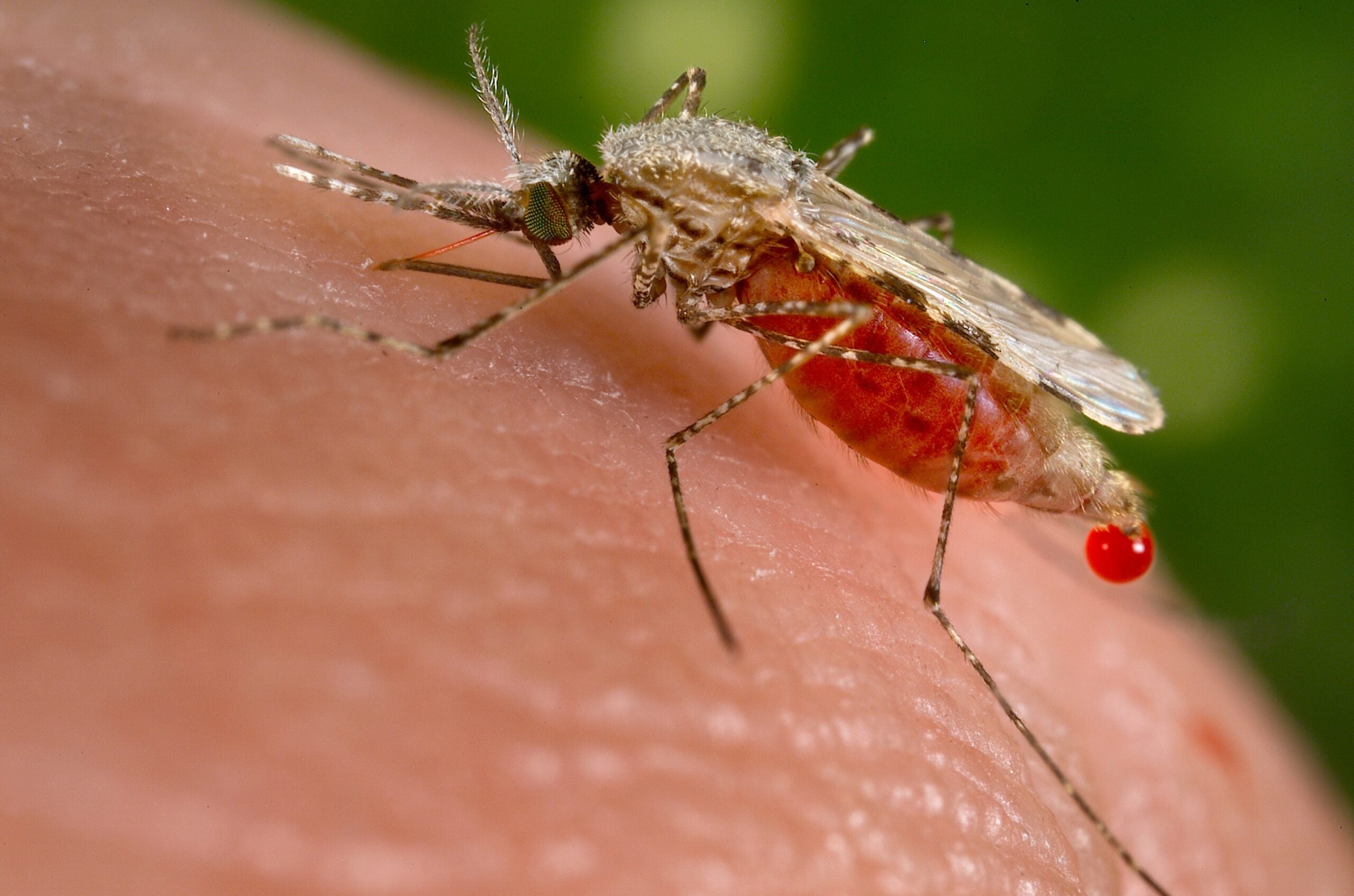
Anopheles stephensi, a mosquito species non-native to Africa, is spreading across the continent, complicating malaria-control efforts. How big a threat are these mosquitoes, and how prepared are African public health systems to handle yet another malaria vector? Flaminia Catteruccia, Irene Heinz Given Professor of Immunology and Infectious Diseases at Harvard T.H. Chan School of Public Health and Howard Hughes Medical Institute investigator, weighs in.
Q: What do we know about Anopheles stephensi introduction to Africa, and what are these mosquitoes’ notable features?
A: Anopheles stephensi are a major mosquito species in South Asia and the Middle East. They were first detected in Africa in 2012, in Djibouti, whose port serves as a major center for trade with Asia, Europe, and the Middle East. That’s very likely how Anopheles stephensi made their way to the Horn of Africa—via ships carrying goods to the Port of Djibouti. Scientists have sequenced the genomes of those Anopheles stephensi mosquitoes found in Africa and found strong evidence that they originated from Pakistan or Afghanistan.
Since their initial colonization in Djibouti, these mosquitoes have been exploring the continent in different directions, east to west. They’ve colonized elsewhere in the Horn of Africa (Ethiopia, Somalia), in East Africa (Sudan, Kenya), and in West Africa (Ghana, Niger, Nigeria).
Anopheles stephensi mosquitoes belong to the same subgenus as many other species native to Africa and therefore share several similarities. For example, some studies have shown that they, like many of their Anopheles counterparts, have genetic markers associated with resistance to insecticides—meaning they’re more likely to survive exposure to a key malaria-control tool. That said, Anopheles stephensi have some unique characteristics that are important. Unlike other Anopheles mosquitoes, which tend to thrive exclusively in and around the wild, Anopheles stephensi can survive well in urban environments. This is a highly invasive species that can adapt to foreign contexts, including cities, which means that malaria could proliferate in massive African metropolises which heretofore have been largely spared from the disease. Anopheles stephensi also behave less predictably than other species. Most Anopheles mosquitoes tend to bite people inside their homes; this species also bites people outdoors, leaving us with fewer tools to control them and lessening the effectiveness of bed nets.
Q: Have we seen rates of malaria increase in Africa since the introduction of Anopheles stephensi?
A: Yes—but the extent to which these mosquitoes are contributing to increased malaria rates remains an open question. Over the last 14 years, so much has happened across the continent of Africa that has slowed down its health systems, from geopolitical events to the COVID-19 pandemic. So the relationship between Anopheles stephensi’s arrival and higher malaria transmission may not be causal; it may be an association that still needs to be fully proved. That said, researchers in Ethiopia published a study confirming that Anopheles stephensi mosquitoes found in the country were indeed carrying malaria parasites infectious to humans. And they found evidence of mosquitoes from this species in the households of malaria-infected people in Dire Dawa, Ethiopia’s second-largest city. So there are certainly reasons for suspicion and concern. But we still need to answer many questions.
Q: What malaria control strategies seem promising against Anopheles stephensi?
A: There are a couple of genetic technologies that may have the potential to eliminate entire Anopheles stephensi populations. Scientists are working on developing gene drive technology that would allow them to release genetically altered mosquitoes into the wild and have the alterations spread rapidly through the population. One alteration could be deactivating mosquitoes’ fertility genes, which if successful could lead to population elimination. Similarly, another method being tested now in Djibouti is the release of thousands of male mosquitoes genetically altered such that, when they reproduce, they only produce male offspring. This has two benefits. In the short term, malaria rates would go down as the mosquito population becomes heavily male biased, because males are incapable of transmitting malaria (the disease-causing Plasmodium parasite is only transmitted by females). In the long-term, as the population grows more and more male biased, it eventually collapses.
In my lab, we’ve been working on a different strategy based on incorporating antimalarial compounds on bed nets to rid mosquitoes of malaria parasites—curing them, rather than killing them. We’ve been testing these compounds in other Anopheles species that bite indoors, but antimalaria-treated nets may be less effective for Anopheles stephensi, since they bite people outside, too. So we’ve been thinking about where outdoors we could apply this strategy to reduce transmission by this invasive species.
Q: As a malaria researcher, how alarmed are you by these mosquitoes’ spread in Africa?
A: Another insecticide-resistant vector for malaria—especially one that can impact cities—is certainly worrying. How dramatically it changes the landscape of transmission in Africa remains to be seen. I tend toward a measured response: Yes, this is a serious issue, but malaria has always been serious. It’s just an additional problem for us to solve.
It’s also, however, a problem we very well could have avoided. It’s well-known that Anopheles stephensi are highly invasive, so it was probably only a matter of time until they found new territories to settle in. And based on known routes of maritime traffic, the Horn of Africa was a high probability candidate. So this all very likely could have been predicted and then prevented, had we invested more in surveillance. We could have spotted these mosquitoes very early after they arrived in Africa if we had systems set up to trap mosquitoes at likely ports of entry like the Port of Djibouti, then analyze them in laboratories. This is expensive—it requires manpower and funding—but I’d rather prevent a problem like this rather than running after it. There’s no reason why Anopheles stephensi can’t now move on to the next nearest continent—Europe—via certain trade routes. If I was working on public health surveillance in Europe, I would start implementing programs to be able to detect Anopheles stephensi right now.
Learn more:
New malaria control strategy efficiently kills parasites in the mosquito, could lead to more effective bed nets (Harvard Chan School news)
Malaria is gaining ground—but researchers are developing promising new solutions (Harvard Chan School news)