Hybrid MPH in Epidemiology program builds skills, community
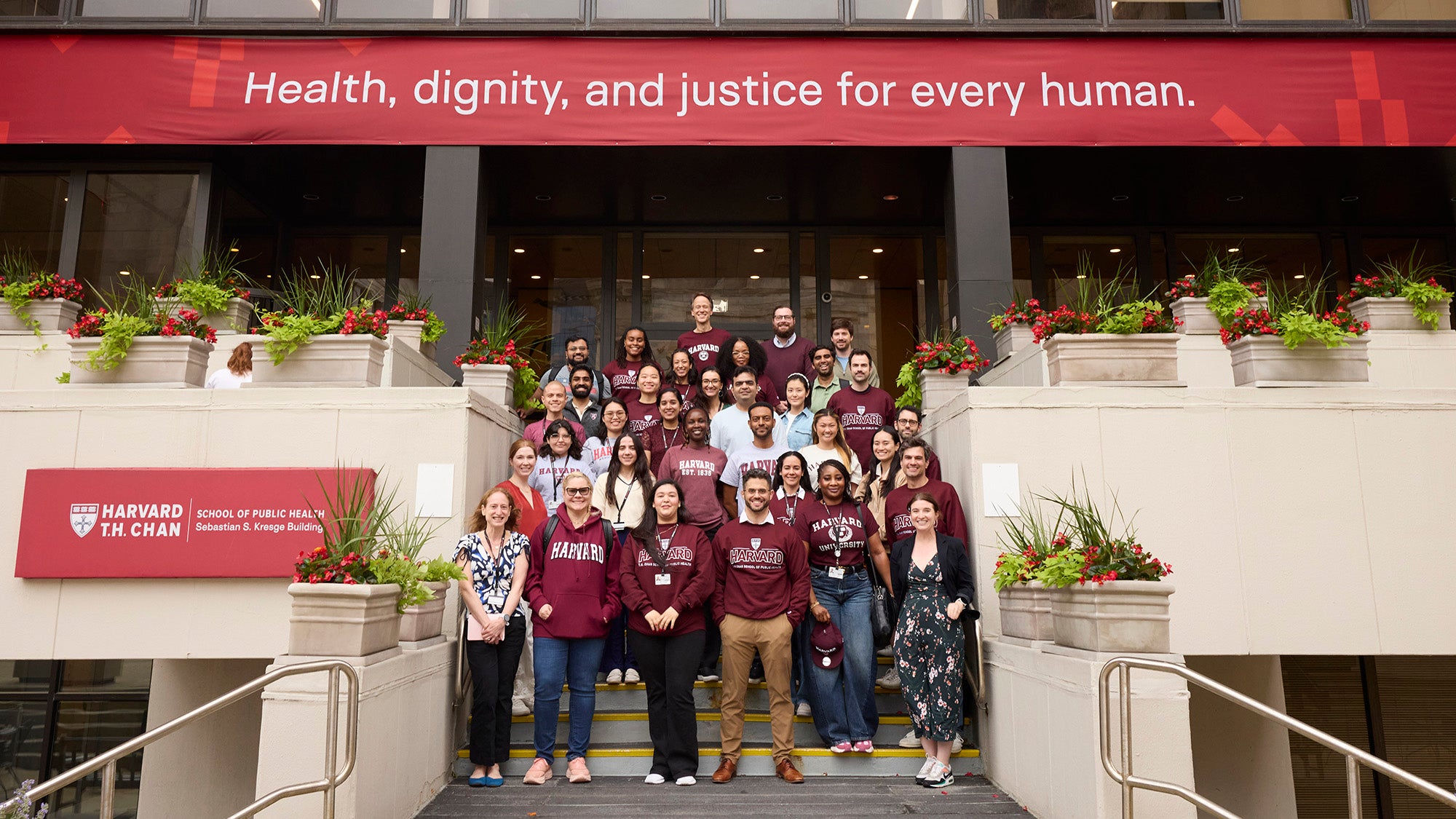
When Harvard T.H. Chan School of Public Health launched its part-online, part in-person MPH in Epidemiology (MPH-EPI) program in 2015, it was considered an experiment. At the time, Harvard didn’t have any online degree programs.
“It was a little bit like, ‘Can Harvard do this online thing? Is it going to be okay?’” recalled Heather Baer, associate professor in the Department of Epidemiology, who has taught in the program since it began and served as faculty director since 2019.
Now, more than a decade later, Baer and assistant director Stephanie Lemoine say the two-year program is firing on all cylinders, enrolling roughly 35-40 students annually who want to build their public health skills while continuing to work.
“The students who come to our program are very much attracted to the hybrid model,” said Baer. “We periodically have conversations about whether we should change the in-person part of the program, for instance decrease it. But we hear again and again from our students how much they love the on-campus time.”
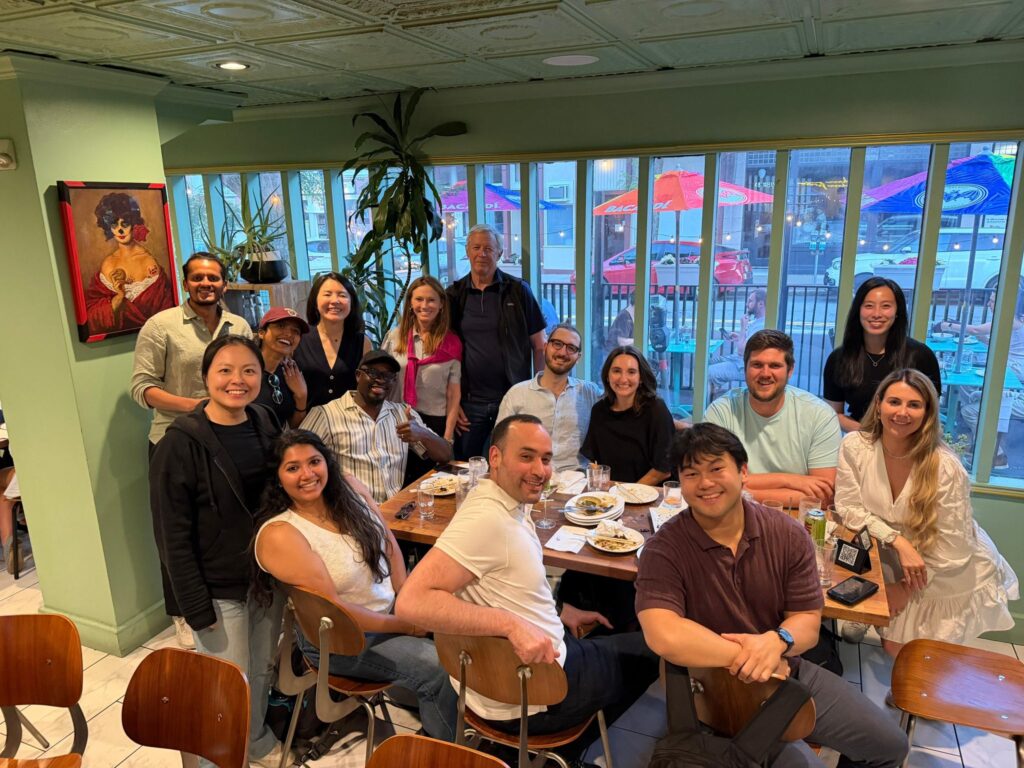
The in-person session “is everyone’s favorite part of the program,” said student Martin Ekiti, who just finished his first year. “There’s a lot that we learn in those [first] three weeks. There’s a lot of group work, so it really helps to actually spend time with people. We also share meals and do social events together.”
Ekiti lives in Tulsa, Oklahoma with his wife—a physician completing her residency in that city—and three kids. He chose the Harvard Chan program in part so that he could remain with his family. “It’s the perfect balance of on campus and off,” he said.
A flexible experience
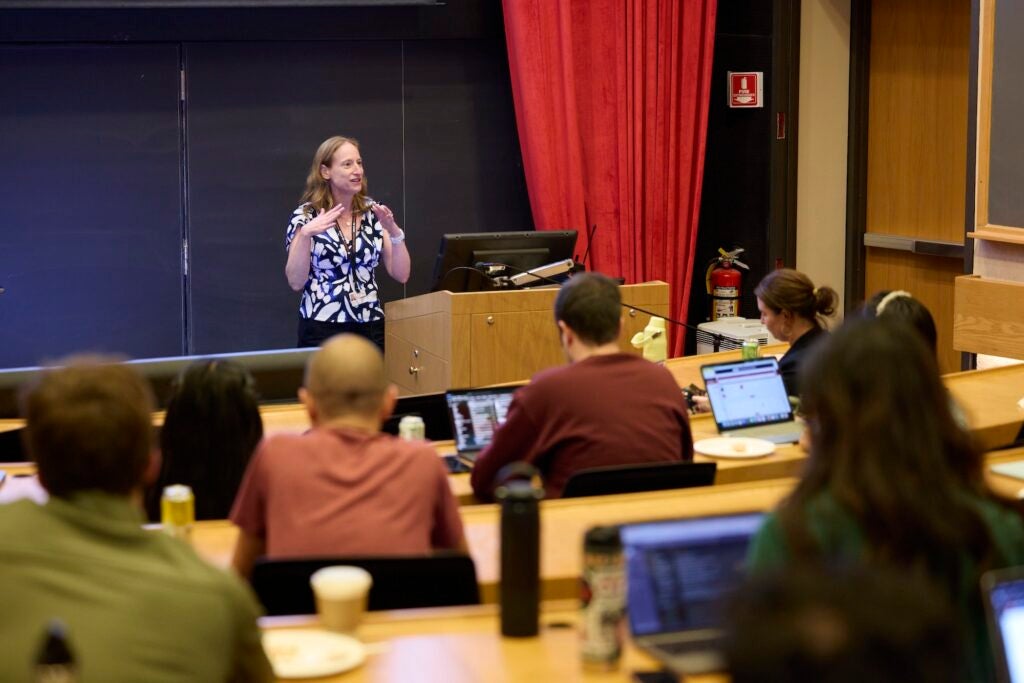
MPH-EPI students come to campus in June for a three-week intensive session in each of their first and second years. During the first three-week session, students take an intensive introductory course in biostatistics and epidemiology and connect with faculty and fellow students. During the second in-person session, they take required courses on ethical and regulatory issues in public health and on public health policy and politics, as well as several electives.
For the online component of the program, they take additional required courses—on advanced methods in epidemiology and on topics including health economics and determinants of health—and they choose from a broad range of electives in areas such as meta-analysis, decision science, machine learning, implementation science, and public health leadership. The students also complete a year-long practicum culminating with a capstone project. They return to campus in the spring of their second year to present their projects at a practicum symposium and to attend graduation.
Most students in the program are medical doctors or other healthcare professionals, according to Lemoine. But others come from a wide range of backgrounds. Past students have included a former math teacher, an architect, and a lawyer. And every year there have been a few from the business world. Noted student Ajaree Betz, “Because we come from different professional backgrounds, every discussion brings different perspectives, so we have very rich conversations in our classes.”
Those conversations continue over the course of the program. Students are “constantly communicating on WhatsApp,” said Lemoine. “They form study groups. They really learn from one another in addition to learning from the faculty.”
Learning study design
Ekiti, a physician originally from Cameroon, has worked in family medicine and occupational health. He also founded a Cameroon-based organization aimed at improving health access in underserved areas of sub-Saharan Africa—which is what got him thinking about public health training. “In my mind, to influence health beyond the clinic was to do public health,” he said.
Ekiti eventually transitioned to the pharma-biotech industry. He is currently global medical officer at Nova Biomedical, which makes point-of-care diagnostic devices, such as handheld meters to measure blood levels of glucose and creatinine. In that role, too, he has realized that it would be helpful to have public health skills—for example, in how to design epidemiological studies, since his job requires him to evaluate the impact of particular devices on patient outcomes.
Ekiti said he’s been “very pleasantly surprised” by the MPH-EPI program and has “learned a lot more than I thought I would.” He noted a couple of examples. One was that he learned what factors to consider in choosing one type of study design over another. He also came away with a greater understanding of a statistical technique called multivariate logistic regression, in which study results are analyzed controlling for confounding. “While logistic regression is a common statistical method I had heard about and even used before, this program delved into the mechanics of the process, giving me a better appreciation of why epidemiologists rely on this method.”
Skills for real-world research
In her native Thailand, Betz earned a bachelor’s in nursing, studied neuroscience, and taught nursing at the college level. She then came to the U.S. and got a master’s in nursing at Duquesne University and hoped to eventually earn a PhD. But that plan was put on hold after she and her then-husband moved to California and started a family. After her kids became more independent she decided to return to her original plan, earning her doctorate in nursing from the University of California, San Francisco in 2024.

Even after her degree, though, she wanted a deeper understanding of epidemiologic methods and population health research—which is what led her to the MPH-EPI program.
The hybrid schedule enables Betz to continue working in several roles. At Thailand’s Ubon Rajabhat University, she helps facilitate international research collaborations. She also reviews manuscripts for Thailand’s Ministry of Public Health. And, through an internship funded by the National Institutes of Health’s National Cancer Institute—unrelated to the MPH-EPI program—she works with a cancer hospital in her hometown of Ubon Ratchathani to develop an epidemiologic profile of breast cancer patients, with the goal of improving outcomes.
She is already applying skills learned in the MPH-EPI program to real-world research. For her practicum, for example, she is exploring whether cancer survivors living in U.S. states with higher temperatures face higher rates of kidney disease than those living in cooler states. Cancer treatments can strain the kidneys, and “when you layer chronic heat exposure on top of that physiological burden, the risks can compound in ways that are not yet well understood at the population level,” she said.
Betz said that Harvard Chan’s program has exceeded her expectations. “It’s very challenging and rigorous but the faculty is really invested in the students,” she said. She is also grateful for her fellow students. “The friendships we’ve built are going to last long after graduation,” she said. “It’s a very loving community.”