How faith leaders and public health leaders can address homelessness—together
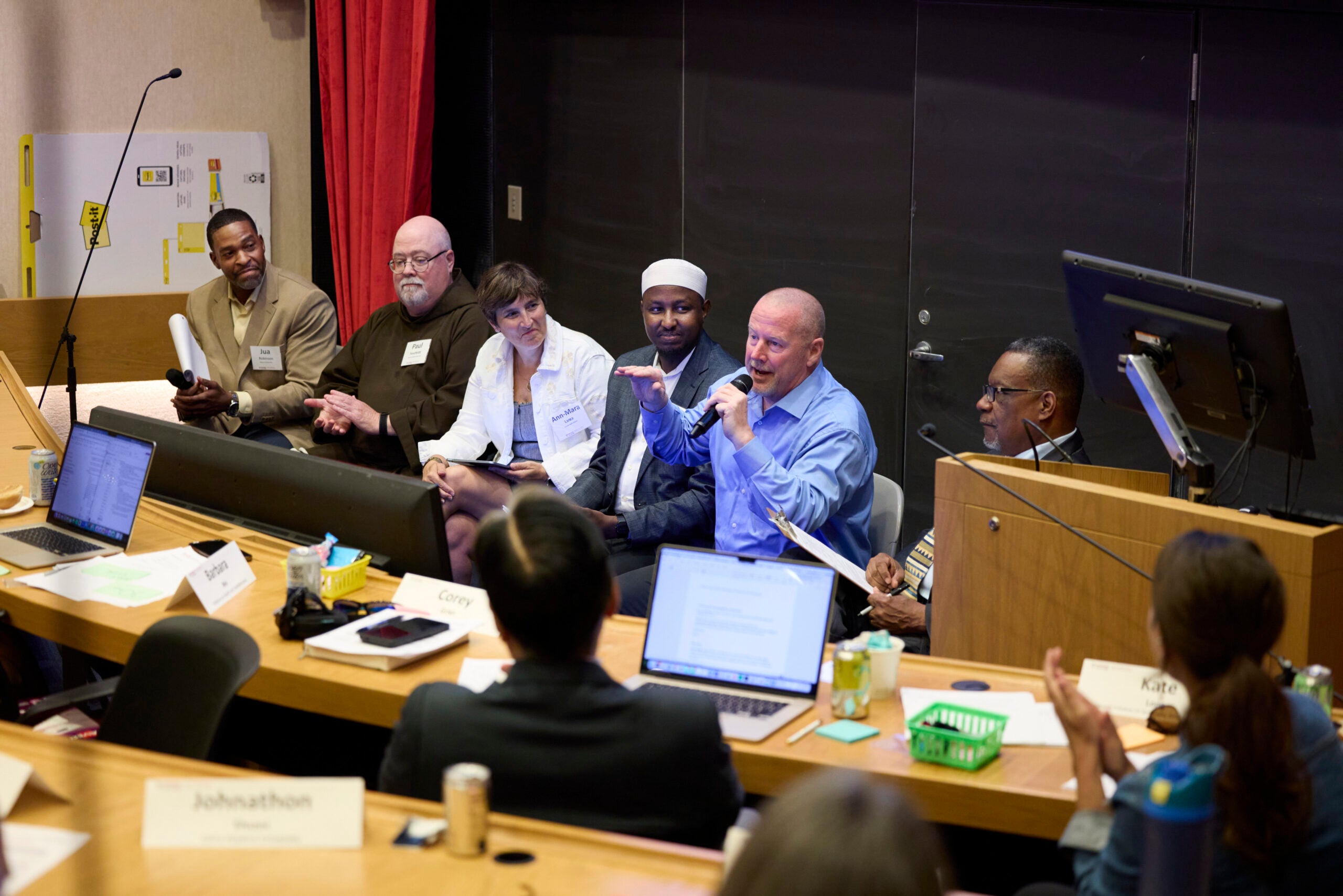
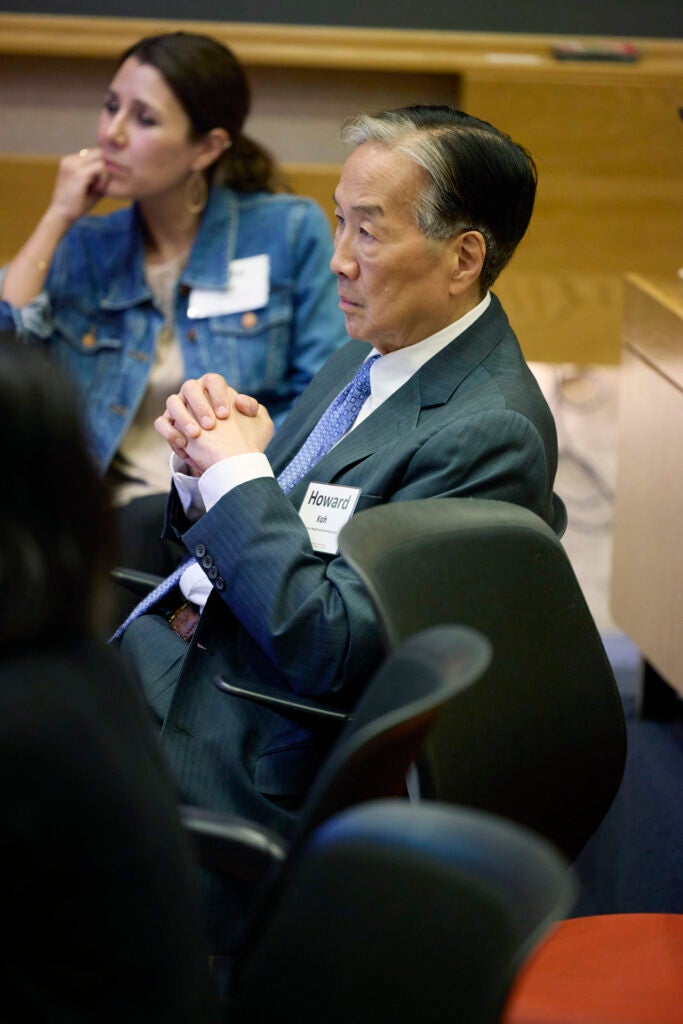
In June, Harvard T.H. Chan School of Public Health’s Initiative on Health and Homelessness (IHH) partnered with the Harvard Human Flourishing Program to host what may be the nation’s first-ever academic conference on the intersection between faith, public health, and homelessness. Attended by 70 public health researchers, faith leaders, clinicians, policymakers, and community leaders from around the country, the conference covered how leaders from each field can work together to more effectively address the U.S. homelessness crisis. Below, Howard Koh, Harvey V. Fineberg Professor of the Practice of Public Health Leadership and chair of IHH, discusses the importance of both health care and spiritual care for unhoused populations.
Q: In what ways are public health and spirituality complementary disciplines?
A: Health doesn’t start in a doctor’s office but rather where people live, labor, learn, play, and pray. We in public health, medicine, and academia at large generally overlook the “pray” part, even though, for many, that is fundamental and sacred. For millennia, health was always viewed as involving connection between body and soul. But over the last few centuries, those two dimensions have been steadily separated, such that health leaders today rarely even acknowledge issues of spirituality—which I’m defining as ultimate meaning, purpose, transcendence, and connection to something bigger, whether accessed through religion or other means. Recognizing and respecting spiritual dimensions in people’s lives should be part of any discussion about advancing and protecting health. We have to attend to both people’s physical health and their inner lives—and understand how the two influence each other.
This is especially true when it comes to caring for people experiencing homelessness. People on the street have, in addition to very visible physical suffering, spiritual distress that may not be as visible. But, on the other hand, many can demonstrate extraordinary resilience, rebuild their lives despite unspeakable trauma, and make important contributions to helping their neighbors. Health groups and faith groups can be powerful partners in moving toward a shared mission in addressing and ending homelessness. On the public health side, we can bring greater attention to issues of clinical care, data, and policy, while faith groups can encourage deeper sharing of beliefs and provide community, connection, and support amid great uncertainty. Each perspective can contribute to more effective systems of care and prevention to help people fulfill universal human needs of safety, support, wellness, connection, belonging, meaning, and purpose in their lives.
Q: What are some practical ways faith leaders and public health can leaders work together to address homelessness?
A: Faith leaders are often the most trusted leaders in their communities. We in public health need to recognize that and learn from them, especially at a time when trust in our institutions has sharply declined. I saw how the faith and health worlds can collaborate when I served in the Obama administration as assistant secretary for health for the U.S. Department of Health and Human Services (HHS). It was then that I learned that, under President George W. Bush, offices of faith-based partnerships were established in the White House and in every federal agency. After I came on board as assistant secretary, I helped HHS and these faith organizations work together to enroll people in health insurance after the passage of the Affordable Care Act as well as increase vaccination rates in their communities.
Specific to addressing homelessness, faith leaders are often the first that people turn to in a time of crisis. If someone is about to be evicted or has endured domestic violence that pushes them out of the house, it’s often the pastor, Imam, or the rabbi who is consulted first before any health professional. So faith leaders can be part of an early warning system to identify people at risk of homelessness. Likewise, people who are already unhoused will often show up on church doorsteps to ask for help. Faith leaders can collaborate with community health leaders and government health departments in these situations to support such vulnerable people and connect them with immediate and long-term support and resources.
Nationally, faith-based organizations provide at least 30% of emergency shelter beds for families—in some cities, that number is closer to 60%. Their work can involve, in addition to providing shelter and food, spiritual support. Many religious institutions may individually be doing heroic work to help those on the street but are not coordinated to other faith or health organizations in any systematic way. At our conference, we heard about the Boston Public Health Commission’s initial efforts to map the city’s faith organizations’ work and offerings around homelessness, creating a guide for all involved organizations to see the big picture on current activities and identify potential opportunities for collaboration.
Meanwhile, public health institutions—particularly schools of public health—can use their convening power to offer faith organizations and other groups opportunities to come together to make connections, learn from each other, promote research and education, and strengthen a common mission of service for the most underserved people in our society.
Q: What research is being conducted on faith, health, and homelessness?
A: IHH and the Human Flourishing Program have been spearheading critical research on faith and public health and the status of bringing these dimensions together on the ground. Kate Long, a research scientist with the Human Flourishing Program, led our 2024 study of how spirituality is currently being integrated into public health and medicine in the U.S., and what opportunities exist to integrate them more broadly and deeply. More pertinent to homelessness, she has also launched some early research collaborations with a national network of rescue missions to assess their current capacity and impact in delivering services in shelters.
Our research team also recently published a major meta-analysis in JAMA Psychiatry examining the relationship between spirituality and hazardous alcohol and drug use. The study documented the protective effect that spirituality has against substance misuse—notably, that spiritual practices reduced individuals’ risk of dangerous alcohol and drug use by 13%. That figure rose to 18% for those with greater than weekly religious service attendance. These results have implications for people experiencing homelessness and struggling with substance misuse who seek to rebuild their lives.
Currently, IHH is embarking on a new pilot research study focusing on people with lived experience of homelessness to learn more about practices and policies that can accelerate their exit from homelessness, and the potential role of faith, meaning, and purpose in doing so.