Hospital closures on the rise in both rural and urban areas—particularly among safety-net hospitals
For immediate release: October 8, 2026
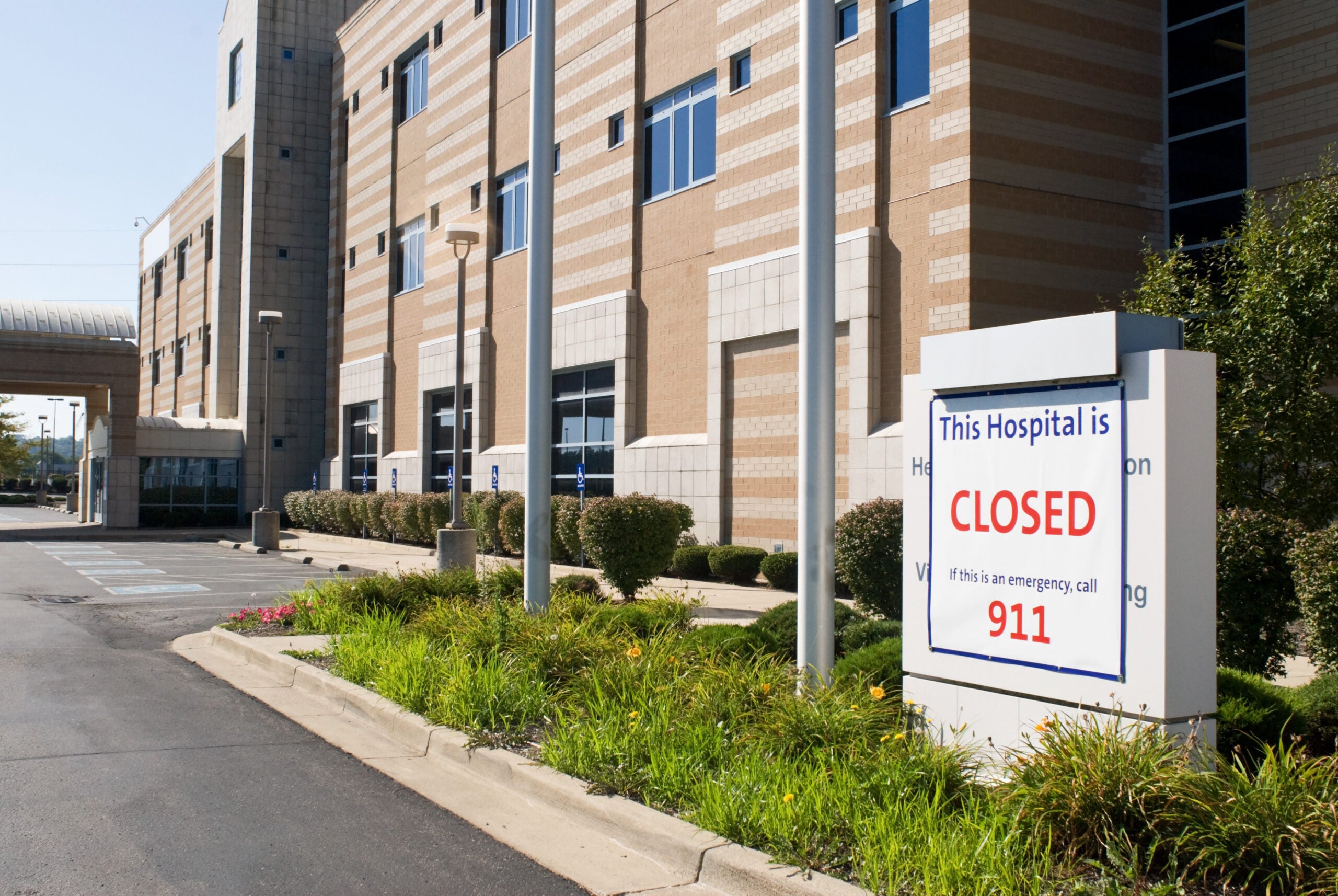
Boston, MA—More hospitals across the U.S. are closing than opening, and urban hospitals are closing at the same rate as rural ones, according to a new study led by Harvard T.H. Chan School of Public Health. Further, the hospitals that close are more likely to be those serving socially vulnerable communities.
The findings were published in a research letter in JAMA on Oct. 8.
Since the passage of the “One Big Beautiful Bill Act” that included changes to Medicaid policy, hospitals have been bracing to lose billions in funding, and concern has been growing over potential hospital closures. Most of this concern has been centered on rural hospitals, such that Congress created the Rural Health Transformation Program, providing billions in state grants for these hospitals. But whether hospital closures are actually concentrated in rural areas has been little studied and remains largely unknown.
The researchers sought to fill this gap and provide a current, comprehensive picture of U.S. hospital closures and openings. To do so, they analyzed data from the American Hospital Association annual survey, characterizing hospital closures and openings occurring from 2010 to 2025.
They found that hospital closures increased by 4% year over year, and openings decreased 3% year over year, with 432 hospitals closing and only 216 opening. The result was a net loss of 216 hospitals and more than 24,000 beds. There was no significant difference between rural and urban hospital closure rates.
The researchers also observed that the hospitals that more often closed were for-profit, small, and safety-net, and those in the most socially vulnerable counties—in both rural and urban areas. Safety-net hospitals and those serving a high number of Medicaid patients rarely opened.
“Many policymakers have been treating hospital closures as a rural problem, but our data show it’s a national problem,” said corresponding author Thomas Tsai, associate professor of health policy and management and co-director of the Healthcare Quality and Outcomes Lab. “We must shift away from only asking ourselves how we can save rural hospitals, and start asking: How do we protect access to hospital care for vulnerable communities, wherever they are?”
Article information
“Longitudinal Trends and Characteristics of Hospital Closures and Openings,” Joshua E. Calianos, Julia H. Song, E. John Orav, Jose F. Figueroa, Thomas T. Tsai, JAMA, October 8, 2026, doi: 10.1001/jama.2026.18260
The research was supported by the Commonwealth Fund.
Orav reported receiving grants from the Office of the Assistant Secretary for Planning and Evaluation. Figueroa reported receiving grants from the National Institute on Aging, the National Institute of Nursing Research, the Department of Veterans Affairs, the National Institutes of Health, the Agency for Healthcare Research and Quality, the SCAN Foundation, the Robert Wood Johnson Foundation, and Arnold Ventures, and receiving personal fees from Project Hope (for editorial services for Health Affairs Scholar). Tsai reported receiving grants from the Department of Veterans Affairs and Arnold Ventures and receiving personal fees from Johnson & Johnson. No other disclosures were reported.
Visit the Harvard Chan School website for the latest news and events from our Studio.
For more information:
Maya Brownstein
mbrownstein@hsph.harvard.edu
###
Harvard T.H. Chan School of Public Health is a community of innovative scientists, practitioners, educators, and students dedicated to improving health and advancing equity so all people can thrive. We research the many factors influencing health and collaborate widely to translate those insights into policies, programs, and practices that prevent disease and promote well-being for people around the world. We also educate thousands of public health leaders a year through our degree programs, postdoctoral training, fellowships, and continuing education courses. Founded in 1913 as America’s first professional training program in public health, the School continues to have an extraordinary impact in fields ranging from infectious disease to environmental justice to health systems and beyond.