How easing regulations on heavy metals air pollution could impact health
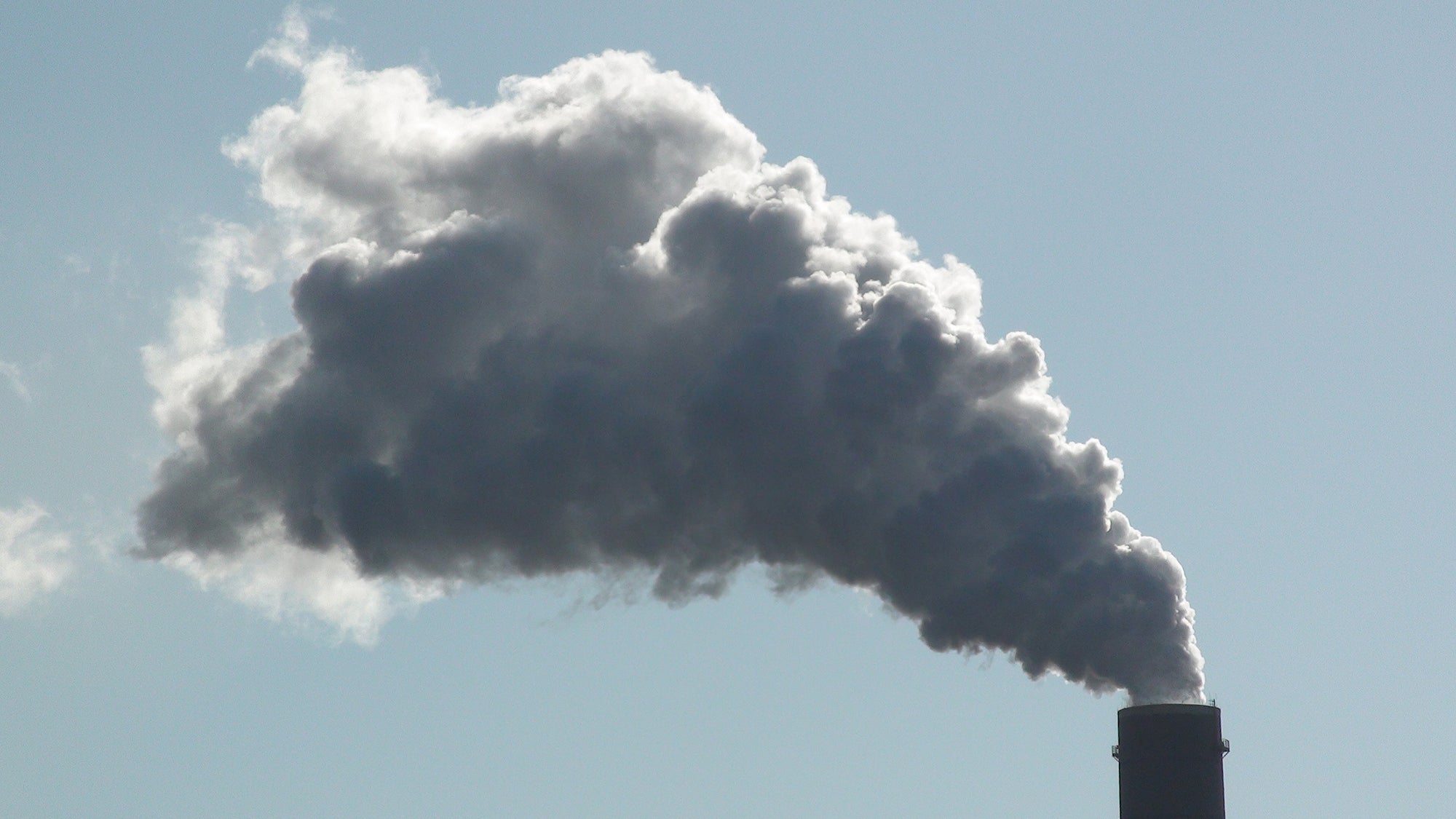
A recent repeal of federal environmental regulations aimed at limiting the emission of mercury and other heavy metals from power plants could have serious health impacts, according to experts from Harvard T.H. Chan School of Public Health.
In a March 20 article in JAMA, Mary Rice, Mark and Catherine Winkler Associate Professor Environmental Respiratory Health and director of the Center for Climate, Health, and the Global Environment (C-CHANGE), and Elsie Sunderland, a professor of environmental science and engineering in Harvard Chan School’s Department of Environmental Health, were among several scientists who warned about the health consequences of the U.S. Environmental Protection Agency’s decision to loosen air pollution standards for mercury, cadmium, chromium, lead, and nickel.
Rice noted that air pollution can lead to inflammation, airway constriction, blood clotting, and cardiac stress very soon after exposure. “These aren’t just long-term theoretical risks, they’re acute physiologic responses,” she said. “If protections are weakened, we can expect to see near-term changes in these kinds of outcomes.”
The article noted that mercury is considered uniquely dangerous because it’s highly volatile, bioaccumulates up the food chain, and is a potent neurotoxin that can harm the brain and nervous system. Prenatal exposure has been linked with chronic impairment in cognitive function, memory, and attention.
“There’s a lot of literature that shows that just like lead, any level of mercury exposure will lead to some neurodevelopmental impairment and that that persists into adulthood,” said Sunderland.
In February, the EPA repealed amendments that were made in 2024 to the Mercury and Air Toxics Standards (MATS) rule. MATS, instituted in 2012, set emissions limits for hazardous air pollutants from coal-fired power plants; the 2024 amendment had closed a loophole that had allowed plants burning a low-grade form of coal to emit higher levels of mercury.
The article noted that the EPA’s repeal of the MATS amendments is part of a larger trend toward deregulation. Recent moves have included the repeal of the 2009 “endangerment finding” that set emissions limits on vehicles; an attempt to pull back regulations on per- and polyfluoroalkyl substances (PFAS); and a decision to no longer consider the health-related monetary benefits of reducing air pollution.
Said Sunderland, “There’s a lot of movement here in a direction that is really, really bad for public health.”
Read the JAMA article: Why the EPA’s Reversal on Heavy Metal Air Pollution Is Cause for Concern