Extreme heat: Who’s most at risk and ways to stay safe
When it comes to extreme heat, certain groups—and people living in certain parts of the U.S.—are more vulnerable to health impacts, according to Harvard T.H. Chan School of Public Health’s Amruta Nori-Sarma.
Nori-Sarma, assistant professor of environmental health and population science, spoke about the dangers of extreme heat and strategies for staying safe in a wide-ranging interview on a July 23 episode of the NPR radio show 1A.
“Extreme heat means something different if you’re in the northern part of the United States compared with the southern part,” she said. “Some of that is about adaptation … in different communities.” Homes in the South, she noted, may be more likely to be air conditioned, “so ambient temperatures might have less of an impact until the temperature gets much more extreme.”
Other topics Nori-Sarma addressed included:
The difference between heat exhaustion and heat stroke. “Heat exhaustion is where people feel tired. Your body is no longer able to sweat, which is one of the primary ways that we cool off when it’s very hot outside. You can generally treat it at home with hydration,” Nori-Sarma said. “By comparison, heat stroke looks very similar to a regular stroke. It’s dizziness, it’s changes in your ability to speak … [and] in your cognitive function.” For heat stroke, it’s a good idea to visit an emergency room or urgent care facility “to get your core body temperature cooled down,” she said.
How extreme heat impacts people with chronic diseases and mental health conditions. “We know that people who have underlying, for example, cardiovascular diseases or respiratory illnesses and people who have pre-existing mental health conditions may be particularly susceptible when it’s very hot outside,” Nori-Sarma said. “The same is likely true of people who are experiencing the symptoms of long COVID.”
Public health interventions during periods of extreme heat. Nori-Sarma stressed the importance of opening cooling centers and outdoor spaces with cooling activities, such as splash pads and public pools, and ensuring wide availability of drinking water and shaded spaces.
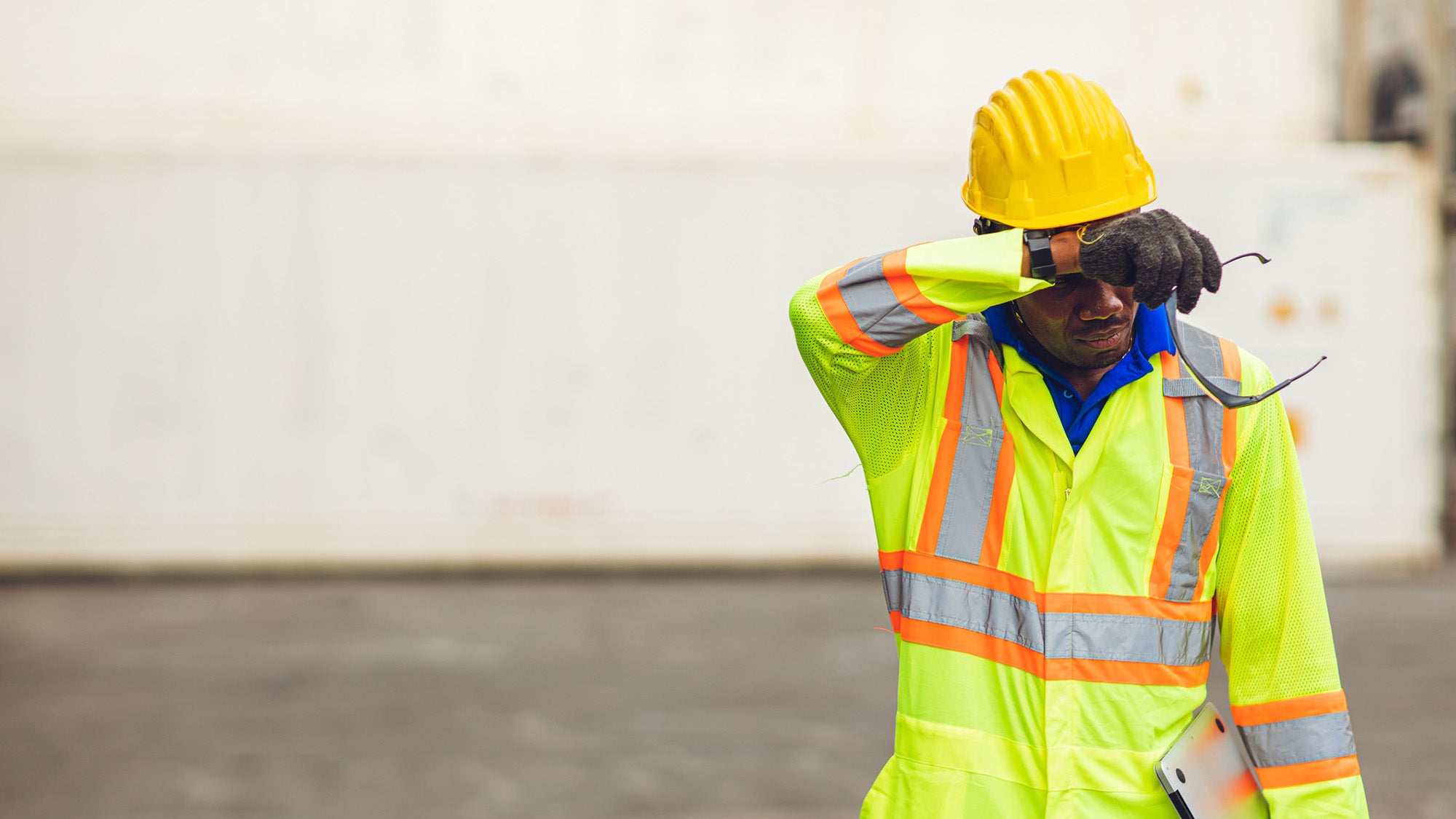
The importance of water breaks for outdoor workers. 1A host Niala Boodhoo noted that efforts to require water breaks for workers have failed in some states—for instance, in Texas, in 2023, Republican Gov. Greg Abbott approved a law eliminating 10-minute water breaks for workers, saying that it bogged down business. Nori-Sarma’s response: “Yes, it could be disruptive to have a 10-minute water break, but it would also be disruptive to have a worker who experiences heat stress or heat exhaustion and has to have a more severe medical intervention as a result,” she said. “I think it’s important for business to take those trade-offs into consideration.”
What individuals or communities can do to help during periods of extreme heat. Nori-Sarma recommended that people use social networks to stay in touch with vulnerable people in their circles, such as the elderly or people taking medications that could impact their ability to regulate during heat waves.
Listen to the 1A interview or read the transcript: Fighting extreme heat in 2026
Learn more
Amid extreme heat, ‘know your risk and check on your neighbors,’ say experts (Harvard Chan School news)