Can hip fracture risk be reduced at molecular level? Maybe, study finds.
Certain metabolites—small molecules that are made or used when the body breaks down food and that reflect a person’s metabolic activity—are associated with reduced risk of hip fracture, according to a new study led by researchers at Harvard T.H. Chan School of Public Health. The findings suggest potential ways to help prevent hip fracture—a major cause of morbidity and mortality among seniors—on a molecular level.
The study was published Feb. 26 in eBioMedicine. Zhiyuan Wu, postdoctoral research fellow in the Department of Nutrition, was the corresponding author.
Recent studies have examined the relationship between osteoporosis and metabolomic profiles—a snapshot of the metabolites circulating in an individual’s blood. How metabolomics factor into risk specifically of hip fracture remains unknown, however. To fill in this gap, the researchers conducted multiple analyses of the metabolomic profiles of adults enrolled in the Nurses’ Health Study and the Health Professionals Follow-Up Study. They examined 653 metabolites in the blood of 1,234 participants, half of whom had experienced a hip fracture during 15 years of follow-up.
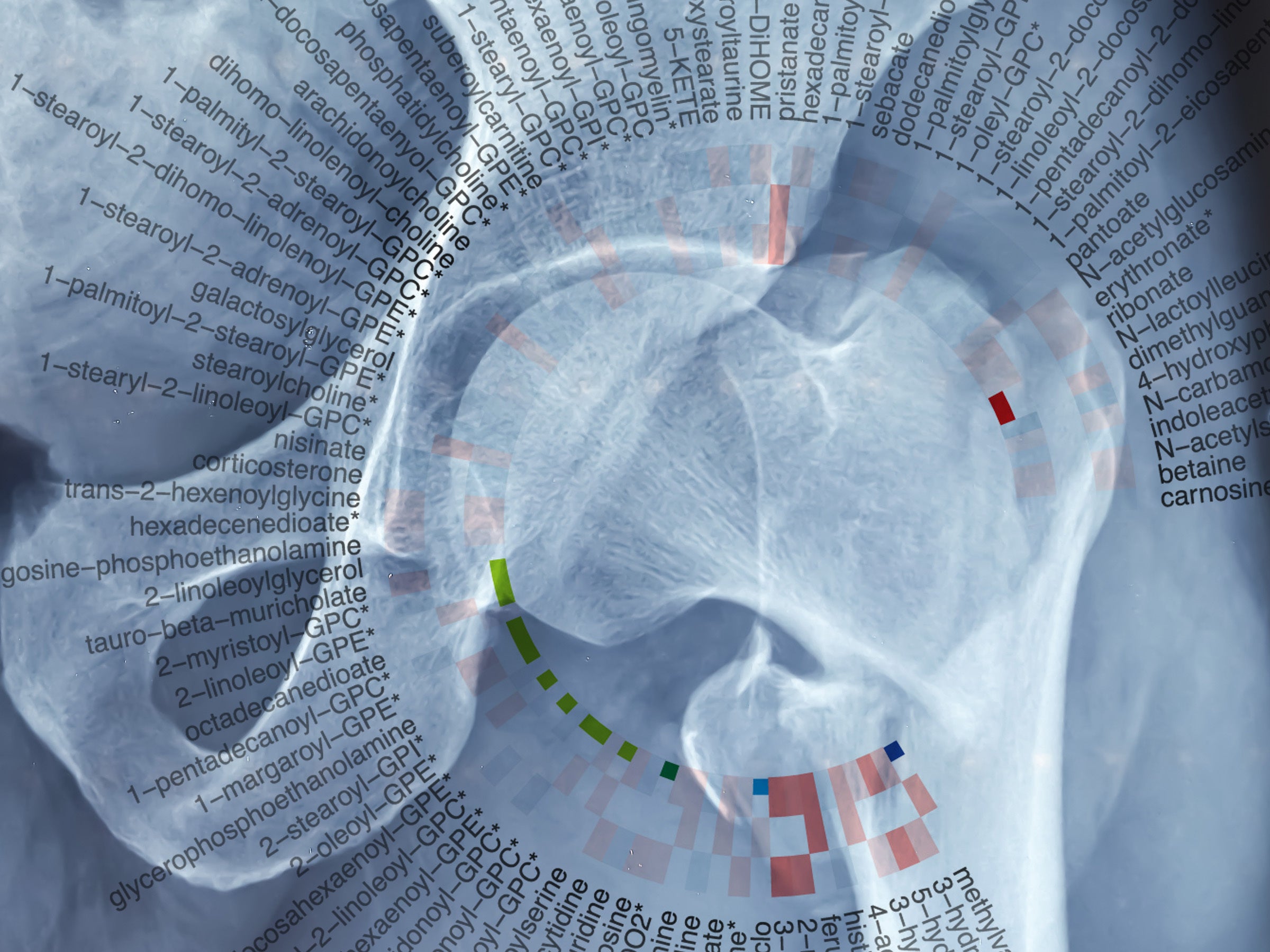
The study found five phospholipids—types of lipid molecules—that reduced the risk of hip fracture. Phosphatidylcholine, a type of phospholipid found in foods including eggs and soy, had an especially protective effect, as did a metabolite called 1-stearoyl-2-dihomo-linolenoyl-GPC.
“These findings highlight the potential of plasma metabolomics in identifying novel risk factors for hip fractures and may inform the development of metabolite-based interventions for fracture prevention in aging populations,” the researchers wrote.
They noted that the results also suggest that dietary patterns supporting healthy lipid metabolism may play a role in bone health. Consuming sources of high-quality fats—such as eggs, soy products, nuts, seeds, and plant oils rich in unsaturated fatty acids—may help support phospholipid metabolism and overall metabolic health, which could contribute to maintaining bone health as people age.
Read the study: Plasma metabolomic profiles and risk of hip fracture among US individuals: a nested case–control and prospective cohort study