From Evidence to Action: The Well-being Gap

Researchers know more than ever about the factors that shape health, happiness, and well-being. Evidence linking social connection to better health outcomes continues to grow, while concerns about the effects of digital environments on mental health have fueled public debate and policy discussions. Yet a persistent challenge remains:
How can evidence on well-being be translated into meaningful action?
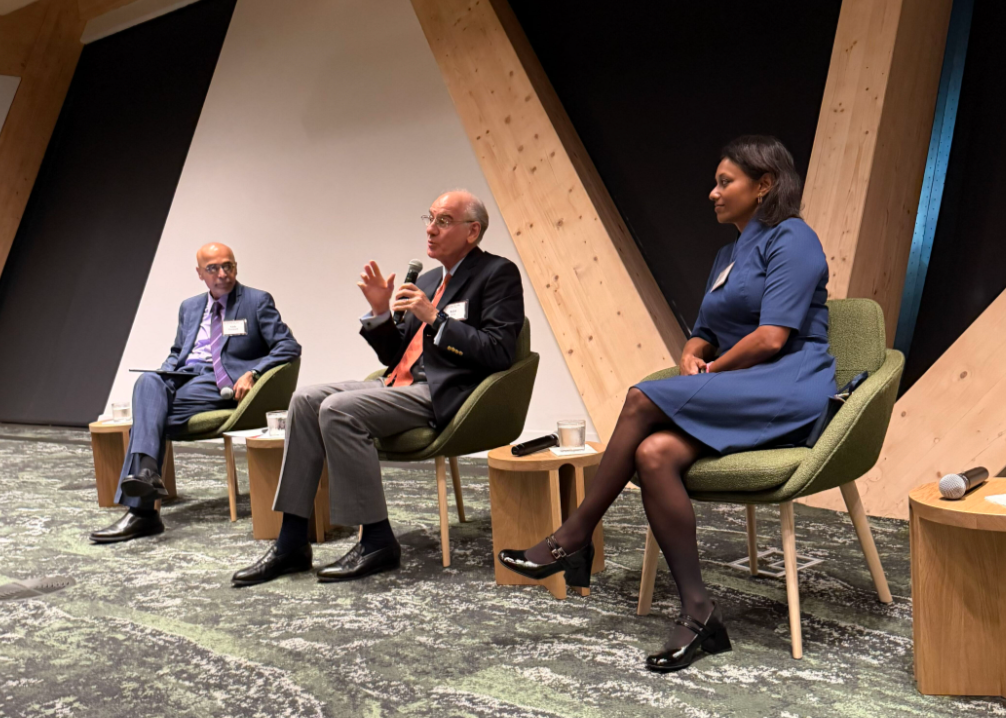
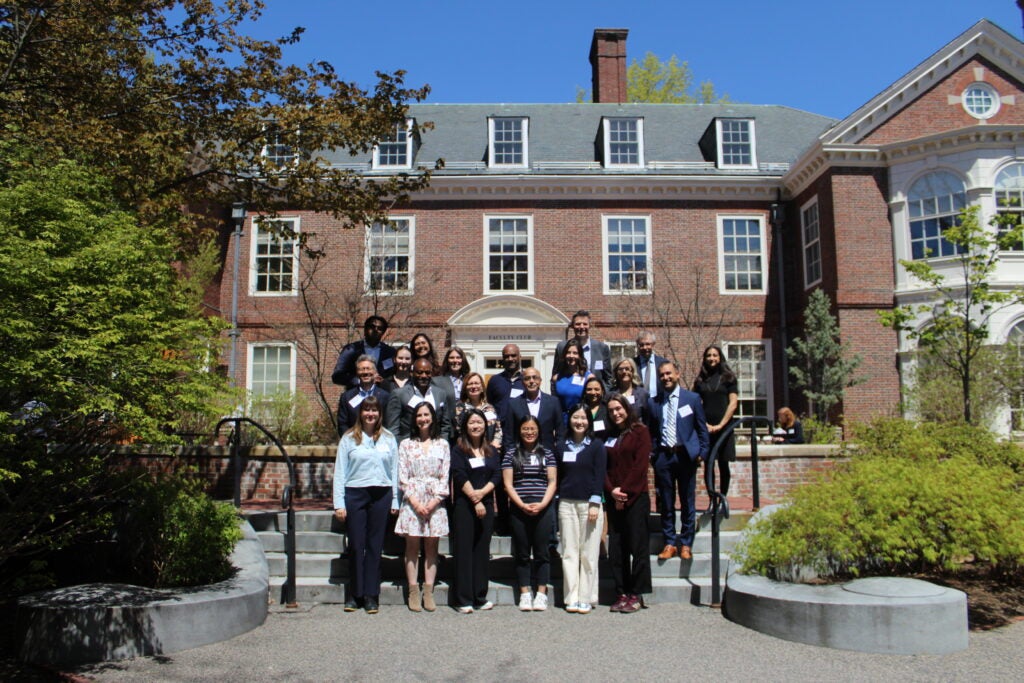
That question brought researchers, practitioners, and policy leaders together at the Harvard Faculty Club on April 28th, 2026, for a roundtable convened by the Lee Kum Sheung Center for Health and Happiness at the Harvard T.H. Chan School of Public Health. The discussion explored the barriers, opportunities, and structural conditions that influence whether research findings lead to changes in policy, practice, and community life.
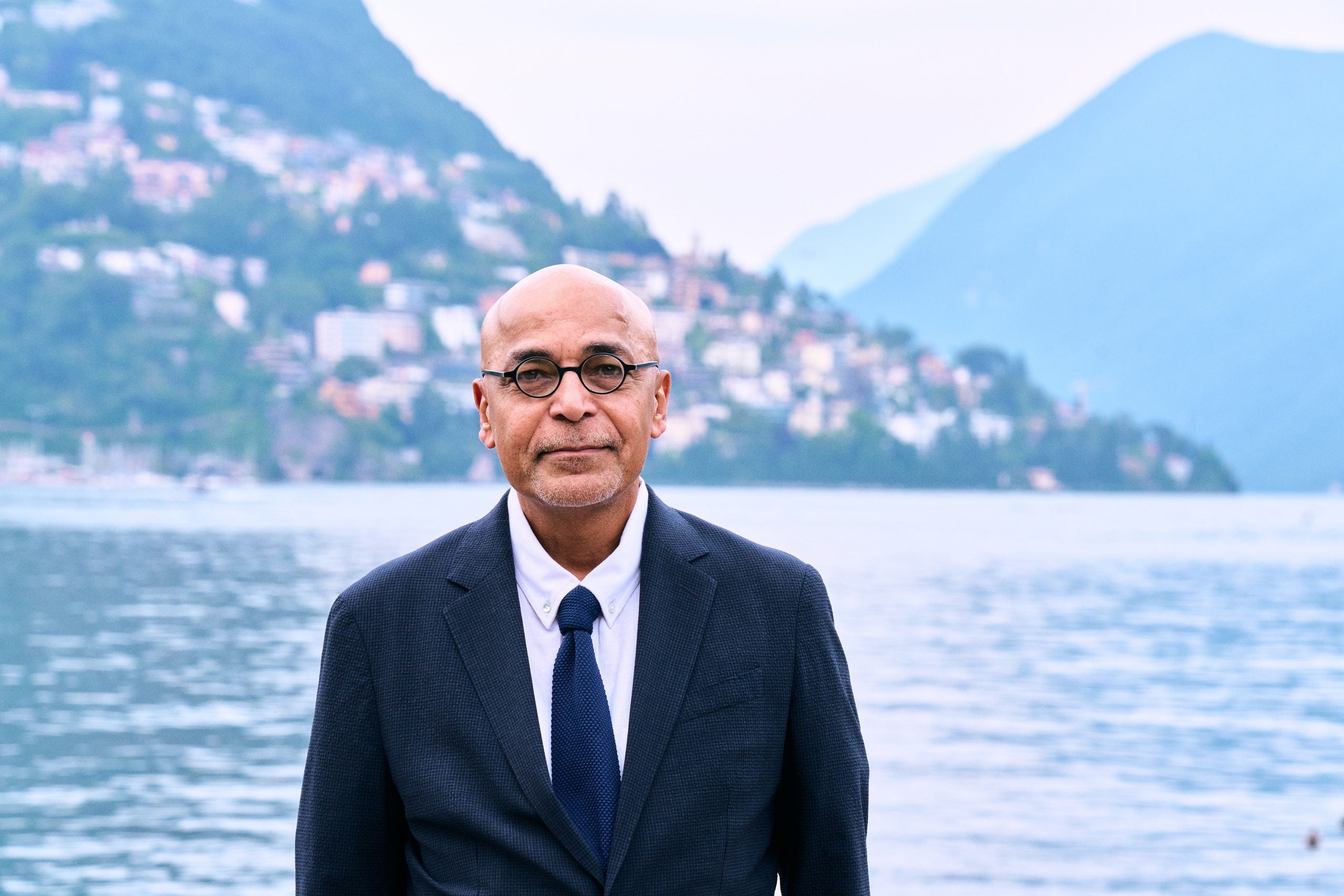
“I have long been interested in understanding and addressing the gap between scientific discovery and delivery,” said Dr. K. “Vish” Viswanath, Lee Kum Kee Professor of Health Communication at the Harvard Chan School and Director of the Lee Kum Sheung Center. “A confluence of factors made this the right moment for the Center to convene this conversation, including ongoing debates about trust in science and investment in research, growing concerns about mental health globally, and public demand for action on issues such as social media, artificial intelligence, loneliness, and isolation.”
To ground the conversation, participants focused on two areas that illuminate different dimensions of the evidence-to-action challenge: digital well-being and social connection.
Digital well-being is a rapidly evolving field where evidence continues to develop alongside changing technologies. Social connection, by contrast, rests on a more established body of research, yet questions remain about how to implement effective solutions at scale.
One of the strongest themes to emerge from the discussion was that the gap between evidence and action is not simply a research problem.
Participants noted that substantial evidence often exists, but findings may be correlational, context-dependent, or difficult to generalize across populations and settings. These realities can complicate efforts to move directly from scientific findings to policy recommendations or interventions.
At the same time, participants cautioned that waiting for complete certainty can delay responses to pressing challenges.
In digital well-being, for example, research examining the relationship between social media use and youth mental health often remains mixed and largely correlational. Yet technologies continue to evolve rapidly, while parents, educators, policymakers, and young people seek guidance now.
Similarly, while the health consequences of loneliness and social isolation are increasingly well documented, evidence on interventions that can be scaled effectively across communities remains less developed. Programs such as social prescribing, intergenerational initiatives, and community-based approaches show promise, but outcomes often depend on local context, implementation, and community engagement.
Participants argued that these realities require a more adaptive model of translation—one that allows implementation, evaluation, and learning to occur simultaneously rather than as separate, sequential stages.
The balance between rigor and action is critical. Science is always evolving, and recommendations may change as the evidence develops. That should not prevent us from acting on the best available evidence, but it does require us to remain willing to learn, adapt, and pivot when needed.
Dr. K. “Vish” Viswanath
The discussion also highlighted the role of measurement in shaping how well-being is understood and addressed.
Terms such as happiness, flourishing, belonging, loneliness, and well-being are often defined differently across disciplines, making it difficult to compare findings and build shared frameworks for action. Participants noted that existing measures capture only part of people’s lived experiences.
In digital well-being research, screen time is frequently used as a metric despite providing limited information about how people engage with technology. Time spent online may involve social support, learning, work, creativity, or passive consumption—experiences with very different implications for well-being.
Participants made a similar observation about social connection. Loneliness and connection are often treated as opposites, despite representing distinct experiences. Much of the research focuses on reducing loneliness rather than understanding and promoting meaningful connection, belonging, and supportive relationships.
These questions of measurement, participants emphasized, are not merely technical concerns. What gets measured often influences what becomes visible to policymakers, funders, and institutions—and ultimately what becomes actionable.
Another recurring theme was fragmentation across sectors.
Researchers, practitioners, policymakers, community organizations, and private-sector leaders share an interest in improving well-being but operate within different systems and incentives. Academic institutions often reward publication and methodological innovation, while policymakers must navigate political realities and public pressures. Community organizations work within funding constraints, and companies may prioritize growth and engagement metrics over well-being outcomes.
Participants suggested that these differences can slow coordination and make it more difficult to translate evidence into practice, from limited access to platform data in digital well-being research to coordinating efforts across healthcare, transportation, housing, and education to strengthen social connection.
Throughout the roundtable, participants repeatedly returned to the idea that improving population well-being requires a systems approach.
In discussions of digital well-being, participants emphasized looking beyond individual behavior to examine how platform design, business incentives, and regulatory environments shape experiences and outcomes. In conversations about social connection, they highlighted the role of parks, libraries, transit systems, and community centers in creating opportunities for interaction and belonging. Yet participants noted that physical infrastructure alone is not enough. Community spaces require programming, accessibility, and ongoing engagement to foster meaningful connection and ensure benefits are distributed equitably.
By the end of the discussion, participants increasingly framed translation not as a linear process of moving research into practice but as a systems challenge requiring collaboration across research, policy, industry, practice, and communities.
As the roundtable came to an end, Dr. Viswanath thanked the roundtable participants for their thoughtful insights and meaningful contributions to the conversation. He concluded:
It is clear that no single sector or actor can do this alone. We need multisectoral collaboration and scalable solutions to translate evidence into action. We also need to cultivate reciprocal relationships between those who generate evidence and those who act on it.
Dr. Vish Viswanath
Roundtable Participants
- Rumeli Banik, PhD, Pew Charitable Trusts
- Natalie Bazarova, PhD, Cornell University
- Christy Denckla, PhD, Harvard Chan School
- Luigi Maria Di Corato, MA, MBA, City of Lugano
- Leigh Frame, PhD, MHS, George Washington University
- Heikki Hiilamo, PhD, Finnish Institute for Health and Welfare, University of Helsinki
- Edna Ishayik, MA, National Conference on Citizenship
- Ashwin Kotwal, MD, University of California, San Francisco
- Sunny Xun Liu, PhD, Stanford University
- Silvia Misiti, MD, PhD, IBSA Foundation
- Justin Pasquariello, MBA, MPA, East Boston Social Centers
- Olivier Sylvain, JD, PhD, Fordham University, Columbia University
- Ashwin Vasan, MD, PhD, Yale University, Commonweal Ventures
- K. “Vish” Viswanath, PhD, Harvard Chan School (Center Director)
- Michael Wilkinson, CMF, Leadership Strategies (Facilitator)
- Gloria Winters, DPT, YMCA of the USA
Center Staff
- Karina Duffy, BS
- Ayla Fudala, MLitt
- Anya Greenberg, BS
- Devan McClain, BS
- Abigail Palaza, BS
- Olivia Song, BS
- Kelsey Torres, MPH