Occupational Safety & Health Seminar
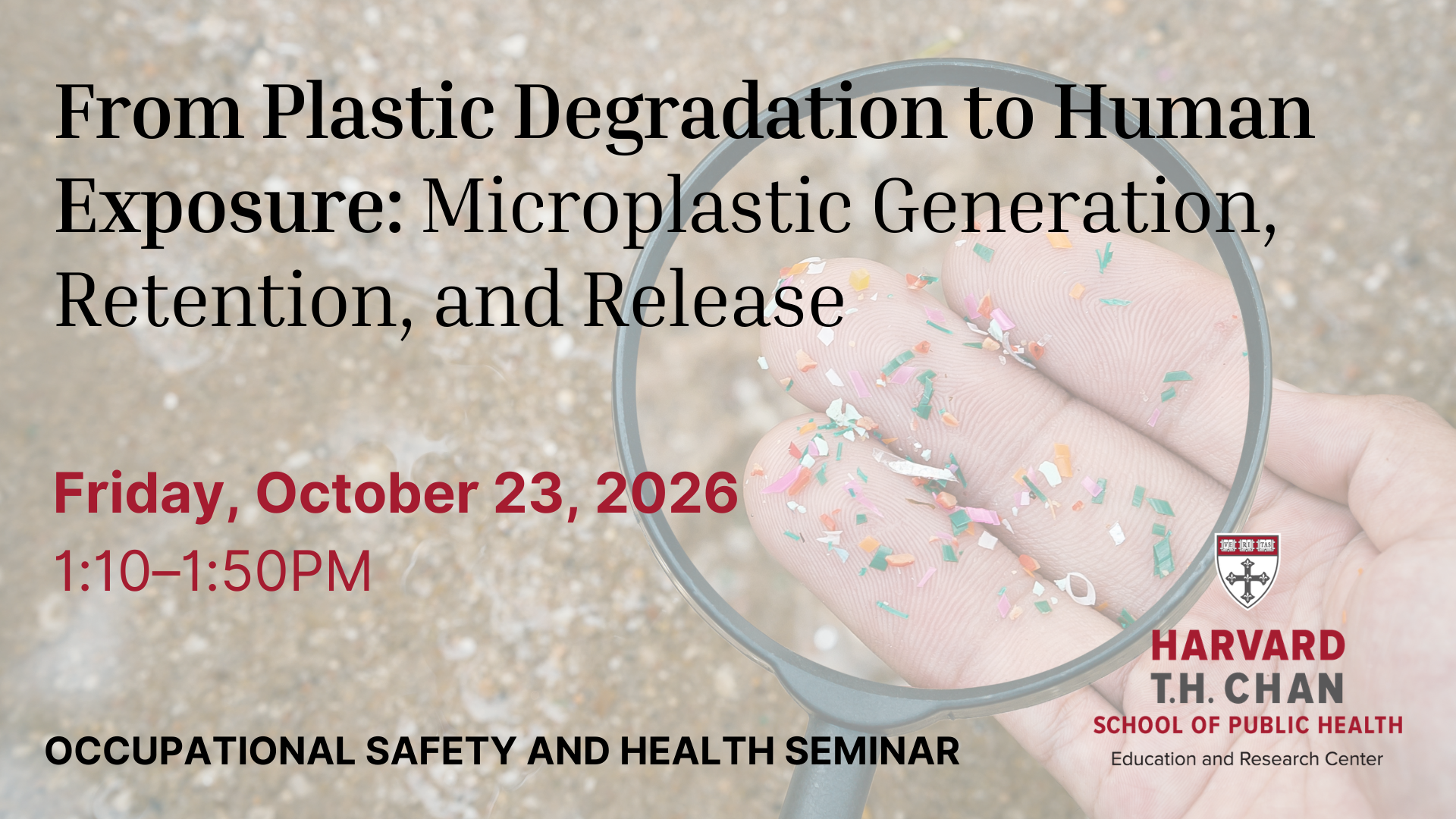
The Department of Environmental Health and the Harvard Chan Education and Research Center for Occupational Safety and Health invite you to the next Occupational Safety & Health Seminar on Friday, October 23, 2026, at 1:10-1:50.
Title: From Plastic Degradation to Human Exposure: Microplastic Generation, Retention, and Release
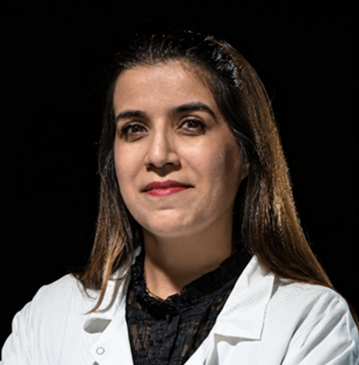
Presenter: Maryam Salehi, PhD, PE, Associate Professor in the Department of Civil and Environmental Engineering at the University of Missouri
Location:
- In-person: 502 Kresge, Harvard T.H Chan School of Public Health
- Online: via Zoom
Register: Click here to register to attend via Zoom.
Abstract: Microplastics (MPs) are emerging environmental contaminants that raise growing concerns about human exposure through inhalation and ingestion. Understanding their generation, environmental occurrence, and exposure pathways requires reliable analytical methodologies and mechanistic insights into the processes governing particle release and accumulation. Research on the mechanical degradation of plastics will demonstrate how intrinsic polymer properties, environmental weathering, and abrasive forces influence MP generation and particle size distributions, with implications for particle release during industrial processes and occupational activities. Beyond their initial generation, MPs interact with environmental surfaces, which can influence their accumulation, retention, and subsequent release. Research investigating the fate of MPs within drinking water distribution and building plumbing systems will also be presented, with particular emphasis on interactions between MPs, pipe surfaces, and biofilms that govern particle retention and release into tap water. Together, these studies provide mechanistic insights into the processes controlling MP generation, accumulation, and release, contributing to a better understanding of potential human exposure pathways and informing future research in environmental and occupational health.
Speaker Information
Maryam Salehi
Organizers
Mindfulness for Cardiovascular Health: From Behavior Change to Healthcare Integration
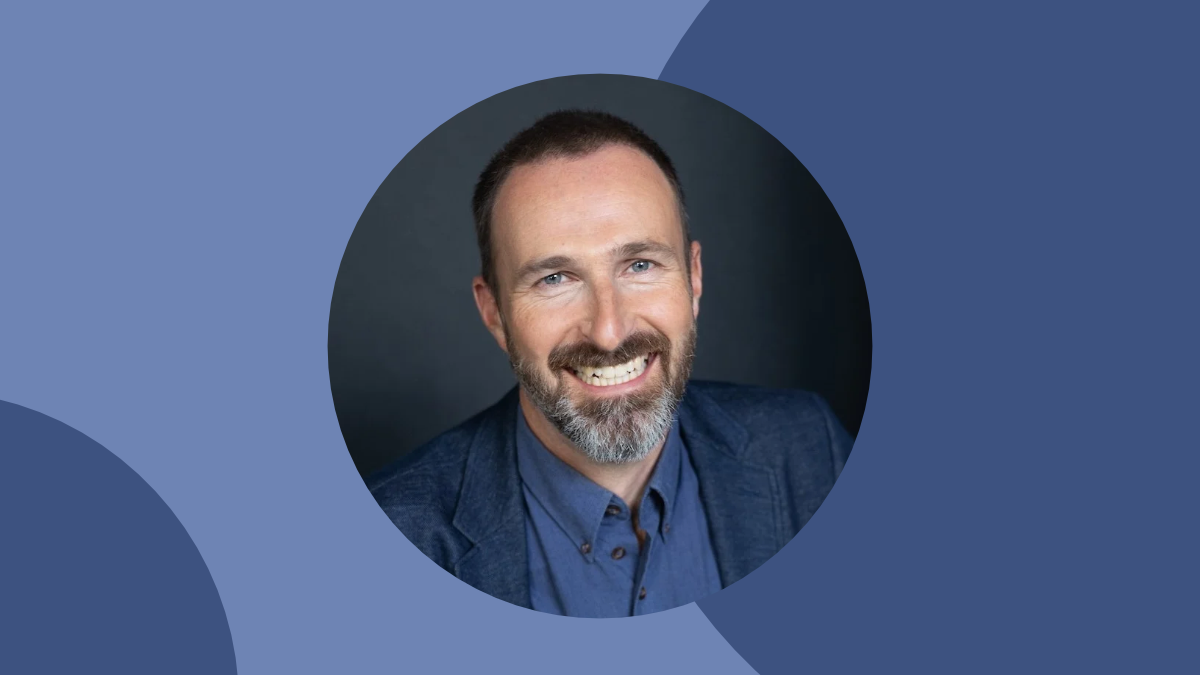
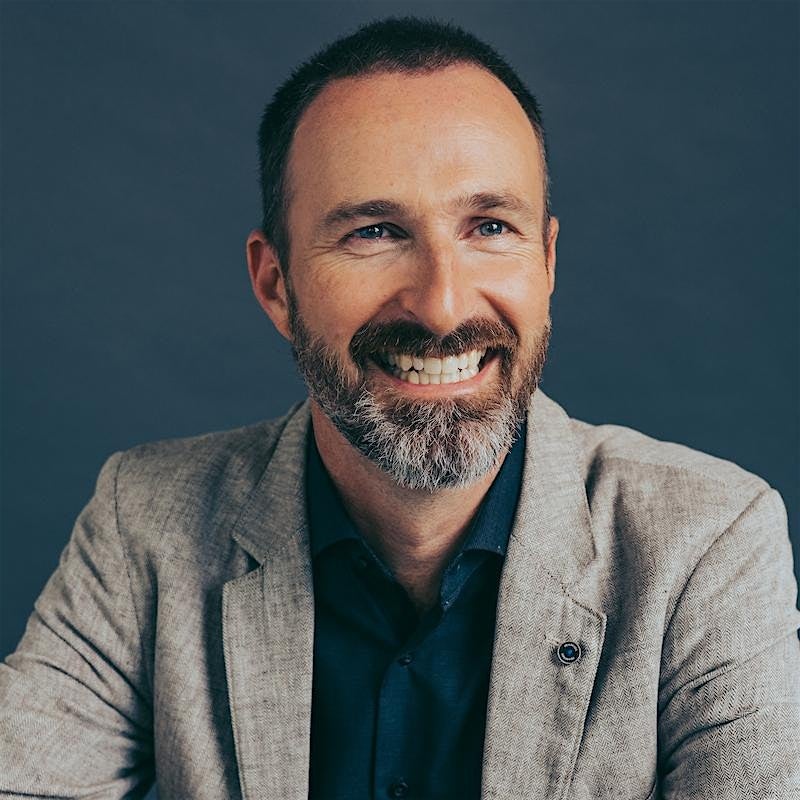
How can mindfulness move from scientific evidence to mainstream healthcare? In this seminar, Eric B. Loucks, PhD, Professor and Director of the Mindfulness Center at Brown University, will explore the research on Mindfulness-Based Stress Reduction and its adaptation for improving nutrition, blood pressure, and cardiovascular health. He will also examine challenges to health insurance coverage and emerging approaches, including group medical visits and digital delivery, to expand access.
This Monday Nutrition Seminar, co-hosted by the Department of Nutrition and the Thich Nhat Hanh Center for Mindfulness in Public Health, will take place on November 30 at 1:00 p.m. ET in FXB G-13* and via Zoom (registration is required).
*Please note that in-person attendance for non-HUID holders is not guaranteed due to space constraints.
Speaker Information
Eric Loucks, PhD
Organizers
Development-induced displacement and women’s health: Qualitative evidence from the Brazilian Amazon
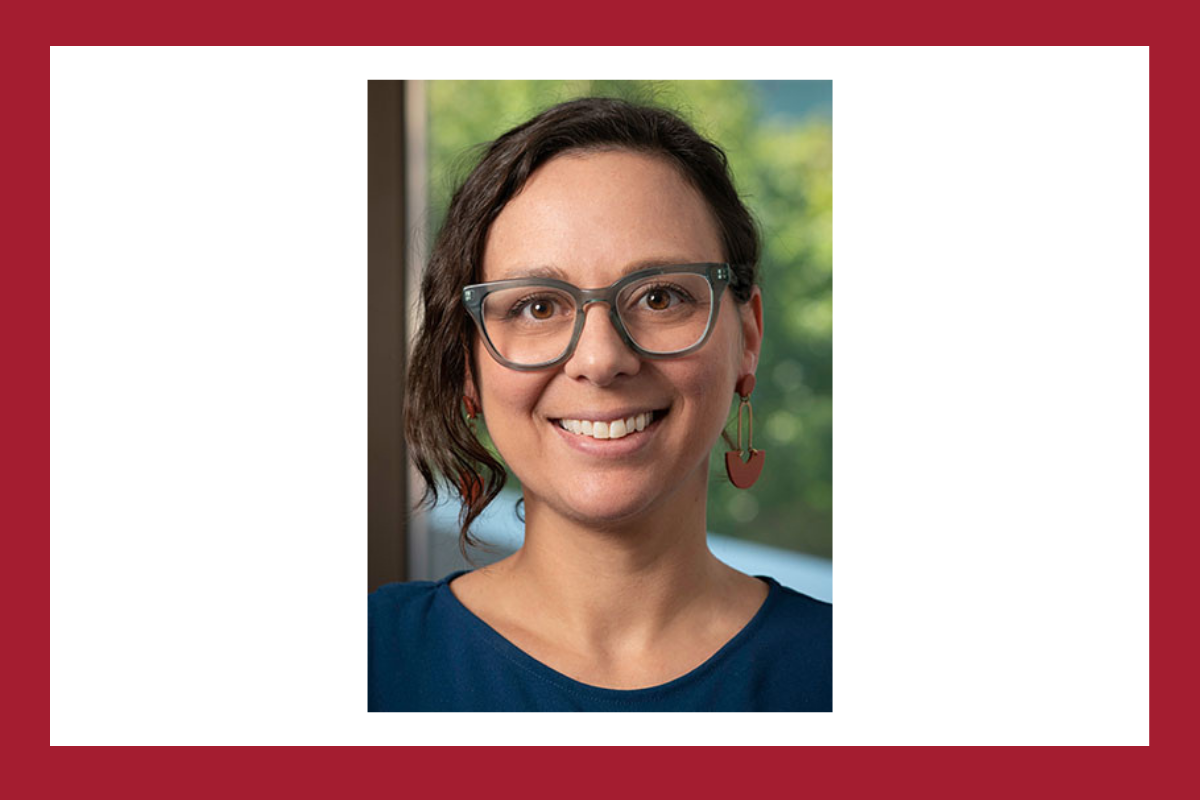
Join the Department of Global Health and Population and the Harvard Center for Population and Development Studies for this Brown Bag/Social Demography Seminar featuring Heather Randell, associate professor at Humphrey School of Public Affairs, University of Minnesota Twin Cities. Please note that an HUID is required to attend this in-person event.
Speaker bio
Heather Randell, PhD, is an associate professor in the global policy area at the Humphrey School of Public Affairs at University of Minnesota Twin Cities and a faculty affiliate of the Minnesota Population Center. She is a sociologist and demographer with interests in understanding how climate change and dam building impact the health and well-being of marginalized populations. Her research uses quantitative and qualitative methods to investigate linkages between climate change and food security, child health, and education; examine the social consequences of dam construction; and explore the relationship between environmental stressors and migration. This work is international in scope, with a particular focus on Brazil and East Africa.
Speaker Information
Heather Randell
Organizers
Student Government General Body Meeting
Student Government General Body Meeting
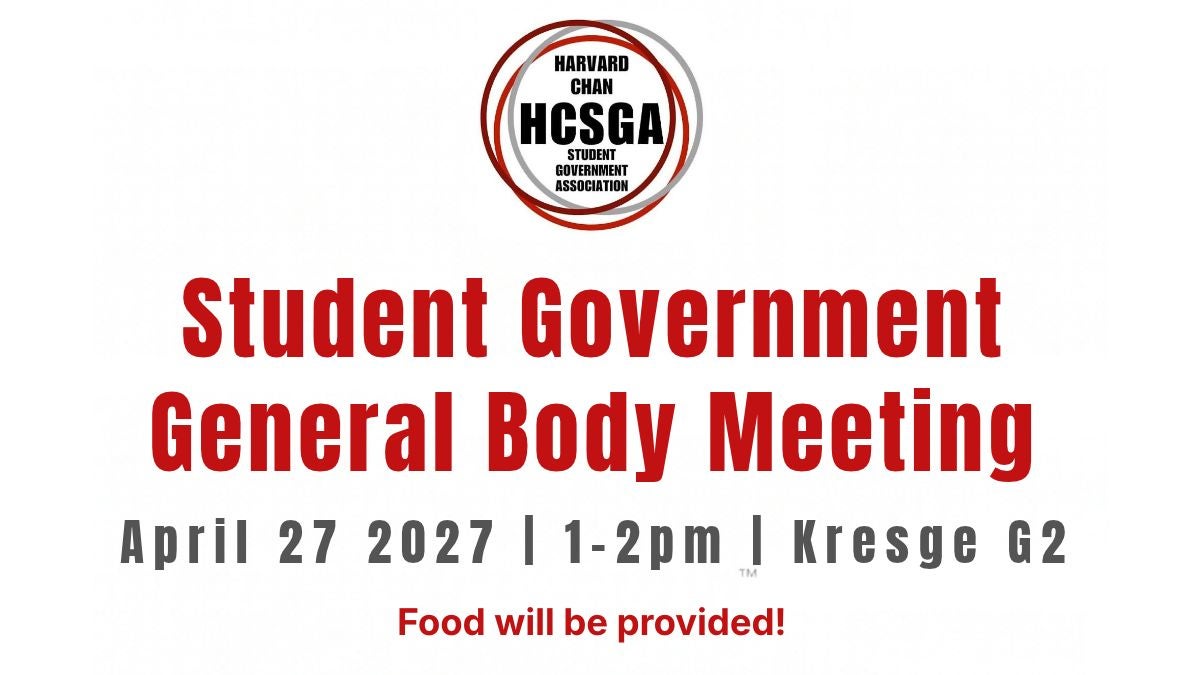
Join the Harvard Chan Student Government Association (HCSGA) on Tuesday, April 27, 2027, from 1:00–2:00 p.m. EDT for our next General Body Meeting! All students are welcome to attend in person in Kresge G2 or on Zoom. Food will be provided for in-person attendees.
General Body Meetings are an opportunity to connect with student government, share your experiences on and off campus, and help HCSGA better support, represent, and serve our student community.
Meeting highlights
- Announcements: Hear updates from student government.
- Open mic: Share a concern, comment, idea, or highlight.
- Swap Meet: Offer or request an item, service, skill, or other support.
There will also be a prize incentive for attending every General Body Meeting!
Date: Tuesday, April 27, 2027
Time: 1:00–2:00 p.m. EDT
Location: Kresge G2
Zoom: Join the meeting
Your voice matters. Join us and help shape our community!
Organizers
Health resilience in polycrisis: Reinforcing a health systems approach
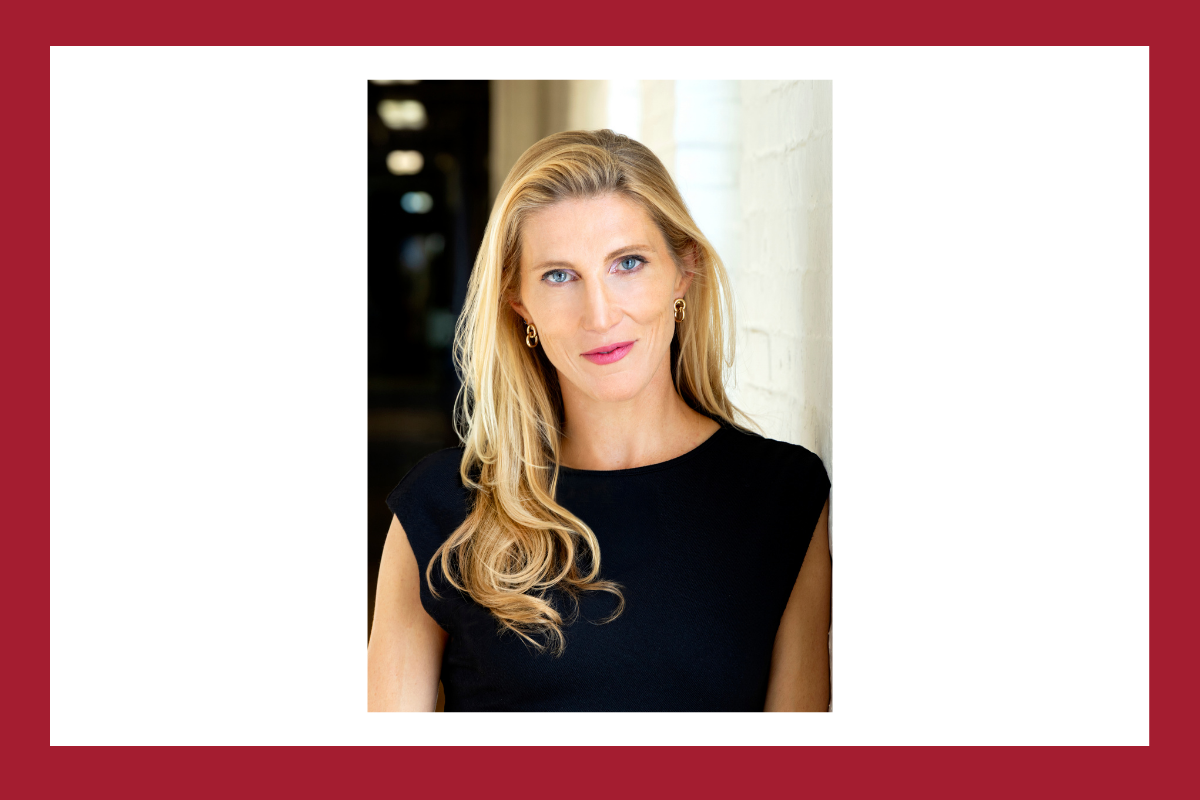
Join the Department of Global Health and Population for this Brown Bag Seminar featuring Vanessa Kerry, co-founder and CEO of Seed Global Health and WHO Special Envoy for Health Resilience. Please note that an HUID is required to attend this in-person seminar.
Speaker bio
Vanessa Kerry, MD, MSc, is the co-founder and CEO of Seed Global Health, where she leads efforts to strengthen health systems by investing in the health workforce. Under her leadership, Seed has trained more than 47,000 health workers who are in service to over 108 million people across Africa. A physician and global health leader, she serves as WHO Special Envoy for Health Resilience and director of Global and Climate Health Policy at Harvard T.H. Chan School of Public Health.
Speaker Information
Organizers
Student Government General Body Meeting
Student Government General Body Meeting
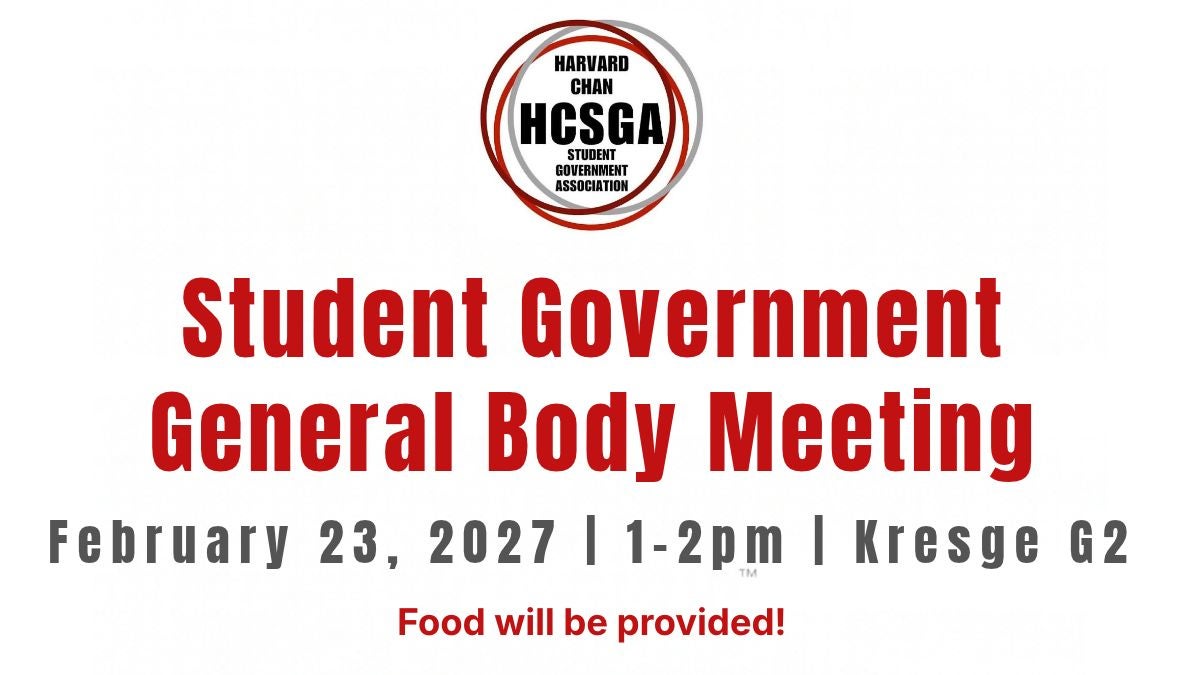
Join the Harvard Chan Student Government Association (HCSGA) on Tuesday, February 23, 2027, from 1:00–2:00 p.m. for our next General Body Meeting! All students are welcome to attend in person in Kresge G2 or on Zoom. Food will be provided for in-person attendees.
General Body Meetings are an opportunity to connect with student government, share your experiences on and off campus, and help HCSGA better support, represent, and serve our student community.
Meeting highlights
- Announcements: Hear updates from student government.
- Open mic: Share a concern, comment, idea, or highlight.
- Swap Meet: Offer or request an item, service, skill, or other support.
There will also be a prize incentive for attending every General Body Meeting!
Date: Tuesday, February 23, 2027
Time: 1:00–2:00 p.m.
Location: Kresge G2
Zoom: Join the meeting
Your voice matters. Join us and help shape our community!
Organizers
Student Government General Body Meeting
Student Government General Body Meeting
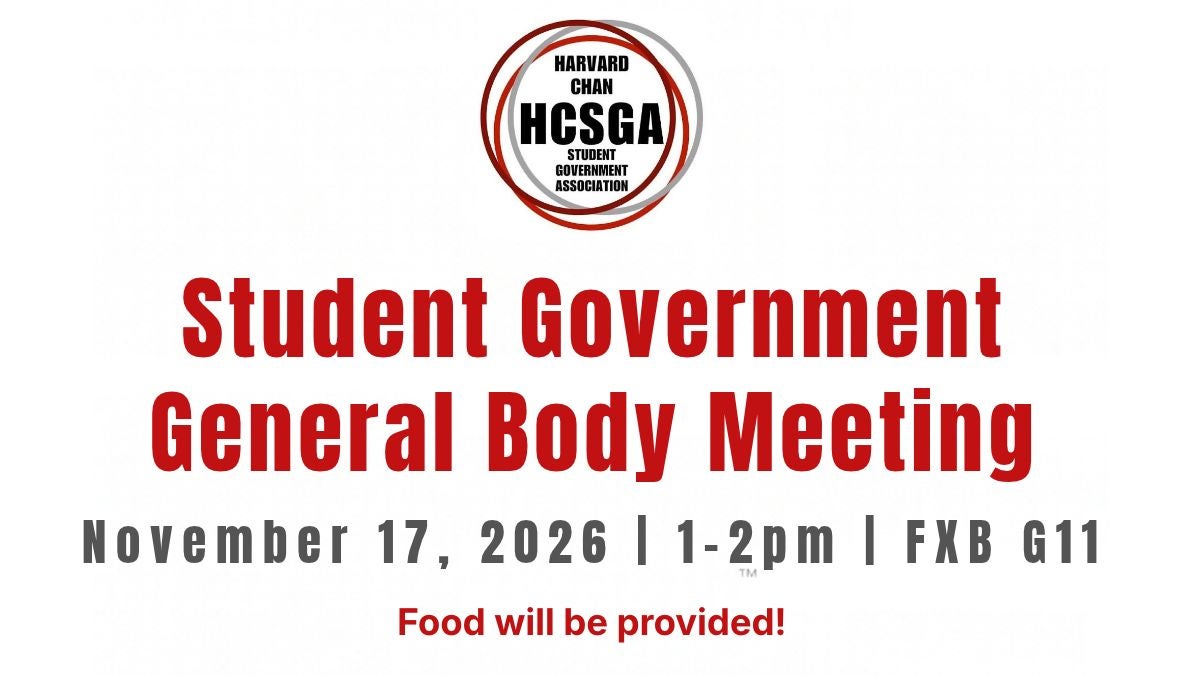
Join the Harvard Chan Student Government Association (HCSGA) on Tuesday, November 17, 2026, from 1:00–2:00 p.m. for our next General Body Meeting! All students are welcome to attend in person in FXB G10 or on Zoom. Food will be provided for in-person attendees.
General Body Meetings are an opportunity to connect with student government, share your experiences on and off campus, and help HCSGA better support, represent, and serve our student community.
Meeting highlights
- Announcements: Hear updates from student government.
- Open mic: Share a concern, comment, idea, or highlight.
- Swap Meet: Offer or request an item, service, skill, or other support.
There will also be a prize incentive for attending every General Body Meeting!
Date: Tuesday, November 17, 2026
Time: 1:00–2:00 p.m.
Location: FXB G10
Zoom: Join the meeting
Your voice matters. Join us and help shape our community!
Organizers
Student Government General Body Meeting
Student Government General Body Meeting
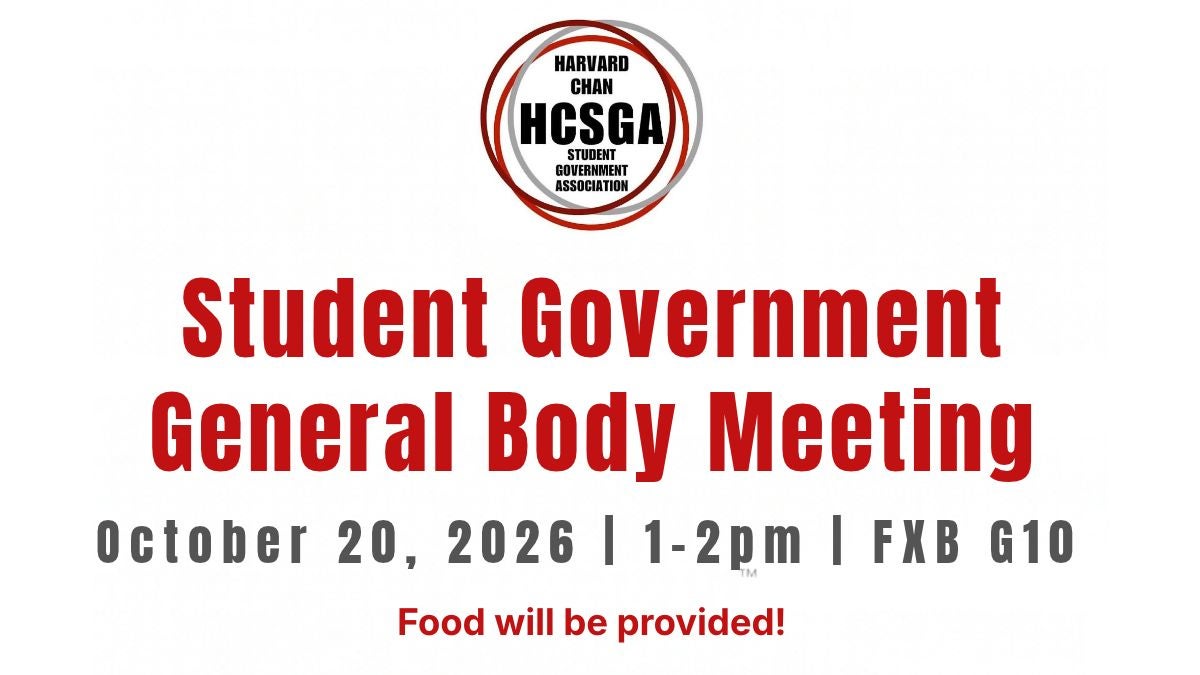
Join the Harvard Chan Student Government Association (HCSGA) on Tuesday, October 20, 2026, from 1:00–2:00 p.m. for our next General Body Meeting! All students are welcome to attend in person in FXB G10 or on Zoom. Food will be provided for in-person attendees.
General Body Meetings are an opportunity to connect with student government, share your experiences on and off campus, and help HCSGA better support, represent, and serve our student community.
Meeting highlights
- Announcements: Hear updates from student government.
- Open mic: Share a concern, comment, idea, or highlight.
- Swap Meet: Offer or request an item, service, skill, or other support.
There will also be a prize incentive for attending every General Body Meeting!
Date: Tuesday, October 20, 2026
Time: 1:00–2:00 p.m.
Location: FXB G10
Zoom: Join the meeting
Your voice matters. Join us and help shape our community!
Organizers
Where Climate Change and Child Protection Meet
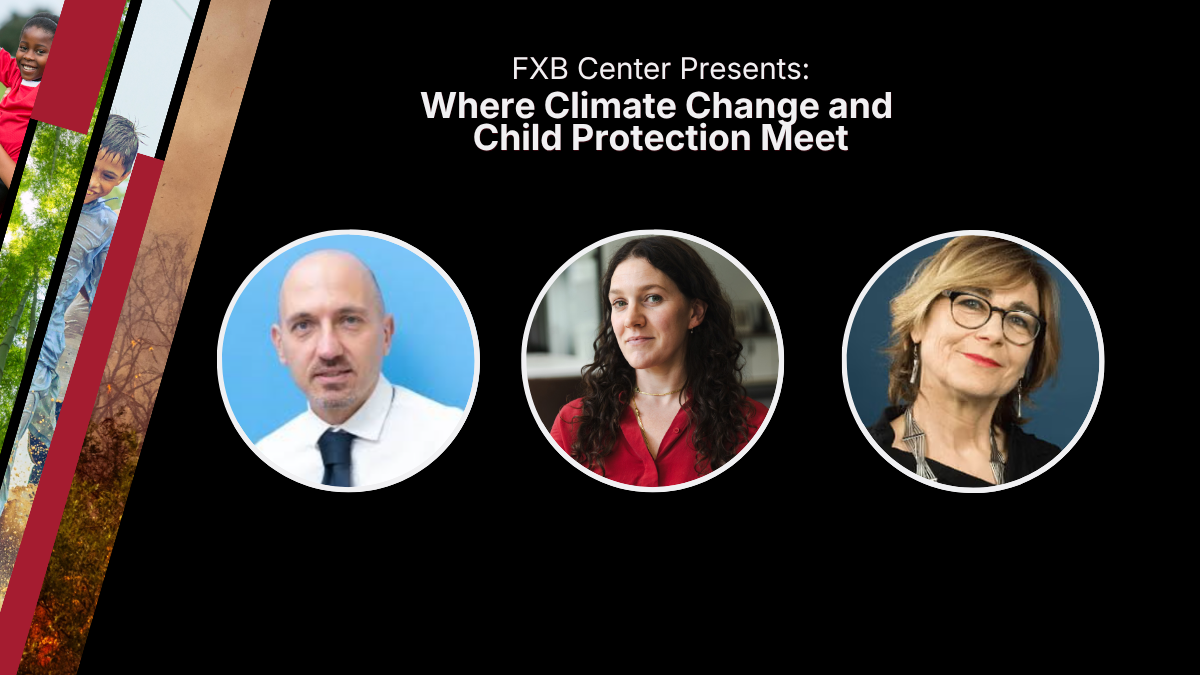
Join the FXB Center for Health and Human Rights on Zoom for a timely discussion on the intersection between climate action and child protection. FXB Research Director Professor Jacqueline Bhabha will be joined by practitioners working directly in this space.
Speaker Information
Organizers
Occupational & Environmental Medicine Grand Rounds
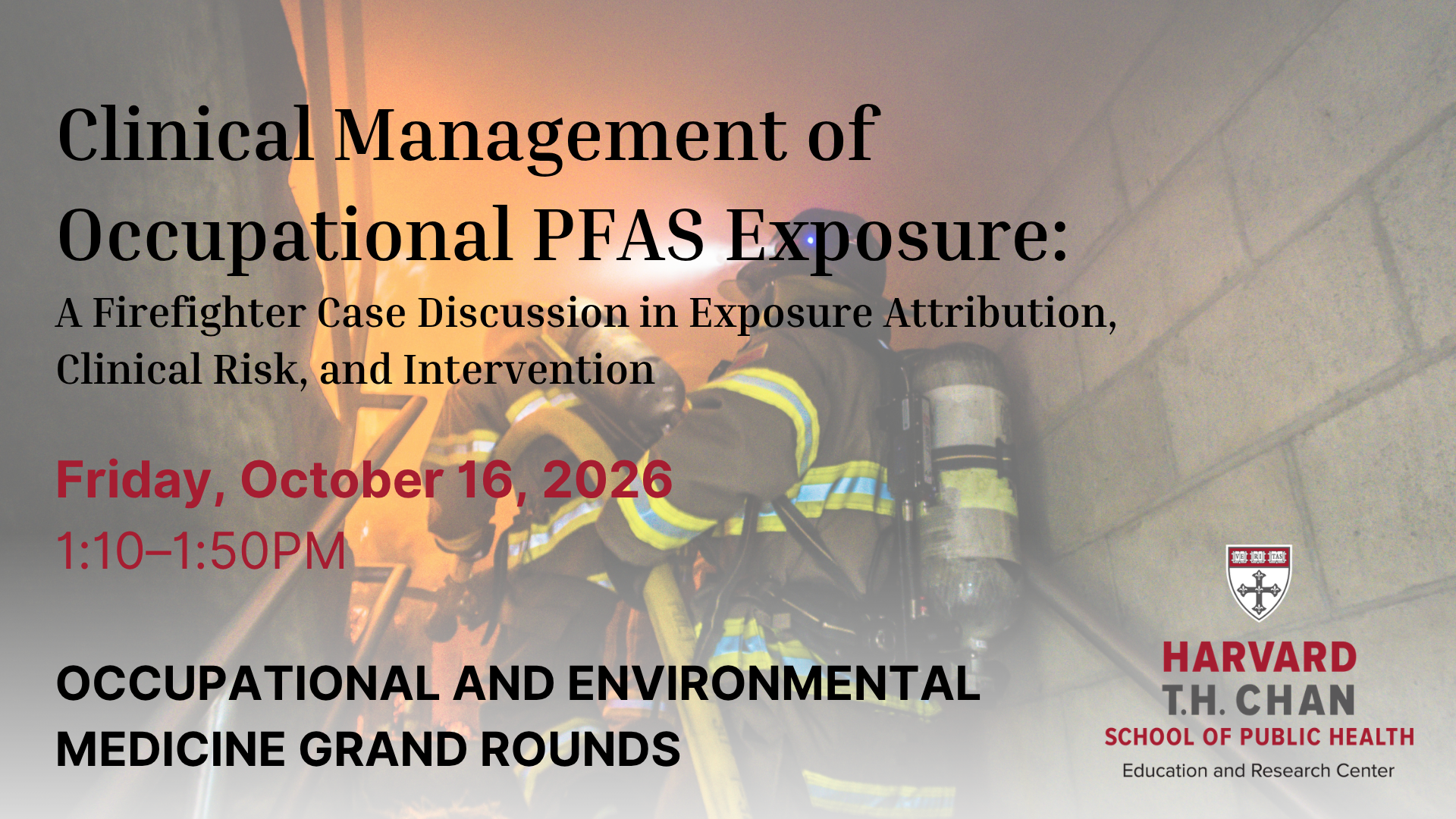
The Department of Environmental Health and the Harvard Chan Education and Research Center for Occupational Safety and Health invite you to the next Occupational and Environmental Medicine Grand Rounds on October 16, 2026.
Title: Clinical Management of Occupational PFAS Exposure: A Firefighter Case Discussion in Exposure Attribution, Clinical Risk, and Intervention
Presenter: Gabriel Adam Carrillo, MD, JD, Harvard Occupational & Environmental Medicine Resident
Discussant: Eli N. Avila, MD, JD, MPH, FACLM, DABLM, Former Secretary of Health, Commonwealth of Pennsylvania Former Commissioner of Health, Orange County, New York Chief Medical Officer, Defense Health Agency / Watervliet Arsenal
Learning Objectives:
By the end of this Grand Rounds, participants will be able to:
- Perform exposure attribution for a firefighter with elevated PFAS levels using a structured occupational, environmental, and medical-legal exposure history.
- Develop an evidence-informed management plan for PFAS overexposure, including exposure reduction, counseling, repeat testing when appropriate, clinical surveillance, privacy protections, and risk-benefit discussion of potential interventions.
- Interpret PFAS biomonitoring results clinically by distinguishing background, above-background, and higher-concern findings, while explaining what PFAS testing can and cannot determine.
Location:
- In person: 502 Kresge, Harvard Chan School of Public Health
- Remote: via Zoom (please RSVP for Zoom below)
RSVP: Please click here to register.
CMEs for US licensed physicians
This activity has been planned and implemented in accordance with the accreditation requirements and policies of the Accreditation Council for Continuing Medical Education (ACCME) through the joint providership of The Harvard T.H. Chan School of Public Health and the Harvard Chan Education and Research Center. The Harvard T.H. Chan School of Public Health is accredited by the ACCME to provide continuing medical education for physicians.
The Harvard T.H. Chan School of Public Health designates this live activity for 1.5 AMA PRA Category 1 Credits™. Physicians should claim only the credit commensurate with the extent of their participation in the activity.