We’re leading the global charge to understand and solve the world’s most pressing environmental health challenges. Learn how we can make an impact together.
A group of scientists has proposed a framework for expanding research into how odors and scents from natural settings impact human health and well-being.
Extreme heat and extreme cold are both associated with increased risks of death from ischemic and hemorrhagic stroke, especially in low-income countries, according to a new Harvard Chan School study.
Replacing diesel school buses with electric school buses may yield up to $247,600 in climate and health benefits per individual bus, according to a new study led by Harvard Chan School.
People living in U.S. households with gas stoves may regularly breathe in unsafe levels of nitrogen dioxide, according to a new study co-authored by Harvard Chan School’s Kari Nadeau.
Having higher levels of a certain lipoprotein—a molecule that helps carry fat around the body—may increase people’s risk of developing Alzheimer’s disease.
A recent art show in the Boston neighborhood of Roslindale provided a platform for community members to explore the factors at play in access to safe hair products among Black women in Boston. The event was conceived by Marissa Chan, a PhD candidate in environmental health at Harvard Chan School.
Two members of Harvard Chan School’s Department of Environmental Health—Francesca Dominici and Ronnie Levin—have been named by TIME as among the 100 individuals who most influenced global health in 2024.
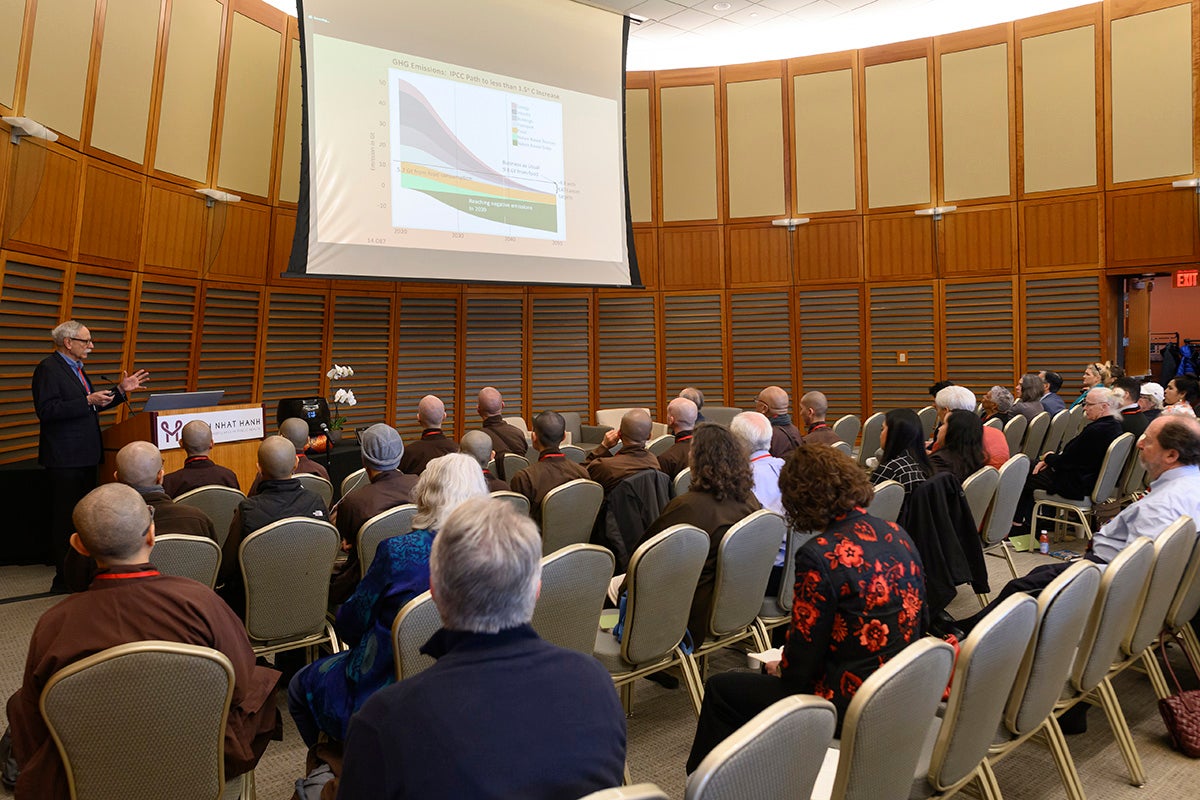
A symposium at Harvard Chan School brought together academics, community leaders, activists, mindfulness practitioners, and monastics who studied under Thich Nhat Hanh to explore the intersection of health, mindfulness, and climate change.
Diseases related to problems in immune health—from nasal allergies to food allergies to rheumatoid arthritis to colorectal cancer—have spiked in recent years, and climate change appears to be playing a role, according to Harvard Chan School’s Kari Nadeau.