EPA repeal of greenhouse gas limits gives ‘life support’ to coal industry, despite climate risks
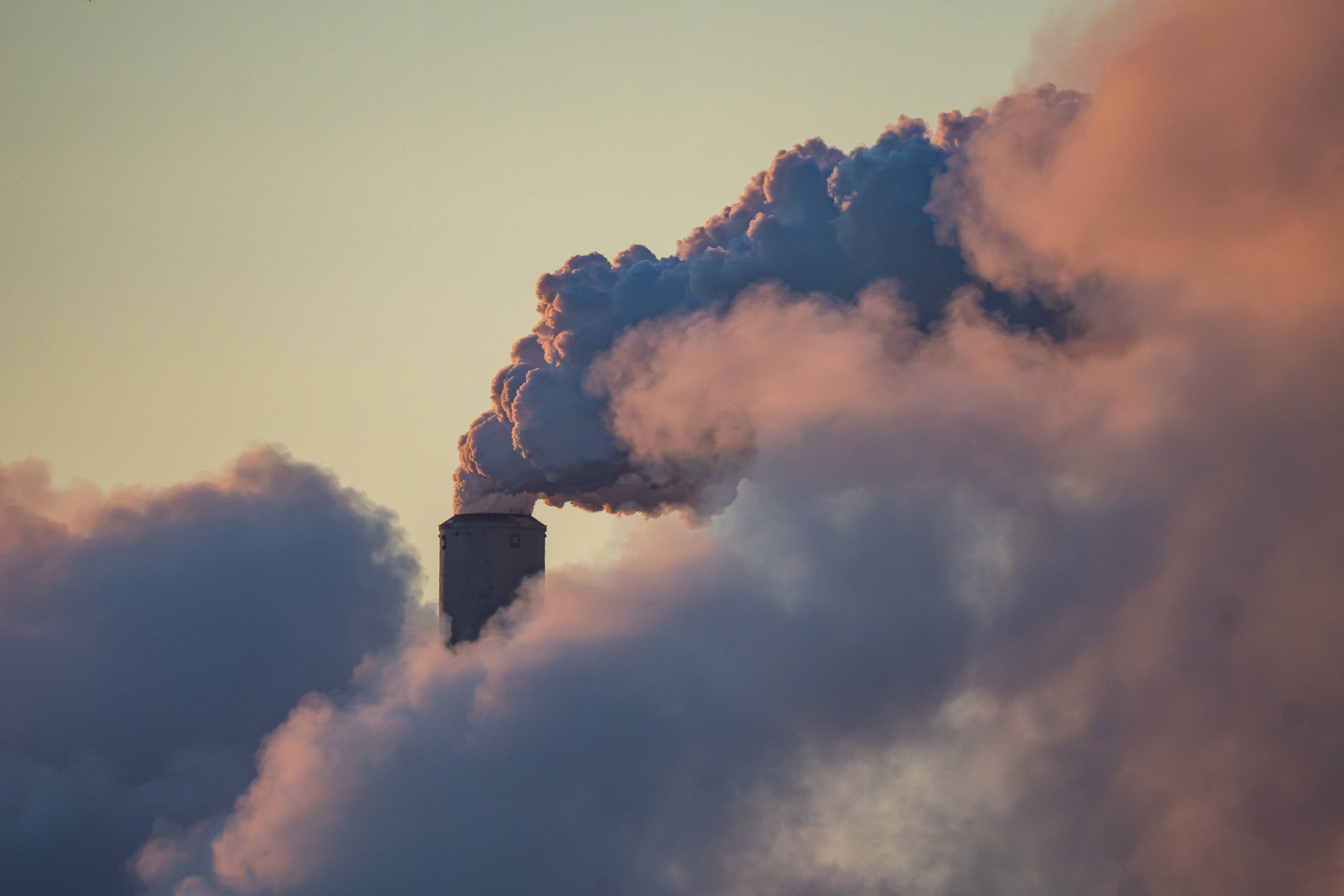
In mid-September, the Environmental Protection Agency (EPA) repealed a Biden-era ruling requiring coal-fired power plants to significantly reduce their emissions of carbon dioxide (CO2), the main driver of climate change. Now, there are no regulations on greenhouse gases coming from coal power plants, allowing them to continue operating without rules around their CO2 emissions. How major of a setback is this to efforts to mitigate the climate crisis? Petros Koutrakis, Akira Yamaguchi Professor of Environmental Health and Human Habitation at Harvard T.H. Chan School of Public Health, shares his perspective below.
Q: Can you provide some background on the EPA’s announcement? As an environmental health researcher, what’s your reaction?
A: The Biden administration had introduced a regulation on coal-fired power plants forcing them to significantly reduce their CO2 emissions by 2039—otherwise they would not be able to renew their licenses and would have to close. This put the U.S. on the path to seeing a mass retirement of these power plants in the 2030s, because the technology to remove CO2 emissions is extremely expensive. Now, the EPA, under the Trump administration, has taken us off that path, and that’s a shame. In removing the CO2 guardrails on these power plants, the EPA is stymying necessary work to reduce greenhouse gas emissions, as well as other pollutants, and they’re extending the life of the coal industry, which is otherwise dying. The only good news here is that, despite the administration’s efforts, the future of coal is not bright in the U.S. This deregulation is a hindrance and slows down our progress toward a healthier planet. Again, that is a shame. But our reliance on coal will fade. The EPA is just putting it on life support.
Q: What makes you confident that the U.S. will move away from coal?
A: We’ve already begun doing so. In the early 2000s, about 60% of our electricity came from coal. Today, coal generates only about 20% of our electricity. Coal-fired power plants have largely been replaced by natural gas-fired power plants, which are much more efficient, and therefore generate electricity more cheaply, and somewhat more cleanly (they still do emit CO2 and other pollutants, but at lower levels). And increasingly, we’re becoming more reliant on renewable energy sources—solar, wind, hydro—in place of fossil fuels like coal and gas. As renewable energy technology has evolved and improved, its costs have gone down drastically, such that electricity generated by renewables costs five cents per kilowatt hour. Electricity generated by gas, coal, and nuclear power meanwhile costs at least 30 cents per kilowatt hour. Renewable energy technology will only continue to advance, becoming more efficient and cheaper. And coal will continue to be dirty and expensive by comparison. Market forces will drive it to obsolescence.
Q: Can we feel optimistic about the U.S.’s energy future? If so, what would that mean for the climate crisis as a whole?
A: I am optimistic that, here and elsewhere, we’re moving toward more sustainable energy production in the future, which will certainly improve planetary health. That said, the damage to our climate has already been done. We can’t move toward that clean energy future fast enough. Even if the world stopped all emissions tomorrow, it would take hundreds of years to get back to non-emergency levels of CO2 and other pollutants in the atmosphere. So we’re going to be living with climate issues—extreme weather events and the threats to our water and food supplies are what I particularly worry about—for a long time. This is a painful reality, and there are two ways we can handle it: mitigation and adaptation. And this move from the EPA counts as neither.