New HHMI article highlights parasite-targeting bed nets developed by Flaminia Catteruccia and collaborators
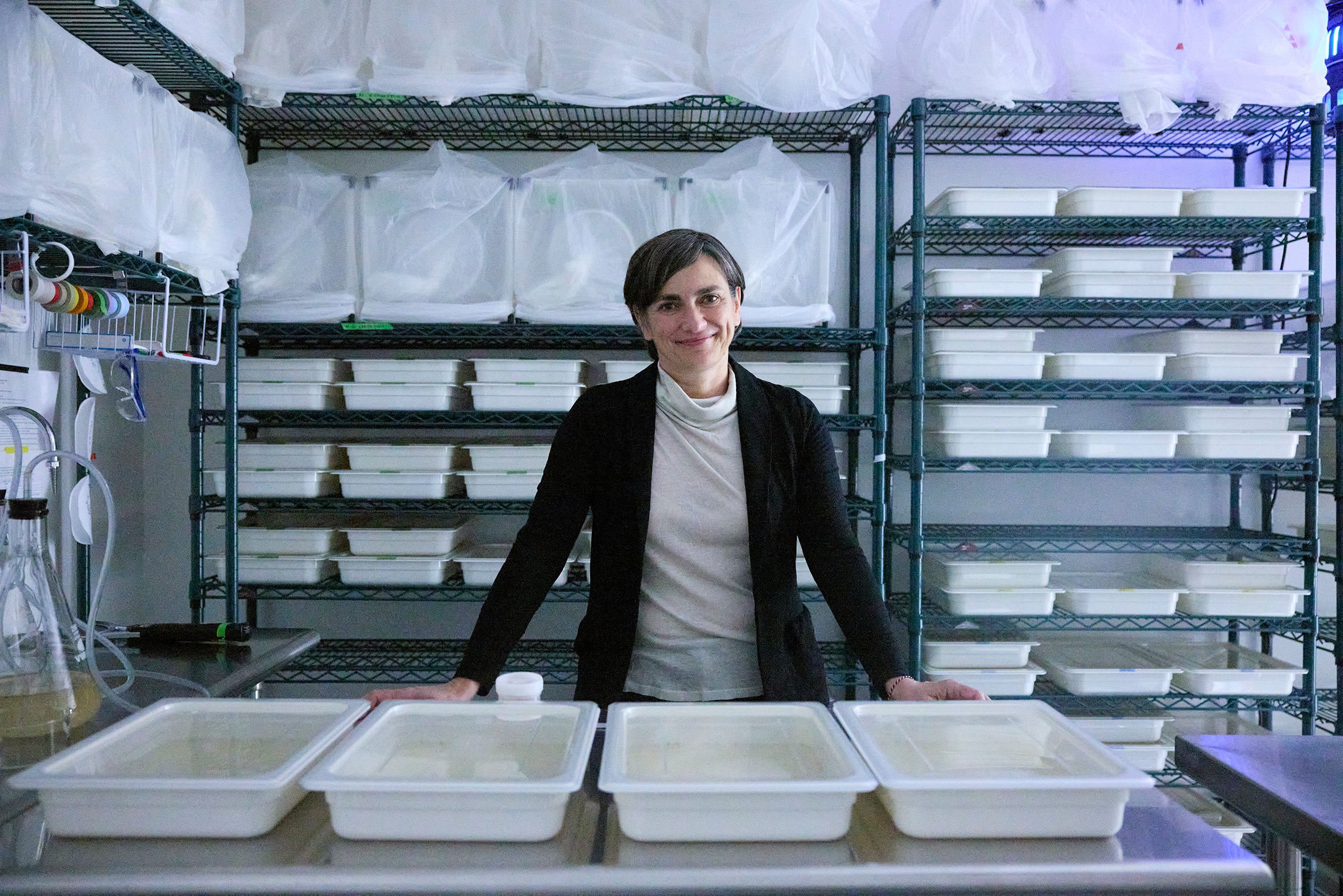
A new article from the Howard Hughes Medical Institute features research from the Catteruccia lab on a promising new approach to malaria control. Led by Flaminia Catteruccia, Irene Heinz Given Professor of Immunology and Infectious Diseases at Harvard T.H. Chan School of Public Health, the research explores bed nets designed to deliver antimalarial compounds to mosquitoes. Instead of relying solely on insecticides to kill mosquitoes, the compounds target Plasmodium falciparum, the parasite that causes malaria, and disrupt its development inside the insect.
The HHMI article describes how the team identified compounds that blocked parasite development in laboratory experiments, including in mosquitoes resistant to conventional insecticides. The compounds also remained active on bed-net-like materials over time. The research is now advancing toward field testing in Burkina Faso and Ethiopia, as the team continues to investigate how this strategy could complement existing tools for malaria control.
Read the full article on the Howard Hughes Medical Institute website.