Health Is More Than Physical and Mental: New Publication Argues We Need to Take Social Well-Being Seriously
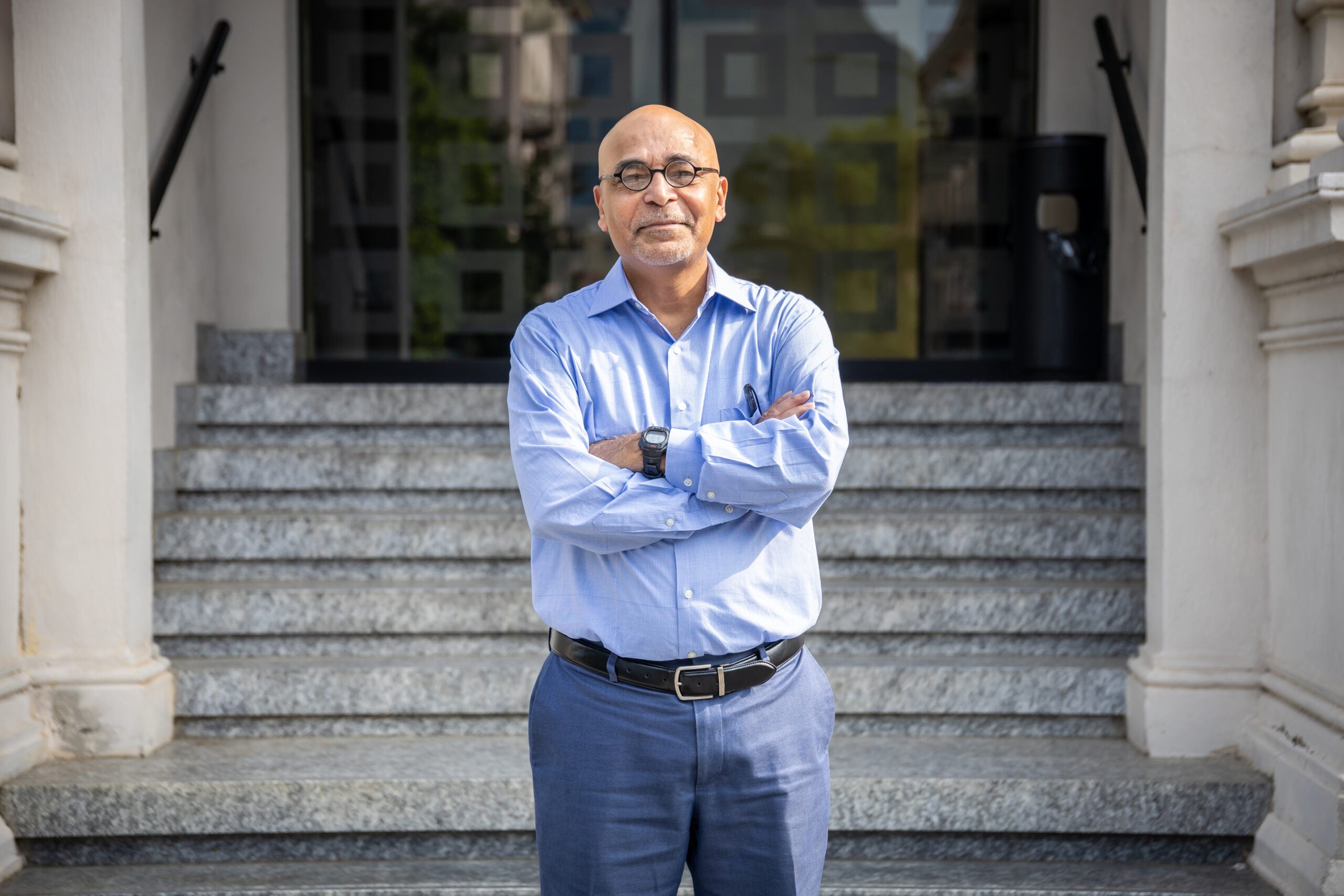
As concerns about loneliness, social isolation, and community fragmentation continue to grow around the world, Dr. K. “Vish” Viswanath, Director of the Lee Kum Sheung Center for Health and Happiness and Lee Kum Kee Professor of Health Communication at the Harvard T.H. Chan School of Public Health, is calling for a broader understanding of what it means to be healthy.
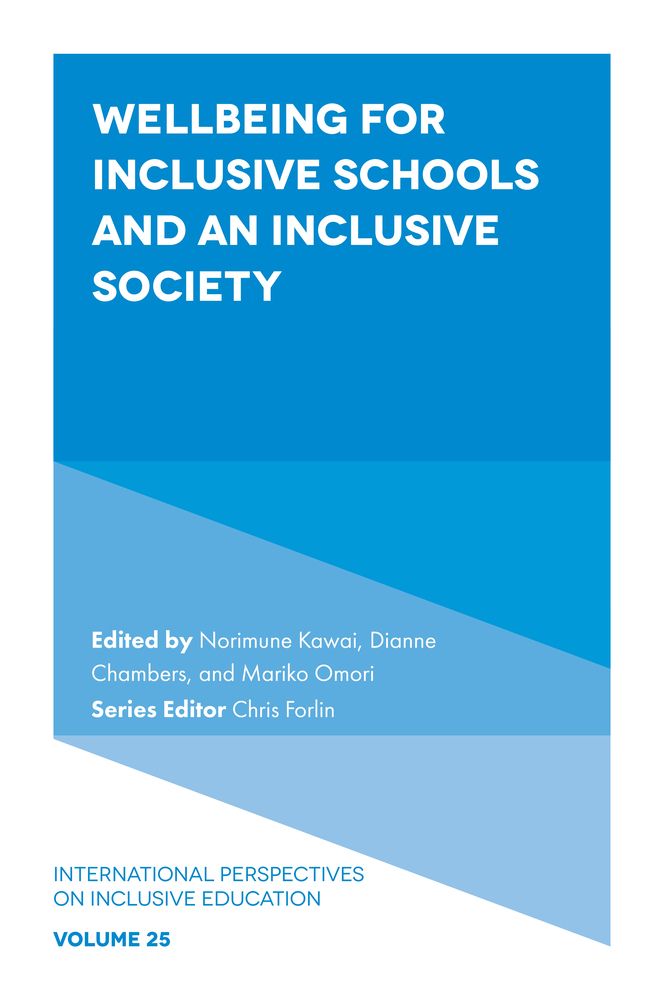
In a new chapter, Beyond Individual Happiness: Understanding the Role of “Social” in Health and Wellbeing, part of the recently published book Perspectives on wellbeing for inclusive schools and an inclusive society, Dr. Viswanath and co-author Dr. Zichao Li argue that health and happiness are shaped not only by individual experiences, choices, and emotions, but also by the relationships, communities, institutions, and social conditions that influence people’s ability to thrive.
There is increasing social isolation and loneliness all over the world. We seldom talk about how you connect with other people, how you trust other people, how you find a sense of social support from other people or from the community. Do you feel that you belong to the community? Do you feel included in the community? These dimensions are extremely important, but somehow do not come to us intuitively. So we are striving to advocate for and articulate the importance of the individual’s connection to the larger society, and why it is as critical, as important, as individual focus on their own physical health or psychological health.
Dr. K. “Vish” Viswanath
At the center of the chapter is a simple but often overlooked idea: health is inherently social.
The World Health Organization has long defined health as a state of “complete physical, mental, and social well-being,” not merely the absence of disease. Yet public conversations about well-being frequently focus on individual happiness, life satisfaction, or psychological functioning, while paying less attention to the social conditions that make well-being possible.
The chapter pushes this idea one step further: from considering social well-being as a dimension of individual health to asking what well-being looks like at the level of communities and societies. This is where collective well-being comes into view.
For Dr. Viswanath, whose research has long explored how communication, social conditions, and inequities shape health outcomes, this perspective represents an important evolution in public health thinking. The chapter places social well-being within a broader shift from treating illness to practicing prevention to promoting total well-being. Within this framework, social well-being is not a peripheral concern but a core component of health itself.
The authors argue that many popular approaches to well-being overlook the powerful influence of social and structural factors. While concepts such as hedonic well-being, which focuses on positive emotions and life satisfaction, and eudemonic well-being, which emphasizes meaning and purpose, remain important, they do not fully capture the conditions that shape people’s lives.
Factors such as socioeconomic status, discrimination, neighborhood environments, migration, aging, and public policy all influence opportunities for connection, belonging, and flourishing. The authors content that well-being reflects not only how individuals feel, but also whether the social conditions around them support healthy and meaningful lives.
One of the chapter’s central contributions—and one that aligns closely with Dr. Viswanath’s longstanding focus on health equity—is its distinction between social integration and social inclusion.
Social integration refers to the ways people are connected to families, friends, workplaces, neighborhoods, schools, and civic institutions. The concept traces back to sociologist Émile Durkheim, who argued that even experiences often considered deeply personal are shaped by broader social conditions.
But integration alone does not guarantee well-being.
Social inclusion asks whether people are able to participate fully in society, whether they are respected and valued, and whether institutions create opportunities for everyone to thrive. The distinction has important implications for health equity because barriers such as poverty, racism, discrimination, and unequal access to resources can limit participation and belonging even when social connections exist.
Inclusion goes beyond connection to complete participation where you feel you are wanted, where you feel your participation is desired and encouraged, as opposed to being discriminated against, as opposed to being discouraged for a variety of reasons… If you are discriminated against and excluded, you cannot participate completely in community life. You cannot access community resources. You cannot access community support.
Dr. K. “Vish” Viswanath
The chapter also highlights a growing body of evidence linking social relationships to health and well-being.
Research on social capital—the trust, reciprocity, civic engagement, and social networks that strengthen communities—suggests that these social resources can support both physical and mental health. Similarly, social support from family members, friends, and community networks has been associated with better health outcomes, lower loneliness, and greater well-being.
At the same time, concerns about loneliness and social isolation have increasingly emerged as public health priorities around the world.
Although the terms are often used interchangeably, Drs. Viswanath and Li note important differences. Social isolation refers to a lack of social contact, while loneliness reflects the subjective experience of feeling less connected than one would like. Both have been associated with adverse health outcomes and underscore the importance of meaningful social connection as a determinant of well-being.
The chapter also examines the role of communication technologies and social media, an area that has become the focus of intense public debate.
As a leading scholar of health communication, Dr. Viswanath brings a nuanced perspective to questions about technology and well-being. While concerns about potential harms often dominate public discussion, he and Dr. Li argue that the evidence is more complex. Certain forms of social media use—including problematic use and social comparison—may undermine well-being. Other forms of engagement, including communication, relationship maintenance, and positive online interactions, may help strengthen social connection and support well-being.
For individuals with limited opportunities for connection offline, digital platforms can provide important avenues for participation and belonging. The authors call for additional research that examines both the positive and negative dimensions of digital engagement and expands beyond heavily studied populations and regions.
Ultimately, the chapter returns to the idea of collective well-being introduced at the outset: a healthy society cannot be understood simply as a collection of healthy or happy individuals.
A healthy society depends not only on how people feel, but also on how resources, opportunities, trust, safety, belonging, and social participation are distributed. This perspective shifts attention away from individuals as isolated units and toward the social structures and institutions that shape everyday life.
It is insufficient and inadequate to think that somehow if I am physically doing well and psychologically doing well, and if I have my connections, I am healthy. I’m flourishing… How can you flourish and thrive when everyone around you is miserable? You cannot flourish, thrive, feel good if people around you are also not flourishing, thriving, feeling good, if they are being excluded. We have to think about how every person in the society needs to feels that sense of belonging, that sense of participation, and have equal opportunity to flourish and thrive. That is collective well-being to me.
Dr. K. “Vish” Viswanath
The publication of Beyond Individual Happiness comes at a moment when questions of connection, inclusion, and collective life feel increasingly urgent. Communities around the world are confronting loneliness, inequality, migration, aging populations, and rapid technological change—forces that shape not only health but also whether people feel they belong and can participate meaningfully in society.
The chapter invites readers to ponder an important question: What does it mean for a society—not only an individual—to be well? For the Lee Kum Sheung Center for Health and Happiness, this question points toward a critical frontier for research, practice, and policy.
A good life is not lived alone. A healthy society is measured not only by individual happiness, but also by the strength, fairness, and inclusiveness of the social conditions that make well-being possible.
Source: Viswanath, K., & Li, Z. Beyond individual happiness: Understanding the role of “social” in health and wellbeing. In N. Kawai, D. Chambers, & M. Omori (Eds.), Perspectives on wellbeing for inclusive schools and an inclusive society.