Leaders in Health program equips community leaders to drive change
Adriana Tejada was working at New Hampshire Hunger Solutions as a communications coordinator in 2021 when she started looking for a program that could help her grow as a leader. “I could see the systems-level barriers keeping families from accessing food, and I wanted to build the skills to influence those systems rather than just work within them,” she said.
She was accepted into that fall’s eight-week Leaders in Health (LIH) program at Harvard T.H. Chan School of Public Health, which provides training and leadership development for people in nonprofit, government, and other roles who want to apply a public health lens to their work with communities. Her capstone project was on increasing school breakfast participation in middle schools.
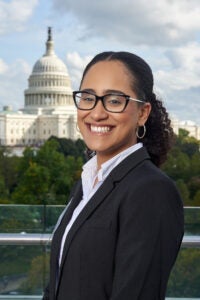
Tejada credits the program for a shift in the way she views her professional identity—from a communications person working in nutrition to a public health professional whose tool is communication.
She went on to earn an MPH from the University of Michigan and is now a health communications manager at the Massachusetts Department of Public Health. “I handle politically sensitive messaging, equity initiatives, and public-facing content. The scope is broader, and the stakes are higher, and the leadership grounding I got from the program is a big part of why I felt ready for that step,” she said.
Applications for the 2026 LIH program, which runs September 17 through November 5, open August 1.
Practical learning
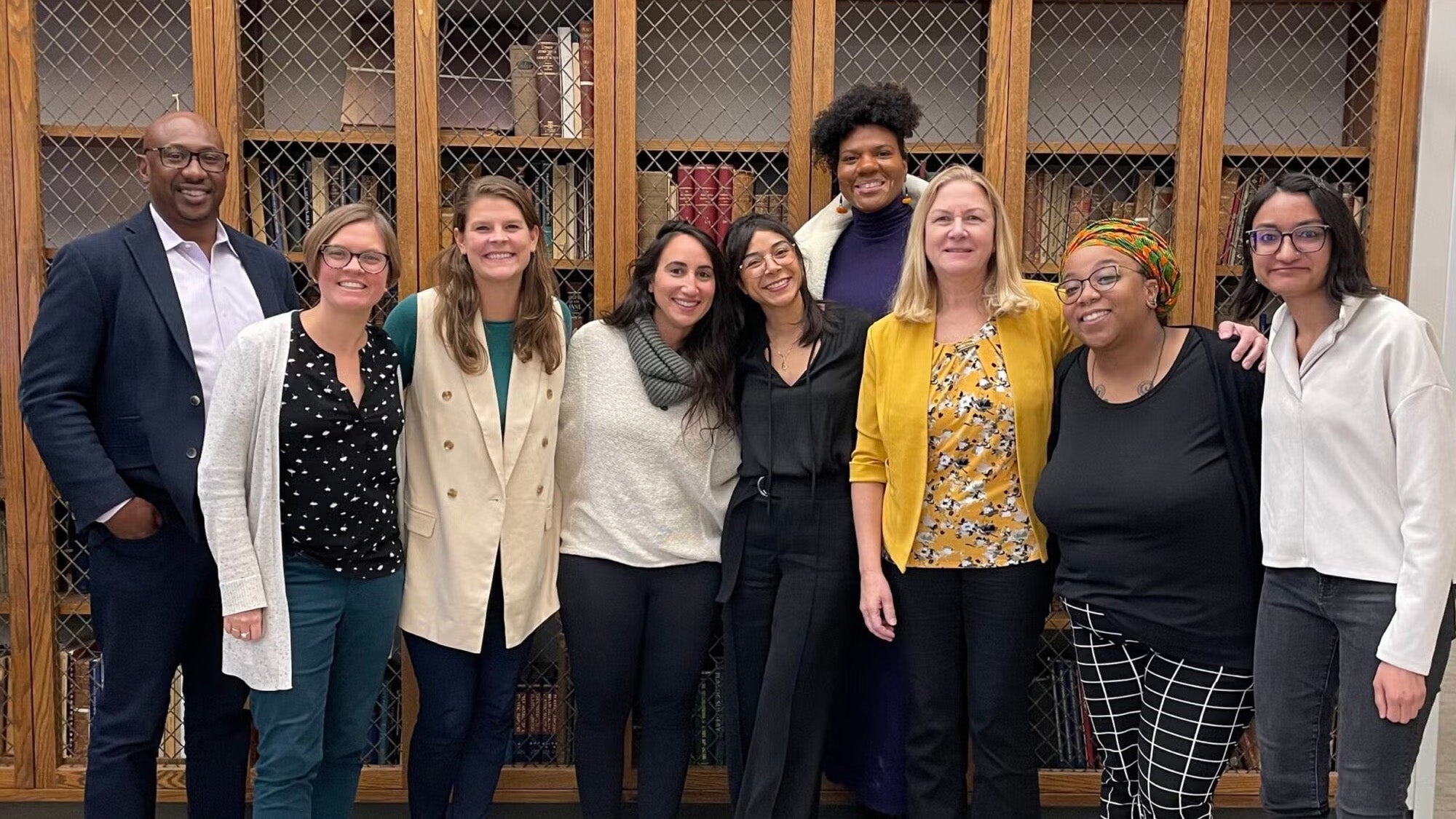
Launched in 2011 and directed by Bekka Lee and Ra’Shaun Nalls, LIH has been run as a hybrid program every fall since the COVID-19 pandemic. That has allowed the program to expand its 130-person alumni network from primarily the Boston area to Springfield and other parts of Massachusetts. Participants typically come to campus three times during the program.
Its curriculum’s main topics include community-based participatory research (a method in which scientists and community members work as equal partners), program planning and evaluation, and includes additional content focused on specific areas of public health. For example, last year, Howard Koh, faculty chair of the Initiative on Health and Homelessness, gave a lecture on making public health impact through policy change. During the program, participants develop a capstone project and leave with a plan for putting it into action in their communities.
“What I appreciated most about the program was how practical the learning was,” said Tiffany Vassell, a nurse who joined the 2022 cohort to gain skills to help her transition from clinical work to public health leadership. Vassell is now director of the Healthy Baby Healthy Child program at the Boston Public Health Commission, which serves thousands of families each year. “The concepts I learned continue to influence how I approach quality improvement, partnerships, program design, and community engagement,” she said.
Applying learning in real-time
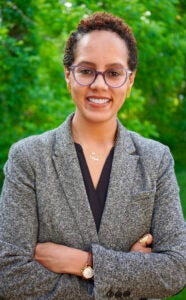
LIH’s emphasis on leadership development was what inspired Meriam Mikre, DrPH ’26, to apply to be a teaching assistant and also to evaluate Leaders in Health for her doctoral project. She said that while there are other programs teaching foundational public health concepts to community leaders, LIH’s approach is unique.
“Leaders in the program apply what they’ve learned in real time,” said Mikre. She noted that lessons are often followed by exercises in which participants apply new concepts to their work, and that breakout discussions create opportunities to learn from peers working across diverse public health contexts. By learning from cohort members whose experiences both mirror and differ from their own, she said, participants develop new perspectives and practical insights to inform their efforts.
Importantly, Mikre said, Lee and Nalls center the wisdom and expertise held by the participants—some of whom have been doing public health work for decades. They also invite participants back to collaborate as community partners in Harvard Chan School courses, serve on advisory boards, and contribute to research.
One such example is community organizer Ricardo Henry, who co-founded a food distribution program in Boston’s Hyde Park neighborhood to help residents struggling with food insecurity during COVID-19. He applied to LIH in 2022 “to ensure that I was engaging the community in a meaningful and equitable way,” he said.
Henry used skills he gained in community-based participatory research to gather meaningful data on the primary care experiences and nutrition needs of the mostly Haitian population he serves. Over the past few years, his program has evolved into a nonprofit called the Hyde Park Food and Wellness Pop-Up and includes initiatives such as a high school community service program and a nutrition education curriculum. Henry has contributed to Nalls’ community-based participatory research course at the School, and last year a group of students partnered with Henry on an informal survey and group discussion with Hyde Park residents.
“I would encourage anyone who works with communities and is committed to improving health outcomes to apply to Leaders in Health,” Henry said. “The program helped me approach community engagement more intentionally, strengthened my leadership, and gave me practical tools to build authentic partnerships with community members. As a result, my work became more focused, more collaborative, and ultimately more effective.”