On Someone Else’s Terms

Zili Huang is a Rose Service Learning Fellow and PhD student in the Department of Global Health and Population.
Before traveling to Indonesia this summer, I thought I had a fairly good understanding of why people do, or do not, follow medical advice.
Like many researchers trained in health policy and economics, I had learned to think about health behaviors through familiar frameworks, including access to care, financial barriers, health literacy, provider communication, and health system design. When patients did not take medication as prescribed, we naturally asked what prevented them from doing so. Were medicines unavailable? Were they too expensive? Did patients understand the benefits of treatment? These were the questions I had been trained to ask.
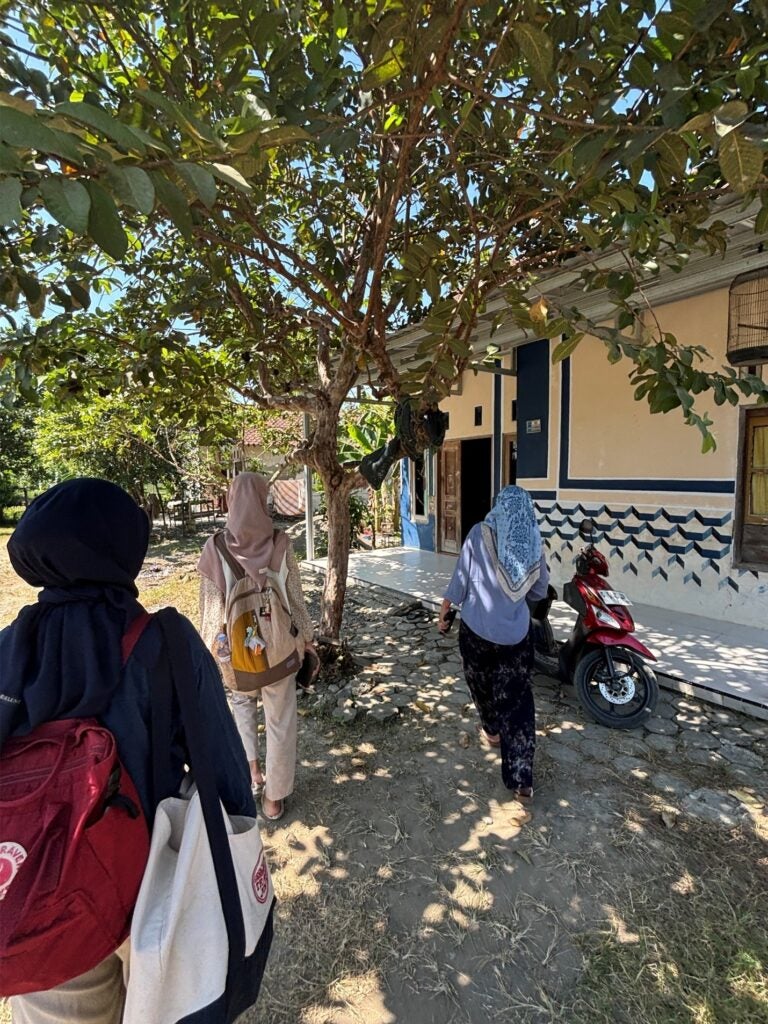
Then I spent ten days in villages around Slawi, a sub-district of Tegal in Central Java, collaborating with the Center for Indonesia’s Strategic Development Initiatives (CISDI) on a study examining how people with hypertension navigate the primary care system and identifying opportunities to strengthen chronic disease care.
Each day, I accompanied our local colleagues as they visited households to conduct blood pressure screening and interview community members. I expected to learn about Indonesia’s primary care system. Instead, I found myself reflecting on something much more fundamental: the assumptions I carried with me into the field.
One conversation, in particular, has stayed with me.
During an interview, a community member explained why she did not take medication consistently for her hypertension. She told us that years of worrying had contributed to her illness, but ultimately, it was God who had given her the disease. Because it came from God, she believed it was something she should accept rather than resist through medication.
My first instinct was almost automatic. Years of training had taught me to explain health behaviors by identifying barriers that could be measured, categorized, and ultimately addressed. I found myself mentally translating her explanation into concepts I already knew. Perhaps this reflected limited health literacy. Perhaps it was a misconception about chronic disease. Perhaps it was another example of poor medication adherence shaped by cultural beliefs.
But as the conversation continued, I realized I was no longer trying to understand her on her own terms. I was trying to translate her into concepts that already existed within my own vocabulary.
From within her own understanding of illness, faith, and responsibility, her decision was internally coherent. It reflected a way of making sense of illness that was consistent with her worldview, even though it differed from the biomedical framework through which I had been trained to understand health.
That realization stayed with me long after the interview ended.
As health systems researchers, we often ask why people do not follow treatment recommendations. We build models to examine financial incentives, insurance coverage, provider behavior, and service delivery. These questions are both important and necessary. Yet conversations like this reminded me that there are dimensions of human behavior that cannot be fully understood through institutional or biomedical explanations alone.
In health policy research, culture, religion, and social norms are often treated as contextual factors surrounding health behavior. My experience in Slawi made me wonder whether this framing is backwards. These are not merely the context in which behavior occurs; they are often part of the logic through which behavior itself becomes meaningful. Without understanding these systems of meaning, some health behaviors remain difficult to explain. It is not because the behaviors themselves lack logic, but because our existing frameworks may not yet be asking all of the necessary questions.
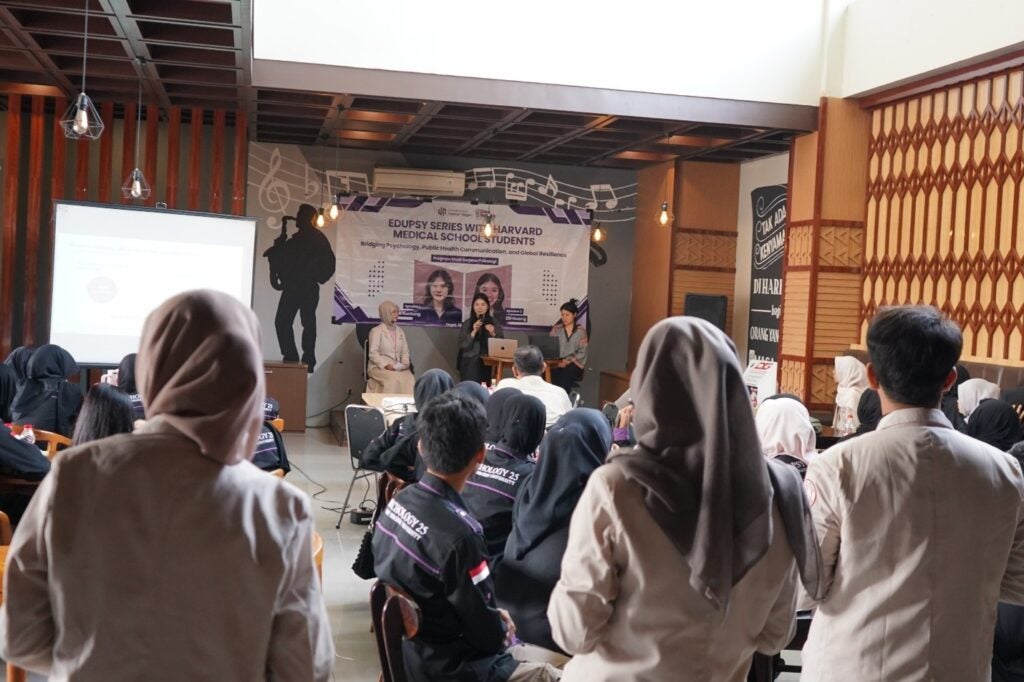
A few days later, during a discussion with students at a local university, one nursing student raised a question that echoed this realization.
“Many patients don’t listen to our advice,” she said. “Sometimes they continue doing things that are clearly wrong. What should we do?”
Only 10 days earlier, I might have answered by talking about education, counseling, or improving health communication.
After spending time in the villages, I hesitated.
The question was no longer simply how to persuade people to follow scientific recommendations. It was whether the distinction between right and wrong that science offers is the same distinction people use to navigate their everyday lives.
Science is remarkably powerful at telling us what improves health. It can distinguish effective treatments from ineffective ones and provide evidence for better clinical and public health practice. But people’s daily decisions are rarely made through scientific reasoning alone. They are shaped by religious beliefs, cultural traditions, family relationships, personal experiences, and moral understandings of what it means to live well.

This realization did not make me question science. Instead, it made me reflect on the role of the researcher.
For those of us trained in science, learning to produce evidence is only part of becoming a researcher. Equally important is recognizing that people do not necessarily understand illness through the same conceptual frameworks that researchers do. Our task is not simply to communicate scientific facts more effectively, but also to understand the systems of meaning through which those facts are interpreted, accepted, questioned, or rejected.
Looking back, I think the most valuable lesson I brought home from Slawi was not about Indonesia’s health system or hypertension management.
It was about reflexivity. I entered the field believing that my role was to understand why people were not following scientific recommendations. I left realizing that another responsibility comes first: understanding how people understand their own lives.

Only then can we begin to ask how public health might communicate scientific knowledge in ways that people can genuinely hear – not by dismissing their beliefs as ignorance, but by recognizing that science and lived experience often speak different languages.
Perhaps the challenge is not simply translating scientific evidence into simpler language. It is learning to translate between different ways of making sense of the world.
And perhaps that is one of the most important responsibilities of public health.