‘Trust that you are more ready than you think,’ Harvard Chan graduates told
At some point in their careers, members of Harvard T.H. Chan School of Public Health’s Class of 2026 should expect to be called on to take the lead during a moment of crisis, said Rochelle Walensky, MPH ’01, former director of the U.S. Centers for Disease Control and Prevention (CDC).
Speaking at the School’s May 27 Convocation ceremony, Walensky said, “Public health has never waited for perfect times, only for imperfect people, as we are, willing to step forward. And now, that responsibility—and I believe, that great, great gift—belongs to all of you.”
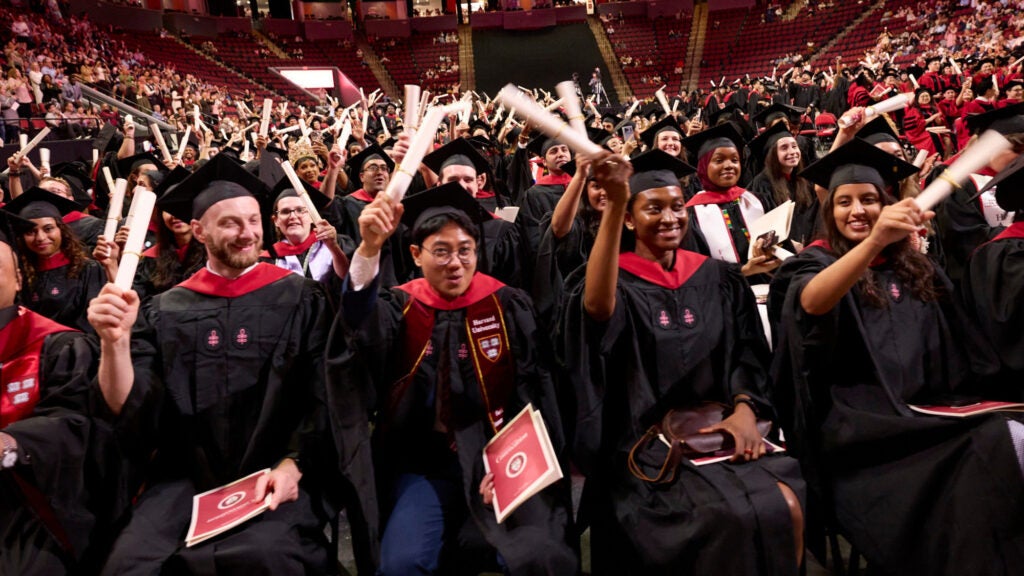
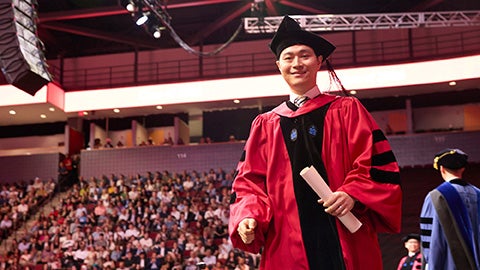
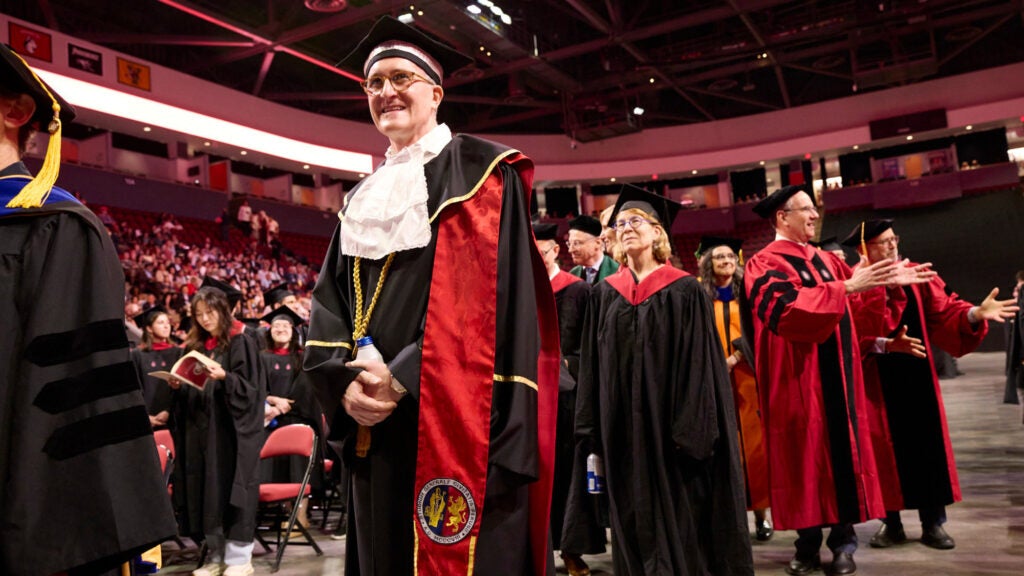
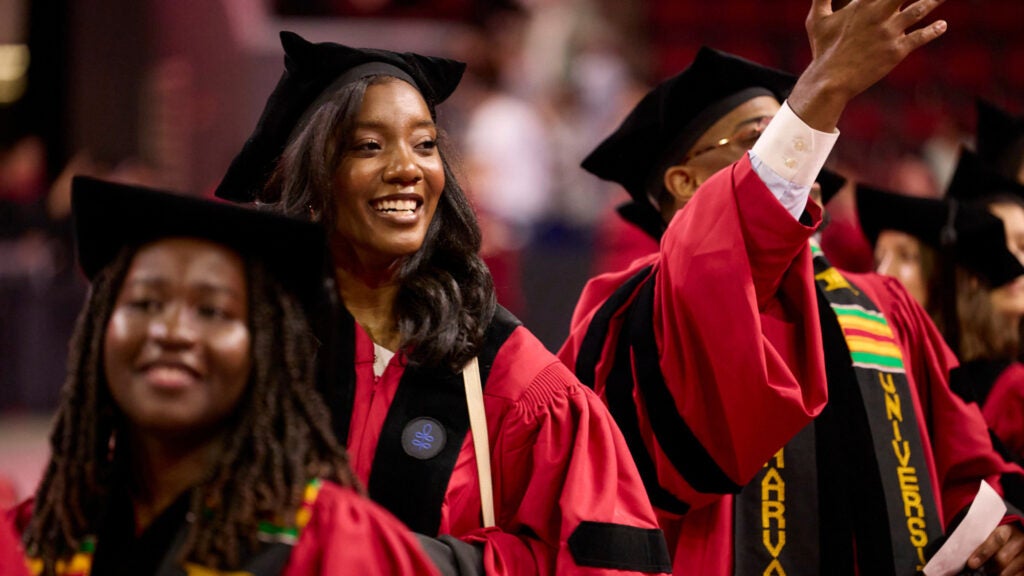
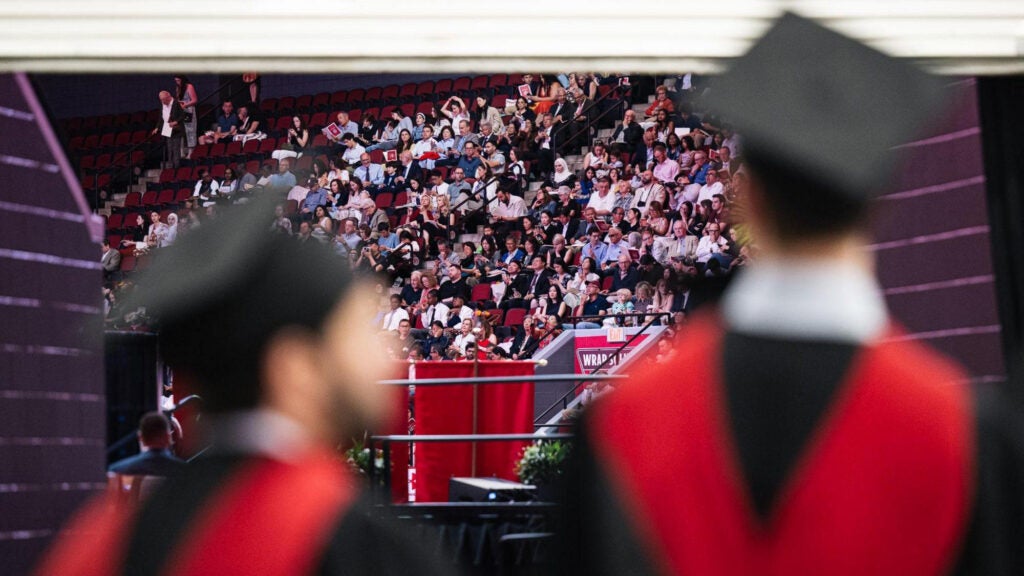
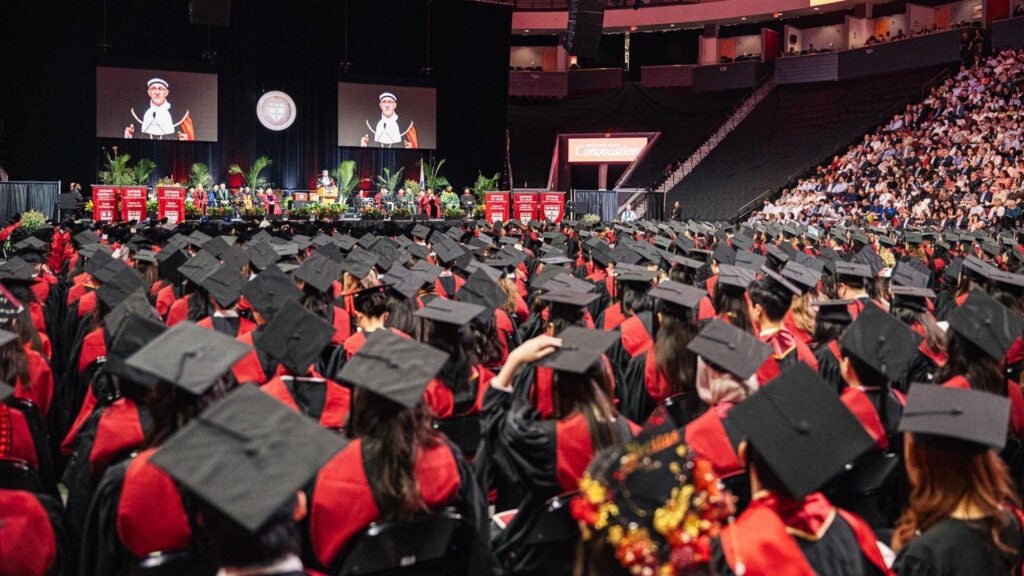
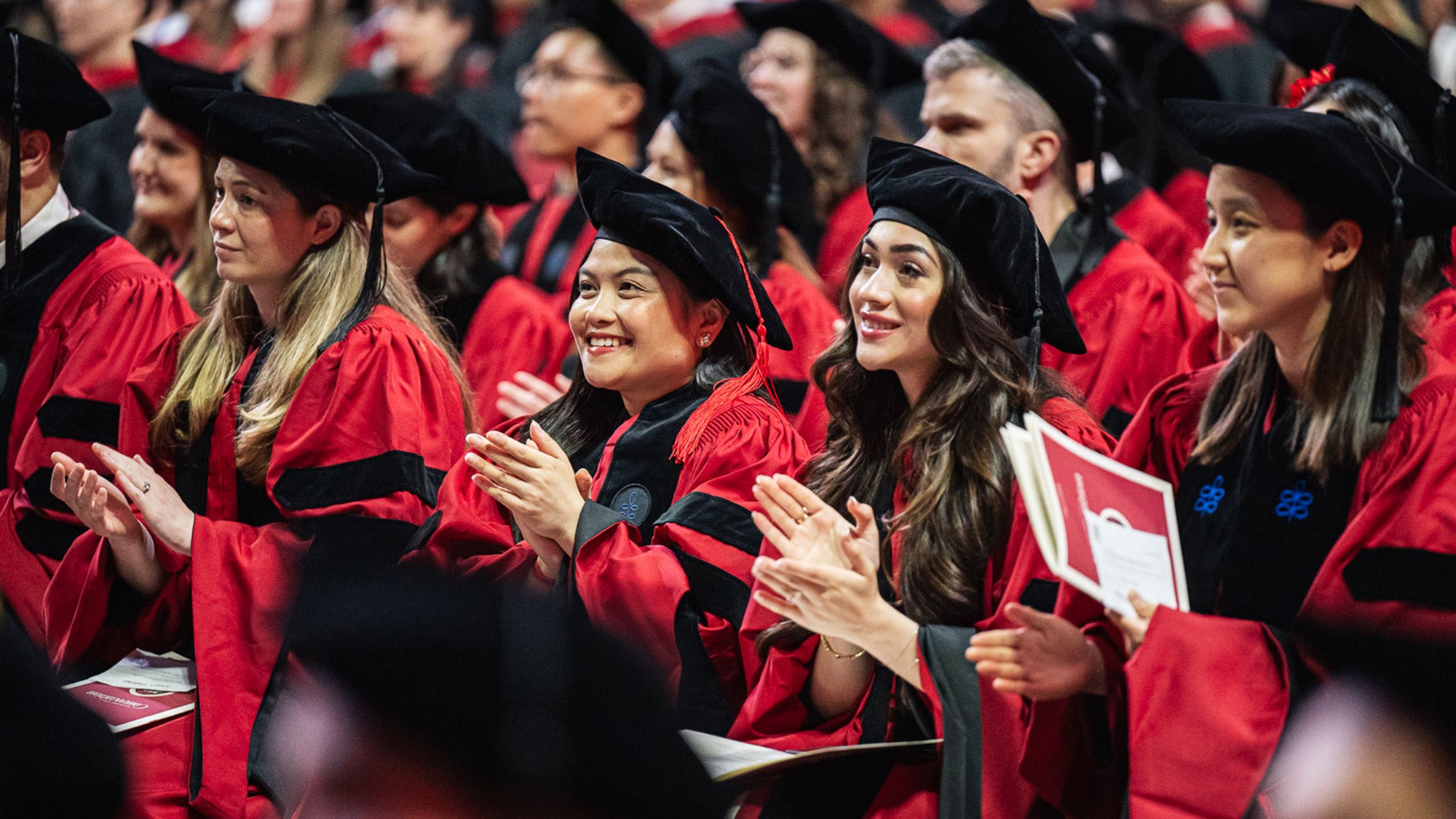
The Convocation for the Class of 2026, held at Boston University’s Agganis Arena, celebrated the accomplishments of 659 graduates. Degrees, which will be officially granted at the Harvard Commencement ceremony on May 28, included doctor of philosophy (91), doctor of public health (8), master in health care management (17), master of public health (367), and master of science (176). The graduates came from 37 U.S. states and 57 different countries.
At a reception on May 26, awards were presented to graduating students, faculty, and staff members. Award recipients were recognized by Jorge Chavarro, dean for academic affairs, during the Convocation ceremony.
Rise to a moment that ‘feels impossible’
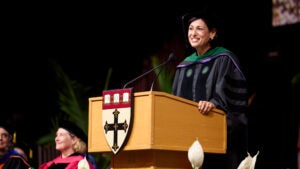
Walensky told the audience that the graduates have been changed by their public health training. “It sharpens how you see the world. It makes you more curious, more skeptical, and more determined to look beneath the surface,” she said. Addressing the graduates, she added, “That is exactly what the world needs from you now.”
She highlighted a few members of the class, including Heesu Shin, SM ’26, a former South Korean air force nursing officer and pediatric ICU nurse who hopes to boost health systems’ ability to care for children with complex diseases around the globe, and Mia Sanchez, SM ’26, a first-generation student who wants to create sustainable solutions for climate change and inspire new generations of scientists—and who found time amid her studies to run this year’s Boston Marathon with her grandfather Carlos.
Walensky then turned to historical examples of people stepping forward to meet a public health challenge, noting how these moments can often come when least expected. George Washington’s experience surviving smallpox led him to require inoculation for troops during the Revolutionary War, a move that likely changed the course of history, Walensky said. In the 1940s, physician and epidemiologist Alexander Langmuir transformed frustration with disorganized disease reporting into the creation of the CDC’s Epidemic Intelligence Service, establishing a global model for outbreak detection and response. And in 2015, physician Mona Hanna-Attisha exposed the water crisis in Flint, Michigan, speaking out—in the face of criticism and institutional resistance—about her findings that children had elevated lead levels in their blood.
Walensky also shared her own story of unexpectedly being asked in November 2020 to lead the CDC when she was chief of the Division of Infectious Diseases at Massachusetts General Hospital. She accepted despite feelings of doubt and imposter syndrome, she said.
Walensky urged graduates to rise to the moment when they are called on to make a difference. Although the responsibility may feel overwhelming, she said, they will be armed with their education, bolstered by the data, and supported by family, friends, and mentors.
“Trust that you are more ready than you think,” Walensky said. “And know that what feels impossible today may become the thing that defines you tomorrow.”
Carrying forward a legacy
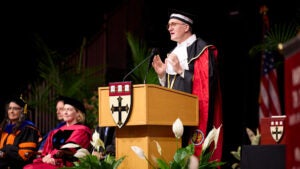
Harvard Chan School Dean Andrea Baccarelli told graduates that they are now part of an extraordinary legacy. “You join a community of people who have changed the world,” he said. “And I have every reason to believe that you will do the same.”
He celebrated the expertise that members of the Class of 2026 have developed in a wide range of areas, and the remarkable work they will go on to do—from epidemiologists tracing the causes of diseases and infectious disease researchers advancing better treatments to interdisciplinary thinkers and future global health leaders who understand that today’s health challenges cross borders and demand collaboration across fields.
Baccarelli also highlighted a few of the public health luminaries who are part of the School’s legacy, including Alice Hamilton—Harvard’s first female faculty member—whose research helped lay the foundation for workplace safety laws in the U.S.; the eight alumni who became CDC directors; and current faculty member David Williams, whose Everyday Discrimination Scale has helped quantify the health consequences of being treated as unequal.
“Public health can and does achieve extraordinarily ambitious goals. No field touches more lives,” Baccarelli said. As the new graduates continue the School’s legacy of public health impact, he said, “You carry forward not only knowledge, but courage, and the deep conviction that human suffering and inequities are not inevitable. I know you’re ready.”
New ways of seeing
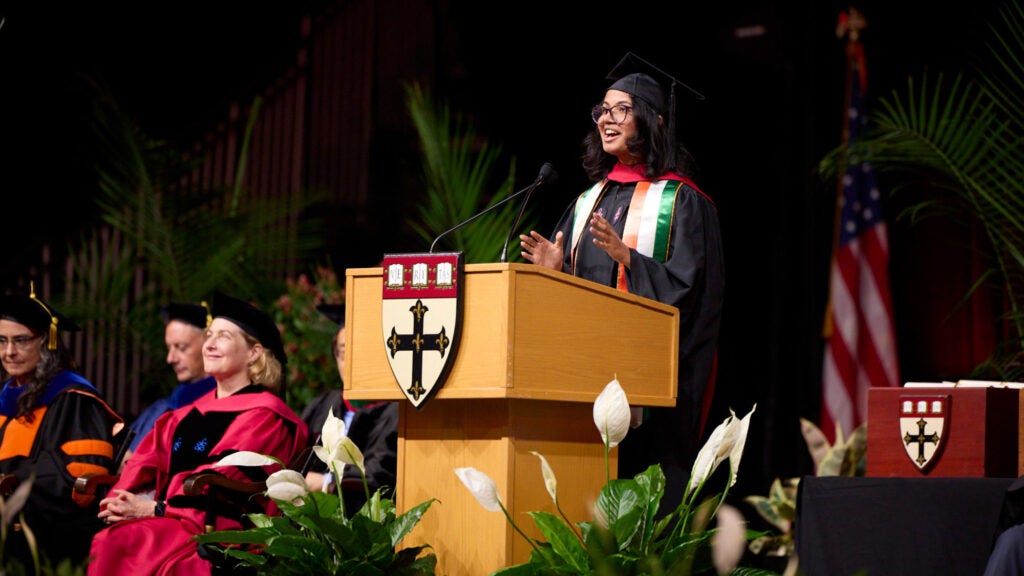
Rajeshwari Subramanian, MPH ’26, was the student speaker. She spoke about how her family’s life changed following a road accident that left her father paralyzed from the neck down. As her family modified their home to make life easier for him, Subramanian said that she became aware of the many barriers that exist in daily life for people with disabilities.
“That was my first lens. A lens shaped by access,” she said, noting that now when she walks into a room, she notices things like how easily it could be navigated by a person in a wheelchair.
At Harvard Chan School, she said, she realized that her fellow students each had their own lenses—that thing that they didn’t just see but refused to ignore—such as climate, nutrition, or housing disparities. Subramanian said that these lenses have now become her own and have expanded the things in the world that she can’t unsee.
She told her fellow graduates that their education had given them not just new knowledge, but new ways of seeing. “And that is not just our burden, it’s our superpower. Because the world does not just change through big, dramatic revolutions. It changes because people like us walk into rooms and notice things others don’t. And decide: This shouldn’t be this way.”
Subramanian urged members of her class to hold onto their personal lenses. “It’s not just how you see the world. It is how you will change it.”
‘Make your mark’
Bernard Lee, president of the Harvard Chan School Alumni Council, said that while graduates will face a complex environment in public health with real pressures on trust, truth, and health systems, they are ready. “You are exactly the people to move us forward,” he said.
He welcomed graduates into the School’s 15,000-plus global network of alumni, who he said are working to rebuild trust in science, close gaps in health care access, and fight for health equity.
“So, go. Make your mark. The work will be meaningful. The impact will be real. And the world—your patients, your communities, your future students—is counting on your brilliance, your courage, and your heart,” he said.
Gallery photos: Kent Dayton, Ben Gebo