World Malaria Day 2026: Turning Momentum into Action
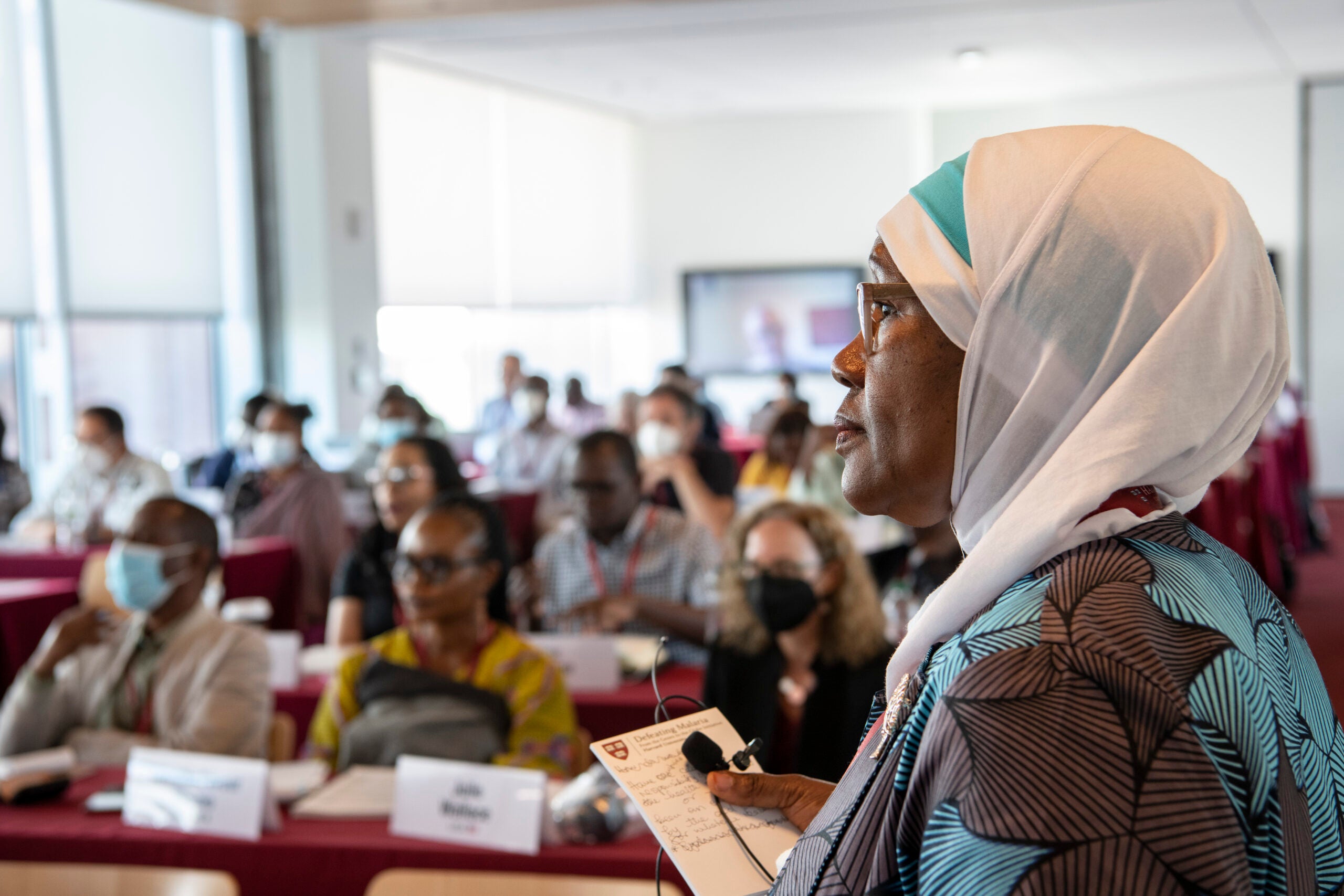
In honor of World Malaria Day 2026, Dr. Regina Rabinovich—Director of the Malaria Elimination Initiative at ISGLOBAL at the University of Barcelona and Scholar in Residence, Department of Immunology and Infectious Diseases, Harvard T.H. Chan School of Public Health—shares her perspective on how research, partnerships, and real-world engagement are accelerating progress.

Through the lens of World Malaria Day 2026’s theme, “Driven to End Malaria: Now we can. Now we Must,” what is one emerging opportunity or approach that gives you the most optimism for the future of malaria elimination?
An emerging near-term approach is the potential for synergies in delivery across existing and emerging tools. Vaccine programs increasingly need to coordinate with malaria, NTD, and water programs. The global health community has learned hard lessons about purely vertical approaches: these are neither efficient in terms of human resources nor are they sustainable in terms of financial resources.
The University’s malaria research efforts date back to the Harvard Expedition of the 1920s, where malaria was documented and studied in Liberia and the Belgian Congo. What’s one lesson from the past that continues to shape our work today?
An evergreen lesson in malaria is that innovation is critical. Historically, in the 1950s, the global health community launched a global eradication program with a single drug and a single insecticide. This limited approach, coupled with lessons learned from the successful eradication campaign (e.g., Smallpox and the current Polio effort), has taught us key lessons: the risk of resistance, the need to improve tools, and the challenges unique to the last mile. Both biological resistance and financial gaps are constant challenges to these programs. Innovation remains a key step in confronting both of these problems.
What’s one thing everyone should know about Harvard’s Defeating Malaria: From the Genes to the Globe Initiative?
Harvard’s Defeating Malaria Initiative is far from an ivory tower project—it is deeply grounded in practice, engaging with country leaders, innovators, and implementers to create linkages and support leaders to push the frontiers of scientific and public health innovation.