Health Systems Innovation Lab
The Health Systems Innovation Lab is a global research and training lab that specializes in health system performance, health policy, and venture creation.
677 Huntington Ave,
Boston, MA 02115
Building 1, 11th floor
HSIL Hackathon 2026 – Building High-Value Health Systems: Leveraging AI
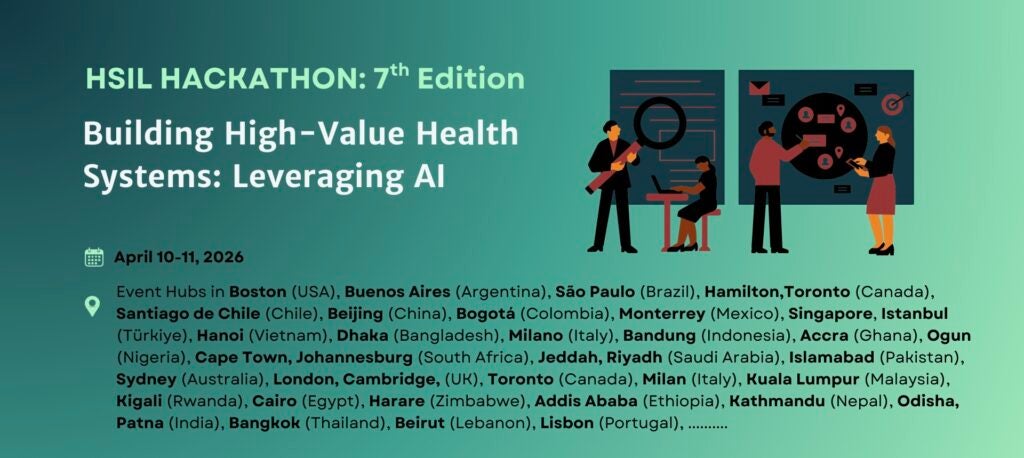
Where the world’s best minds reengineer the future of health systems. Join the 7th Edition to design, prototype, and pitch technology-powered solutions with real pathways to scale.
What is the HSIL Hackathon?
The Health Systems Innovation Lab (HSIL) Hackathon is a transformative global event where innovators come together to design solutions that strengthen health systems. The Hackathon is an intensive, collaborative experience spanning 2 days where participants brainstorm, build, and pitch new ideas to tackle a specific challenge. The goal is to move from concept to a functional prototype or working product within the event’s timeframe.
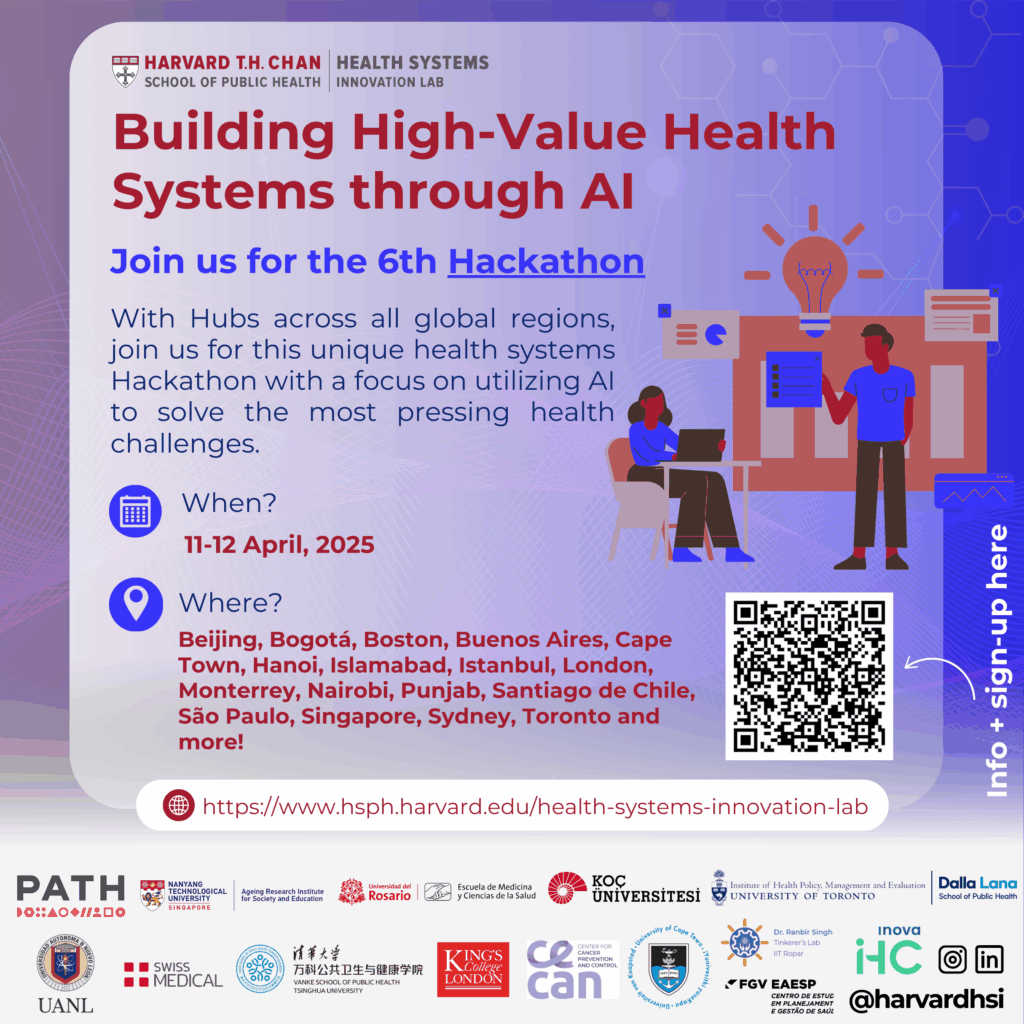
Every year, HSIL organizes the Hackathon in collaboration with partner countries and institutions around the world. In 2025, the HSIL Hackathon brought together over 500 teams across 19 hubs globally, making it the largest event of its kind to date.
Following the Hackathon event, the winning teams are invited to participate in the Health Systems Innovation Lab Venture Incubation Program which spans multiple weeks and supports further development of each venture through structured educational sessions and mentorship.
At its core, the Hackathon empowers participants to bridge the gap between theory and practice by encouraging unconventional thinking and practical implementation. The solutions developed during these events have the potential to revolutionize healthcare—improving patient care, enhancing operational efficiency, and strengthening the adaptability of health systems worldwide.
Who should join?
This initiative is open to all who are inspired to advance health systems through innovation. Previous hackathons have engaged students, clinicians, engineers, designers, policy analysts, entrepreneurs, and others – forming interdisciplinary teams at Harvard and partner hubs worldwide.
Participants can join through their local hub as a team or individually.
Timeline – 2026 (7th Edition)
Dates reflect the 2026 Hackathon and Venture Building Program. Local hubs may run supplementary sessions.
- Application Period = Ongoing (Until spots for each hub are filled)
- HSIL Collaborative Hub Program = February 9 – March 6
- Speaker series open to all registered participants
- Mentorship opportunities
- Two-day Hackathon Event = April 10-11, 2026
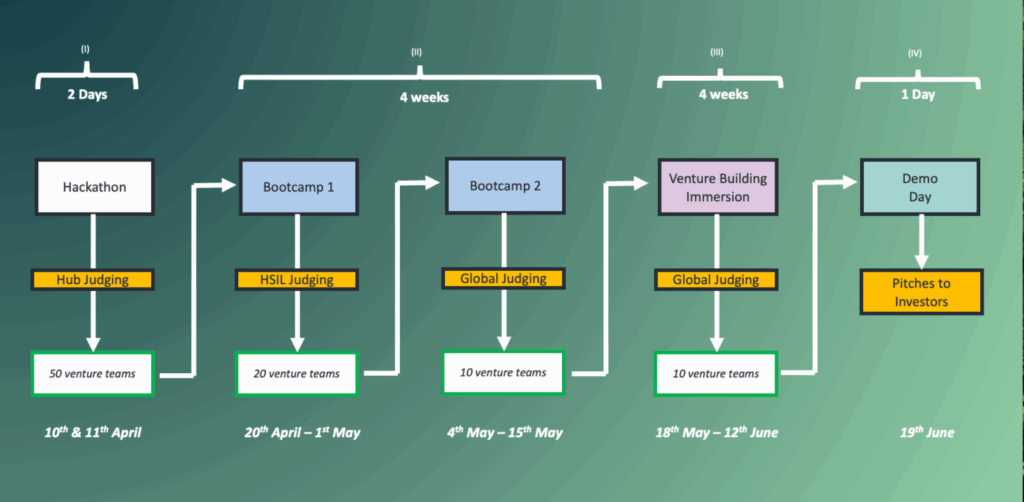
- Winning teams from each hub (50 teams total) advance to Venture Building Program
- Venture Building Bootcamp 1 = April 20-May 1, 2026
- 50 teams participate -> 20 teams advance
- HSIL Judging + Bootcamp 2 = May 4-May 15, 2026
- 20 teams participate -> 10 finalists advance
- Global Judging Window = May 18-June12, 2026
- Finalist refinement + global panel
- Demo Day = June 19, 2026
- Pitches to investors & awards
Hackathon Event
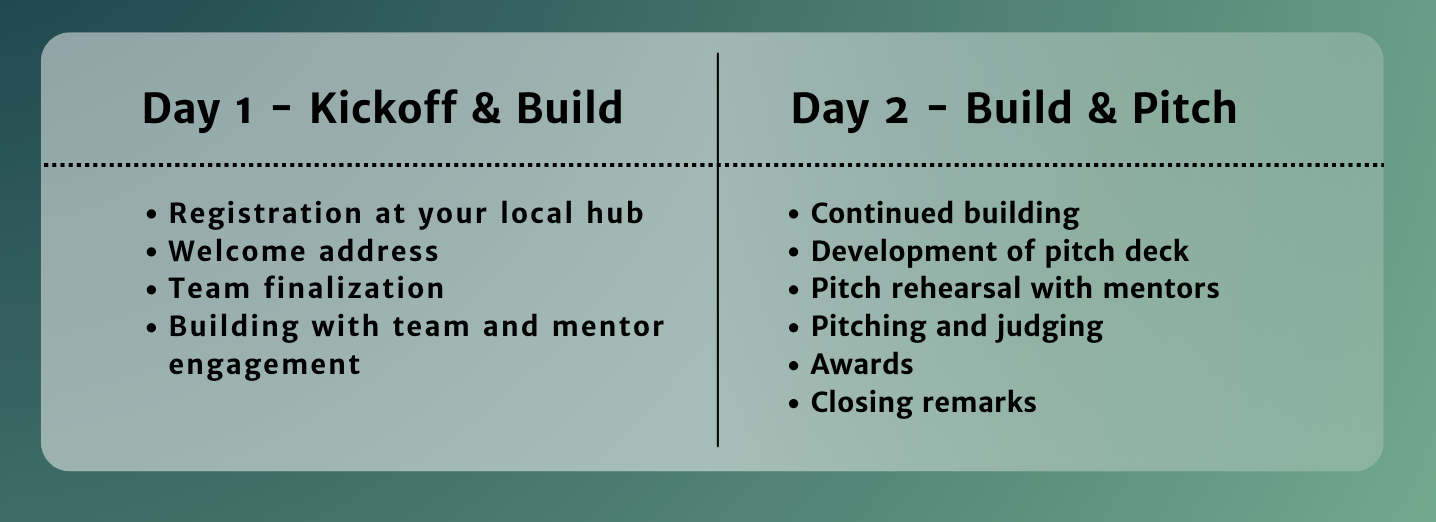
The Hackathon is an intensive, collaborative experience spanning 2 days where participants brainstorm, build, and pitch new ideas to tackle a specific challenge.
Venture Building Program
Following the hackathon, HSIL runs a remote Venture Incubation Program to help selected teams develop their ideas into viable ventures.
The Venture Building Program operates remotely and is structured in three phases over eight weeks:
2026 Collaborating Hubs
Partner institutions host local build sites across five continents. Once applications open, team members from each hub can find their dedicated workspace below.
Health Systems Innovation Lab at Harvard T.H. Chan School of Public Health



University of Sydney / Westmead Health Precinct

The NSW Office for Health and Medical Research (OHMR) is part of the NSW Ministry of Health that supports and coordinates health and medical research across New South Wales. It funds research, builds collaborations, and promotes the translation of evidence into healthcare practice and policy to improve health outcomes.

The University of Sydney is one of Australia’s leading research-intensive universities, located in Sydney and established in 1850. It is known for excellence in teaching and research across a wide range of disciplines, including health, medicine, and public health. USYD plays a major role in advancing innovation and improving global health through high-impact research, strong industry partnerships, and a diverse international community.

The University of New South Wales is a leading research-intensive university in Australia, known for its strong focus on innovation, technology, and high-impact research. Located in Sydney, UNSW is internationally recognised for excellence in areas such as medicine, public health, engineering, and business, and for its strong partnerships with industry and global institutions.
The Westmead Health Precinct is one of Australia’s largest integrated health, education, and research hubs, located in Western Sydney. It brings together major hospitals, research institutes, and universities to deliver world-class healthcare, conduct cutting-edge research, and train future health professionals, with a strong focus on improving patient outcomes and community health.

Westmead Research Hub is a cooperative partnership that brings together hospitals, universities, medical research institutes, and pathology services to share resources and infrastructure. It started from humble beginnings in 2001 with original partners, The Westmead Institute for Medical Research (then named Westmead Millenium Institute), Westmead Hospital, The Children’s Hospital at Westmead and Children’s Medical Research Institute. The Hub is comprised of seven major partners and supports 1,400+ researchers and students across multiple disciplines.

The Western Sydney Local Health District is part of the NSW public health system and is responsible for delivering healthcare services to communities in Western Sydney. It manages major hospitals and community health services, and is closely involved in clinical care, research, and education through partnerships within the Westmead Health Precinct.

The Laboratory for Technological Innovation in Health (LAIS/UFRN) is the first Brazilian laboratory to have been established within a hospital unit—the Onofre Lopes University Hospital (HUOL)—with the mission of advancing innovation in health. Over the past 15 years, LAIS has consolidated its position as a national and international reference in the development of technologies, research, and strategic initiatives aimed at strengthening Brazil’s National Health System.
Aligned with the UN 2030 Agenda, LAIS contributes directly to the advancement of the Sustainable Development Goals (SDGs), particularly those related to health, quality education, decent work, and the reduction of inequalities. Its institutional mission centers on fostering equitable, technology-driven, and evidence-informed solutions to strengthen health systems and promote social development.

Fundação Getulio Vargas (FGV), InovaHC, MOSO Health Ventures
A leading business school of Fundação Getulio Vargas, recognized for excellence in management education, research, and innovation, with strong engagement in entrepreneurship, public policy, and healthcare. Website
The innovation nucleus of the Hospital das Clínicas of the University of São Paulo (HCFMUSP), responsible for fostering applied research, technology transfer, and innovation initiatives in collaboration with academia, startups, and industry partners. Website
A health-focused innovation and venture-building organization that supports startups and ecosystems in developing scalable solutions for health systems, and serves as the operating organization of Hub InovaHC. Website
McMaster University – The Clinic, Health Innovation Hub

The Clinic is McMaster’s Health Innovation Hub, empowering students, clinicians, and researchers to advance health solutions through competency-based, need-driven innovation. At the core of our offerings are the Health Innovation Bootcamp and Residency Program, which focus on early entrepreneurial education and development. Collaborating with Hamilton’s ecosystem and regional hospital partners, these programs help innovators solve well-defined health problems with targeted solutions that drive meaningful health and societal impact.
University of Toronto
The Dalla Lana School of Public Health (DLSPH) at the University of Toronto is Canada’s largest public health school and a leader in research, education, and health system innovation. The School is advancing a renewed vision that strengthens interdisciplinary research, modernizes public health and health systems education, and deepens engagement with partners locally and globally. DLSPH is committed to providing evidence, expertise, and advocacy to improve population health while building strong collaborations with Indigenous communities and international stakeholders. Through its academic programs and research initiatives, DLSPH is shaping future public health leaders and contributing to meaningful, sustainable health system improvements.


The Center for Cancer Prevention and Control (CECAN) is a center of research excellence in Chile, funded by ANID, dedicated to strengthening cancer prevention and control through high-impact interdisciplinary research. It brings together researchers from different disciplines and institutions to generate scientific evidence aimed at informing public policy and improving the health system. Through applied research, human capital training, and public engagement activities, CECAN seeks to change the course of cancer in the country. By connecting science, public policy, and society, the Center promotes sustainable solutions that have a meaningful impact on people’s lives.

The Andrés Bello Institute of Public Health is a leading center for undergraduate and postgraduate education in health and public policy, created in response to the growing need for specialization in health management. The Institute also provides technical assistance and tailored training to public and private health institutions, Armed Forces hospitals, and municipalities throughout the country, supporting projects aimed at improving quality standards and patient-centered care. The Institute develops projects, research, and studies in public health, epidemiology, health economics, and the organization of health systems and institutions, with the objective of strengthening teaching, promoting innovation, and contributing to the design of public policy solutions. It also acts as a strategic partner for the University’s health faculties in undergraduate education, research and publications, clinical field development, and community engagement programs.

PLEIN UDP (Plataforma de Emprendimiento e Innovación) is the entrepreneurship and innovation hub of Universidad Diego Portales, Chile, dedicated to creating public value through innovation.
It designs and leads public–private collaborations that connect students, researchers, startups, and corporations to address complex societal and market challenges.
Through experiential learning formats—bootcamps, hackathons, challenges, and workshops—it equips participants with practical innovation and entrepreneurship skills. By bridging key ecosystem actors, PLEIN UDP strengthens collaboration and drives inclusive and sustainable solutions
Tsinghua University
Universidad del Rosario

American University of Cairo

Ministry of Health / National Health Innovation Lab Ethiopia

The Federal Ministry of Health (FMoH) of Ethiopia is the lead public institution responsible for promoting and safeguarding the health and well-being of the population through the provision and regulation of equitable, high-quality health services. The Ministry provides strategic leadership for the national health system, including health sector planning, service expansion, disease prevention and emergency response, regulation of medicines and health services, health workforce development, social health insurance, and health information systems. Through the National Health Innovation Lab Ethiopia (NILE), the Ministry advances health system innovation by identifying priority challenges, incubating and scaling solutions, fostering multi-sectoral partnerships, and accelerating the adoption of innovations to improve access, quality, and system performance.
University of Ghana,
The UGBS Innovation Hub (UGBS Nest) is a dynamic innovation and entrepreneurship space within the University of Ghana Business School (UGBS). The Hub is dedicated to nurturing student-led and community-based business ideas and creating an enabling environment that supports their transformation into viable and scalable enterprises.
While the Business School equips students, faculty, and the wider community with essential business and management skills, UGBS Nest complements this mandate by working closely with departments, industry and community partners to bring the ideas of young and emerging entrepreneurs to life, ultimately driving positive social and economic impact.
The University of Ghana’s College of Health Sciences (CHS) is the premier health sciences college in Ghana. It comprises leading schools, research institutes, and centres, including the University of Ghana Medical School, the University of Ghana Dental School, and the School of Biomedical and Allied Health Sciences at the Korle Bu Campus, as well as the School of Public Health, the School of Nursing and Midwifery, the School of Pharmacy, the Noguchi Memorial Institute for Medical Research, the West African Genetic Medicine Centre, and the West Africa Centre for GeoHealth at the Legon Campus.
The College’s mandate is to transform health through excellence in education, cutting-edge research, and global collaborations, leveraging innovation to advance health outcomes locally, regionally, and globally.

Purple Point Neurodiagnostics, Ghana (PPNG) is an innovation-driven neurodiagnostics organization headquartered in Accra and operating as a subsidiary of Purple Point Neurodiagnostics LLC, USA. Beyond delivering affordable, high-quality neurodiagnostic services, PPNG advances health systems through innovation. The Purple Point Research and Development Institute (PPRND) center, serves as a hub for research, technology development, and scalable brain and mental health solutions. Through interdisciplinary collaboration and applied innovation, PPNG supports the development of context-responsive neurohealth solutions for Ghana and the wider African region.
Ennovate BLCK is an innovation-driven ecosystem focused on developing impactful solutions through interdisciplinary collaboration. Our program nurtures talents across five core verticals: environment, health, sustainable mobility, big data, and artificial intelligence.
We supports students, early-career researchers, and professionals catalyze their ideas through structured programs, mentorship, and collaboration with local and global experts. Big Data and AI are key areas of focus of our “Elevate Network” and Ennovate BLCK’s charter for innovation and skill building.
The India hub involves the Harvard T.H. Chan School of Public Health India Research Center (IRC), the Incubation Centre, Indian Institute of Technology Patna (IIT Patna), and the KIIT School of Public Health, Kalinga Institute of Industrial Technology Deemed to be University (KIIT). The HSIL Hackathon for the India Hub will be collaboratively hosted at two locations- Patna, Bihar and Bhubaneswar, Odisha. Applicants can indicate their preferred location when submitting their application for the hackathon. Selected applicants may be assigned to either location based on capacity
Institut Teknologi Bandung
Federated Innovation @MIND, Human Technopole, Università degli Studi di Milano, Politecnico di Milano, SIIAM
MIND – Milano Innovation District is an ecosystem for research and innovation, designed to bring together public and private actors (i.e., companies, incubators, universities, hospitals, research institutions, etc.) focused on life sciences, digital technologies, and sustainable urban development.
The Italian hub involves the Federated Innovation@MIND, Human Technopole, Università degli Studi di Milano, Politecnico di Milano , and the Italian Society for AI in Medicine (SIIAM).




American University of Beirut

Founded by the Faculty of Health Sciences (FHS) at the American University of Beirut, the Knowledge to Policy (K2P) Center is one of three centers of research, practice, and policy at FHS representing a 360° system-network approach to shaping public health and social policies in Lebanon and the region.
The K2P Center is a knowledge management platform that bridges the gap between science, policy, and politics. K2P produces policy-relevant research, synthesizes and makes research evidence more accessible to a broader range of stakeholders; builds institutional capacities for evidence-informed policymaking; and seizes opportunities to advocate and influence policy outcomes.
UCSI Hospital – Centre for Medical Education and Training (CMET)
Contact: cmet@ucsihospital.com / +60 10 332 0775

The Centre for Medical Education and Training (CMET) at UCSI Hospital is an international hub dedicated to advancing healthcare training without borders. It offers structured, hands-on programmes for participants worldwide, combining simulation-based learning, real-world clinical exposure, and innovative teaching approaches.
Education at CMET has no limits — through online platforms, international conferences, and the mobility of our expert faculty, we bring training opportunities to healthcare professionals wherever they are.
Trainees and participants from around the world join our courses and conferences, learning directly from seasoned clinicians in a collaborative environment that emphasises clinical excellence, evidence-based practice, and global best standards.
With its strong commitment to lifelong learning, CMET equips medical students, specialists, and allied health professionals with the skills and knowledge needed to thrive in today’s dynamic and interconnected healthcare landscape.
Origgin Ventures is a deep tech venture creator that specializes in transforming promising research and intellectual property into successful startups. They support technology startups from China, Japan, and Singapore to expand into Southeast Asia through their Venture Co-Creation (VCC) process, which bridges the gap between innovation and enterprises. Additionally, Origgin Ventures partners with leading universities to turn frontier intellectual property into investable startups by providing interim co-founders, capital, and support.

Cradle Fund Sdn. Bhd. (Cradle) is Malaysia’s focal agency for early-stage startups, operating under the Ministry of Science, Technology and Innovation (MOSTI). Since its establishment in 2003 under the Ministry of Finance (MOF), Cradle has funded over 1,200 tech startups, achieving the highest commercialisation rate among government grants. Cradle develops and operates MYStartup, Malaysia’s single window platform for startup funding, capacity building advisory, and market access. It manages CIP Spark and CIP Sprint, grant programmes supporting early-stage idea development and commercialisation. Beyond Malaysia, Cradle spearheads the Startup ASEAN platform connecting and empowering startups across the region. As a key driver of Malaysia’s technology and innovation startup ecosystem, Cradle continues to foster innovation and entrepreneurship, strengthening Malaysia’s position as a regional startup hub.
SURGE AI is an innovative company dedicated to building an ecosystem that leverages technology to improve the lives of both healthcare professionals and the communities they serve. By enhancing efficiency, reducing errors, streamlining management systems, and supporting patient aftercare, we create solutions that make healthcare smarter, safer, and more human.

TRAE (The Real AI Engineer) is an AI engineer capable of understanding requirements, orchestrating tools, and independently completing development tasks, providing users with end-to-end real software services.
Masverse is a Malaysia-based blockchain infrastructure company focused on enabling trusted digital ecosystems for governments, enterprises, and institutions. At the core of its offering is MasChain, a Layer-1 public-permissioned blockchain designed to deliver a secure, scalable, and regulatory-aligned environment for real-world applications.
Masverse specialises in building digital trust infrastructure, with solutions spanning verifiable credentials, digital identity, fund distribution systems, and enterprise-grade blockchain integrations. Its flagship platforms, including BlockchainCert and institutional digital identity frameworks, are designed to eliminate fraud, enhance transparency, and streamline verification processes across sectors such as finance, education, and public services.
Recognised by the Malaysia Digital Economy Corporation and certified by SIRIM, Masverse has established itself as a credible technology partner for both public and private sector initiatives. The company adopts a practical, deployment-ready approach, delivering solutions that align with regulatory requirements while enabling organisations to transition confidently into the digital economy.
With a strong emphasis on real-world impact, Masverse continues to drive innovation across Islamic finance, ESG traceability, and digital governance, positioning itself as a key enabler of next-generation digital infrastructure in Malaysia and beyond.
Autonomous University of Nuevo Leon (UANL) School of Medicine
The School of Medicine at the Autonomous University of Nuevo Leon (UANL) is a leading medical institution in Mexico. We are dedicated to training highly skilled healthcare professionals and advancing medical research through our University Hospital model, recognized as one of the highest quality programs in the country.
Our institution is distinguished by its commitment to fostering researchers from the early stages of their undergraduate and postgraduate education. Furthermore, the UANL School of Medicine actively collaborates with multiple research centers on cutting-edge projects to improve patient care technologies and solve key medical challenges. Our expertise encompasses a wide range of disciplines, including internal medicine, surgery, pediatrics, and gynecology.
Nepal Technology Innovation center – Kathmandu University
Lagos State University College of Medicine (LASUCOM), BW Analytics
The Lagos State University College of Medicine (LASUCOM) is a leading medical institution dedicated to excellence in education, research, and patient care. LASUCOM is distinguished by its unique undergraduate academic programmes: Medicine, Dentistry, Nursing, Physiology, Pharmacology, Radiography and Radiation Science, Medical Laboratory Sciences, Pharmacy, Physiotherapy and Postgraduate programmes, a world-class faculty, administrative and technical staff. It is the only State University in Nigeria with an accredited dental programme.
LASUCOM’s mission is to produce world-class graduates in the health sciences who would be contributors to global medical practice and research, utilising cutting-edge technology and innovation for the advancement of humanity. The college boasts of a committed, unique, diverse team of world-class educators and expert healthcare leaders who help foster an environment of creative learning experience for our world-class students for long-term success. The medical and dental programmes integrate a sound knowledge of the scientific basis of medicine within the professional and clinical context, producing graduates who not only understand medicine, but also recognise the important contribution that science and scientific research make to the practice of modern medicine.
BW Analytics is a technology startup dedicated to delivering expert consultancy and innovative tech solutions to academic researchers & institutions, private enterprises, and government parastatals.
BWA prioritizes access to high-quality, high-resolution data across industries and leads the Open Geospatial Data Initiative (OGDI), which publishes spatial datasets through the Harvard Dataverse with open access, offering free support to researchers worldwide. Our mission is to close data gaps between African digital systems and the rest of the world by building accessible, reliable data infrastructure that accelerates research, technology, and economic growth.
Babcock University


GIFT University was established in 2002 with the vision to bring about a visible change in the society by offering quality education to the youth of the Gujranwala division and also to become a leading educational institute of the region.
Gujranwala division is one of the major industrial hubs of Pakistan, which requires talented and professionally trained human resources to meet the challenges and expectations of modern world consumers. GIFT University maintains a close liaison with the industry, including the Gujranwala Chamber of Commerce and Industry, Gujranwala Business Centre, Federation of Pakistan Chambers of Commerce and Industry, SMEDA, NPO and a number of other organizations. By actively engaging with the industry, GIFT University’s CRD (Corporate Relations Department) helps students secure internships or job placements to gain practical experience.
GIFT University, with a mission to provide international standard education to the youth of this region, has provided modern world facilities, internationally experienced faculty, and the best infrastructure to ensure the quality of education for the youth and young professionals of this region.
Indigenous Research and Development Agency
Escola de Economia, Gestão e Ciência Política – Universidade do Minho – Braga – Portugal
Carnegie Mellon University Africa / Industry Innovation Lab
The CMU-Africa Innovation Hub supports African tech startups in transforming promising ideas into scalable, market-ready products and services. Through its 12-month Business Incubation Program, the Hub helps founders move from proof-of-concept prototypes and early market assessments to revenue-generating offerings that are well positioned for follow-on investment and growth.
In addition, the Innovation Hub runs the TechSkills Marketplace Program, which connects startups with world-class talent by placing CMU-Africa students as interns between May and August, either on-site or remotely. CMU-Africa co-funds these internships alongside participating startups, helping cover intern compensation while strengthening innovation capacity across the ecosystem.
Prince Mohammed Bin Salam College of Business & Entrepreneurship / Dr. Sulaiman Al Habib Medical Academy

Nanyang Technological University (NTU)
University of Cape Town
University of Witwatersrand

The Universidad Complutense de Madrid, whose origins date back to 1293, is one of Europe’s oldest and most prestigious public universities, recognized as a leading center for higher education and research in the Spanish-speaking world. With a broad academic structure spanning health sciences, social sciences, humanities, law, and scientific disciplines, the university has played a central role in educating generations of leaders, researchers, and innovators, while maintaining a strong international presence and active engagement in global academic collaboration.
The Real Colegio Complutense at Harvard University is a non-profit academic institution affiliated with Harvard University that promotes research collaboration, entrepreneurship, and transatlantic academic exchange between leading Spanish universities and the Harvard ecosystem.
National Taiwan University

Mahidol University



University of Cambridge
The University of Cambridge will be proud to host the Cambridge Hub for the Annual Hackathon event, organised by the Harvard Health Systems Innovation Lab. Being a new innovation hub, we will be excited to develop groundbreaking solutions that can revolutionize healthcare using Artificial Intelligence, connecting academics, clinical staff and the world.

University College London, Global Business School for Health (GBSH)
University College London – Global Business School for Health
Hanoi Medical University, Phenikaa University

Hanoi Medical University (HMU) is where a proud legacy meets forward-thinking innovation. Established in 1902 under the leadership of Dr. Alexandre Yersin, HMU has been a cornerstone of Vietnam’s medical education for over a century. We are committed to academic excellence, professional ethics, and compassion, preparing future physicians, researchers, and healthcare leaders to excel in their fields and serve with distinction. Located in the vibrant heart of Hanoi, HMU blends rich academic traditions with modern facilities, advanced research, and a collaborative learning culture. Our diverse community of students and faculty work together to push the boundaries of medical science while upholding the values that define the profession. With diversity, global engagement, and cultural understanding at our core, HMU empowers graduates to contribute meaningfully to healthcare systems in Vietnam and across the world.

Phenikaa University (PU) is a member of Phenikaa Group, a multi-industry corporation in Vietnam. As part of the Phenikaa ecosystem, the University plays a strategic role in developing high-quality human resources, advancing impactful research, and promoting technology transfer for sustainable societal development. Guided by its vision and mission, PU strives to be a leading and sustainable higher education institution in Vietnam through the integration of education, research, and innovation. PU provides a professional, intellectually open, and globally integrated environment empowering learners and researchers to realize their full potential. PU has earned strong academic and research recognition, ranking among Vietnam’s leading universities by Nature Index, featured in THE Impact Rankings, a Top 8 finalist at the The Asia Awards 2025, and Top 6 nationally in the Scimago Rankings 2025. PU includes five member schools and four affiliated faculties, delivering over 100 programs to 35,000+ students within a strong interdisciplinary research ecosystem.
Matamba Film Labs for Women, Internet Society


“Matamba Labs is pioneering a new frontier in empowerment through creative technology and emerging technologies for development. We are dedicated to cultivating the next generation of innovators who bring authentic Zimbabwean and African perspectives to solving our continent’s most pressing challenges.
Our work spans critical clusters: creative tech (VR/AR/XR, animation, and new media), Artificial Intelligence (AI), health technology, and climate solutions. Since our inception, we have provided a safe, nurturing space where people can develop cutting-edge technical skills, explore innovation, and create impact-driven solutions—all free from exploitation.”
Previous Hackathons