Students work on social impact projects in Native American communities
Since 2025, the Harvard Humanitarian Initiative (HHI) has supported Harvard students with research and travel related to projects at the intersection of humanitarianism and Native American and Indigenous communities. HHI collaborates with the Harvard University Native American Program (HUNAP) to promote the opportunity within the broader Harvard community. This spring, six students received funding to work in pairs on three projects.
“At the Harvard Humanitarian Initiative, we believe that investing in students is investing in the future of humanitarian leadership and social impact,” said Executive Director Irini Albanti. “By supporting students in translating scholarship into real-world solutions, HHI seeks to foster lasting impact where it matters most.”
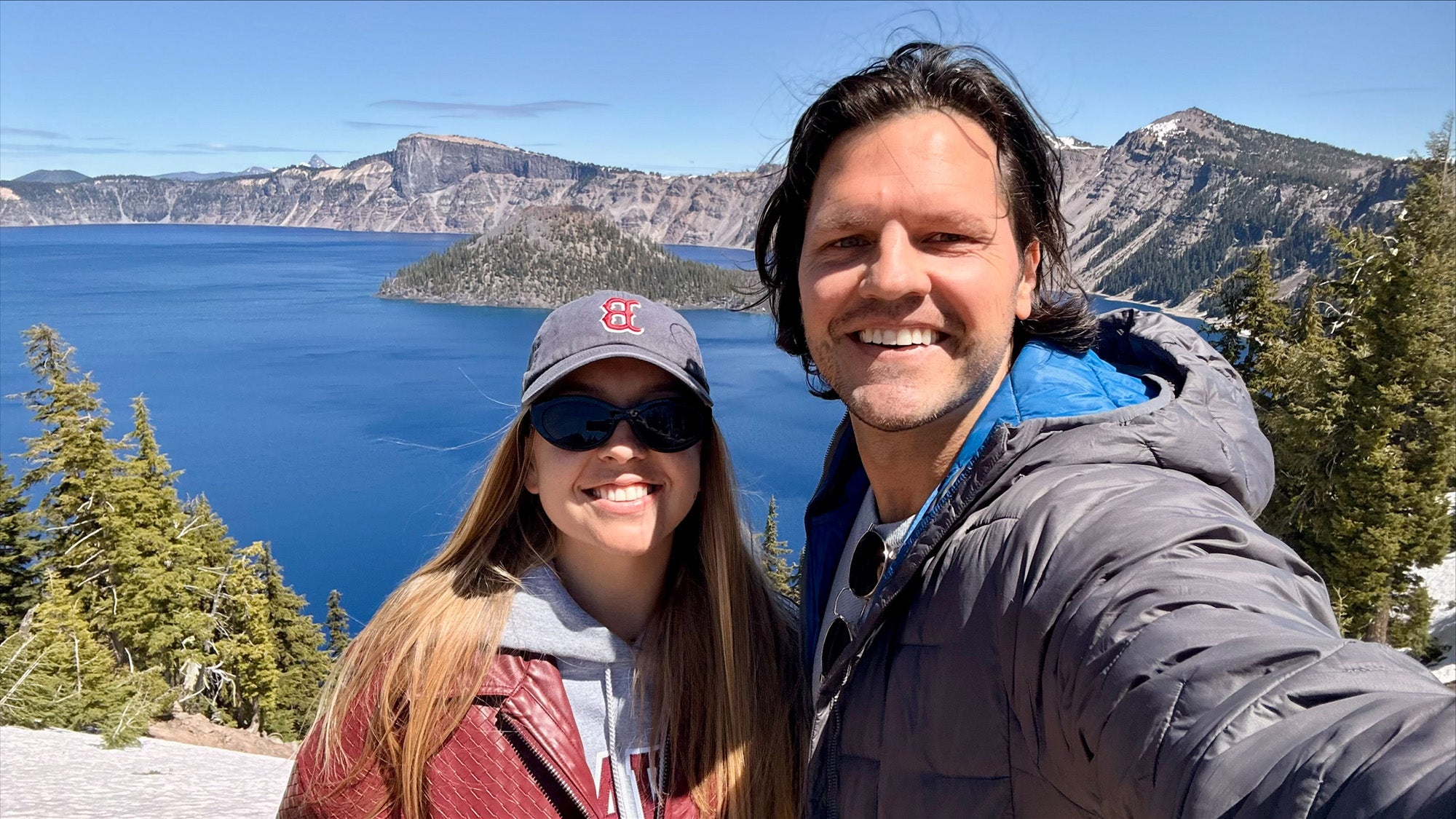
One student pair, Harvard T.H. Chan School of Public Health student Jake Wheeler, DrPH ’28, and Harvard Kennedy School (HKS) student Kishaya Delaney, worked with Honor the Treaty of 1864, a Native-led organization in Klamath Falls, Oregon, to develop a civic engagement curriculum for the Klamath Tribes.
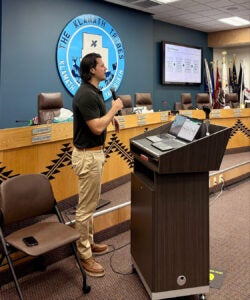
Drawing on tribal documents and interviews with members, the project aimed to empower tribal members with the knowledge and skills to participate in tribal governance, Wheeler said. It is designed to be delivered as a facilitated workshop, a Zoom-based group session, or self-directed study. The students presented the curriculum to tribal staff and council members.
“What drew me [to the project] was the argument that civic participation is a meaningful pathway to health,” Wheeler said. “If you can’t engage in the governance of your own community, you have less power to shape the policies that determine what resources flow to you and on what terms. The knowledge of how to navigate those systems is itself a resource, and like most resources, it isn’t distributed evenly.”
Wheeler comes from a professional background in global health and development, including working as a country representative for The Carter Center in South Sudan and coordinating humanitarian response in Ukraine for Americares. He said that he came to Harvard Chan School to explore some of the same issues he faced in his international work in a domestic context.
For the summer, he received a Winokur Fellowship for a project in the Mississippi Delta working with DeSoto County Dream Center, a faith-based non-profit that provides food and a number of other social services. Wheeler is helping review and organize its community resource guide, learn from staff and clients about the referral process, and develop a framework for thinking about resource navigation and community partnerships. [Update: Read a post by Wheeler about his experience with this fellowship.]
“Something I keep returning to is that access isn’t just about whether a resource exists,” he said. “Whether it’s medicines in Ukraine or civic knowledge in Oregon or food assistance in Mississippi, what determines whether someone actually benefits is whether they have the knowledge and support to reach it.”
Other recipients of the HHI awards included HKS students Yiwei Wang and Velika Yasay, who worked remotely with the Missing & Murdered Indigenous Peoples Project to encourage more reporting by non-Indigenous journalists, including by updating the MMIP Toolkit website. Recipients Nikki Apana and Ayana Watkins, students earning MD-MPP degrees through a joint HKS and Harvard Medical School program, worked with the Chickasaw Nation in Oklahoma to develop a comprehensive strategy memo outlining a path toward a sustainable, tribally run agricultural system.