Staying safe from wildfire smoke
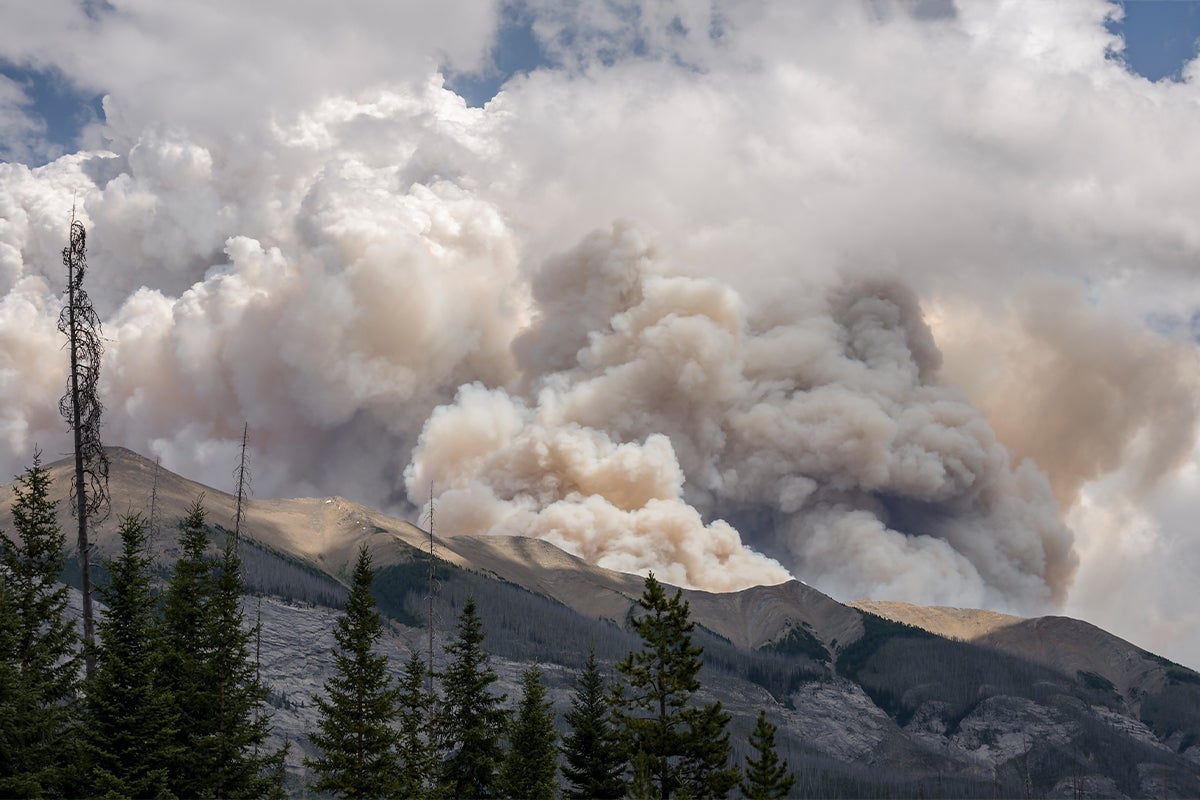
The health impacts of wildfire smoke range from minor ailments like headaches or coughing to more serious issues like heart attacks. But there are steps people can take to protect themselves, according to Harvard T.H. Chan School of Public Health’s Mary Johnson.
Johnson, principal research scientist in the Department of Environmental Health, was among several experts who spoke about the dangers of wildfire smoke, as well as ways to stay safe from it, in a May 4 Everyday Health article.
The article noted that wildfire smoke can threaten people even thousands of miles from the flames. “Part of climate change is extreme weather patterns that include more winds that spread smoke more widely,” said Johnson.
One of the biggest threats from wildfires is particulate matter pollution (PM2.5), which can penetrate deep into the lungs, cause dangerous inflammation, and has been linked with thousands of premature deaths in the U.S. each year. Children, elderly people, and those with chronic lung or cardiovascular conditions face the highest risk.
“With just a 10-unit increase in PM2.5, you’ll see an uptick in emergency room visits and hospital admissions for heart attacks, strokes, arrhythmias, and severe breathing problems related to asthma, COPD [chronic obstructive pulmonary disorder], or bronchitis,” said Johnson. She added, “When the level reaches 200, it’s like smoking almost 9 or 10 cigarettes a day, and that’s for everyone—babies and older people included.”
To stay safe during wildfire smoke events, it’s best to stay indoors, keep windows and doors shut, and run an air conditioner, according to the Centers for Disease Control and Prevention. Johnson said that, if you do need to go out, it may be best to go at night or early in the morning. “When you don’t have sunlight, you’re going to have less conversion of pollutants to ozone [which is dangerous for health],” she said.
Other recommendations listed in the article included:
- Check the Air Quality Index, which can be found in smartphones’ weather apps or on the EPA’s AirNow website
- Exercise indoors and avoid overexertion
- Wear an N95 mask outdoors
- Use an air purifier to help get rid of harmful particulates
Read the Everyday Health article: How to Protect Yourself From Wildfire Smoke