Special delivery: New technique to carry biological ‘cargo’ into targeted cells could lead to more effective disease treatments
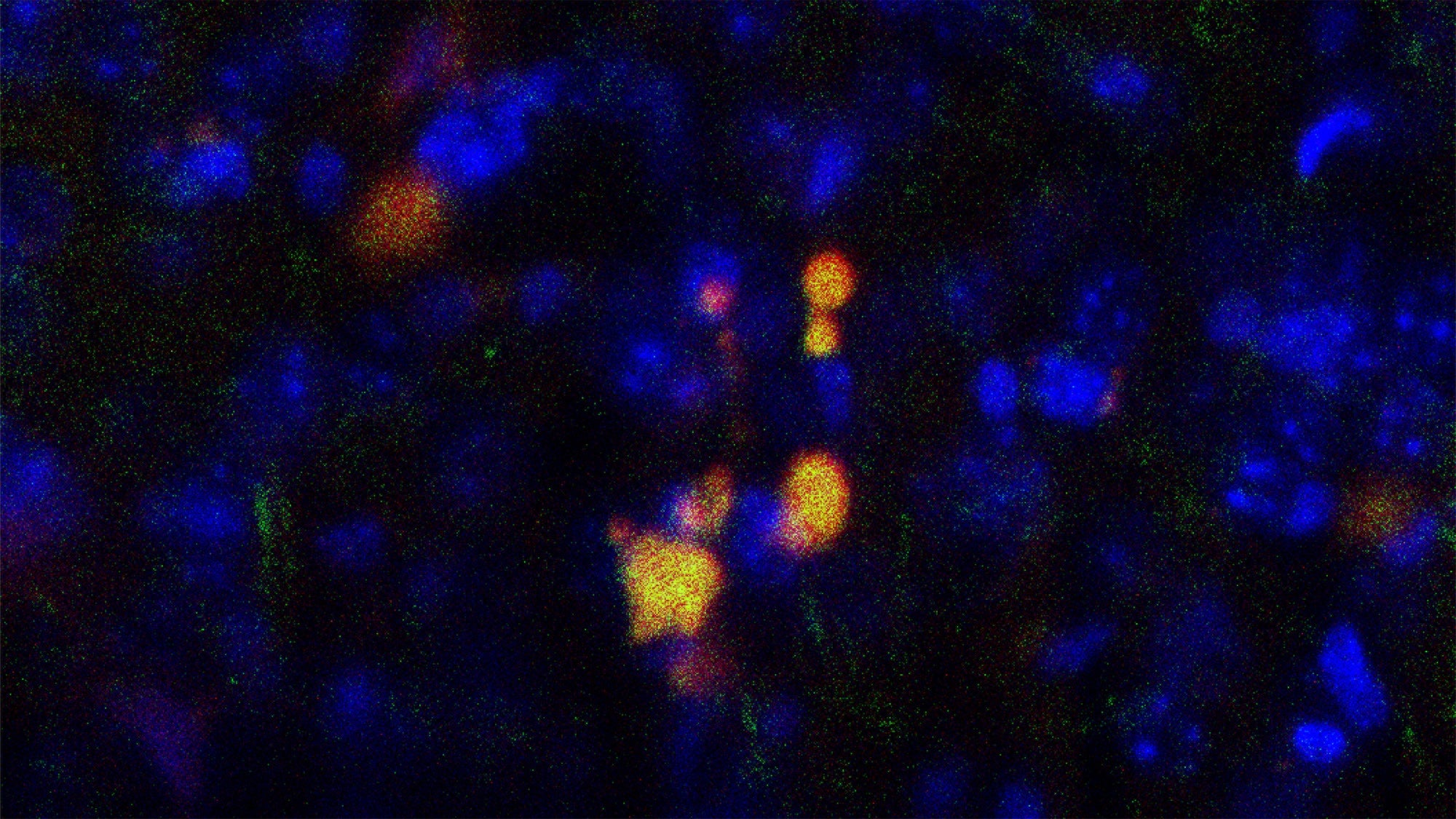
Researchers at Harvard T.H. Chan School of Public Health have discovered a new method for delivering biological “cargo” directly into specific cells using tiny, naturally produced particles called ARMMs (ARRDC1-mediated microvesicles). These particles can be precisely programmed to carry biological molecules—such as therapeutic proteins or genetic instructions—and deliver them to chosen cells.
The new method could make future treatments for serious diseases—such as cancer, Parkinson’s, or Alzheimer’s—safer and more effective, with fewer side effects, according to Quan Lu, Cecil K. and Philip Drinker Professor of Environmental Physiology.
“One of the biggest challenges in medicine is getting treatments into the right cells without affecting the wrong, or unintended ones,” he said. “This study shows that ARMMs can act as a highly targeted, customizable delivery system that is specific (going to selected cell types), natural (made by cells themselves), and versatile (able to carry different kinds of therapeutic cargo).”
The research from Lu and colleagues was described in a Dec. 14 article in the Journal of Extracellular Vesicles. The work was mostly carried out by first author Zhi Qiao, a postdoctoral fellow at the School. Other Harvard Chan co-authors included Sengjin Choi, Zunwei Chen, and Zhiping Yang.
ARMMs are tiny bubble-like particles naturally released by cells. The scientists were able to load ARMMs with specific biological cargo. They then added targeting signals onto the ARRMs surfaces—using an engineered type of protein known to be involved in attachment processes for specific cell receptors—to help the loaded ARMMs find the right cells.
The researchers conducted several experiments. One involved CD8-positive T cells, which are immune cells that play a key role in fighting infections and cancer. These cells are important targets for immunotherapies, but they can be difficult to modify safely and precisely. The researchers programmed ARMMs to deliver cargo specifically to these cells without affecting others.
Another experiment focused on PV-positive interneurons—specialized neurons in the brain that help control the timing and balance of neural activity. These neurons are involved in conditions such as epilepsy, schizophrenia, and autism, but they are especially hard to reach with traditional drug delivery methods. The researchers showed that ARMMs could be targeted to PV-positive interneurons in mice, demonstrating that this approach can reach highly specific brain cell types.
Said Lu, “These two examples were chosen because they represent two very challenging targets—the immune system and the brain—and together they highlight the precision and flexibility of ARMM-based delivery.”
He added, “ARMMs represent a potential next-generation precision delivery system, designed to bring the right treatment to the right cells at the right time.”
Read the study: Targeted Intracellular Delivery via Precision Programming of ARRDC1-Mediated Microvesicles