On one-year anniversary of LA wildfires, researchers assess health impacts, future prevention efforts
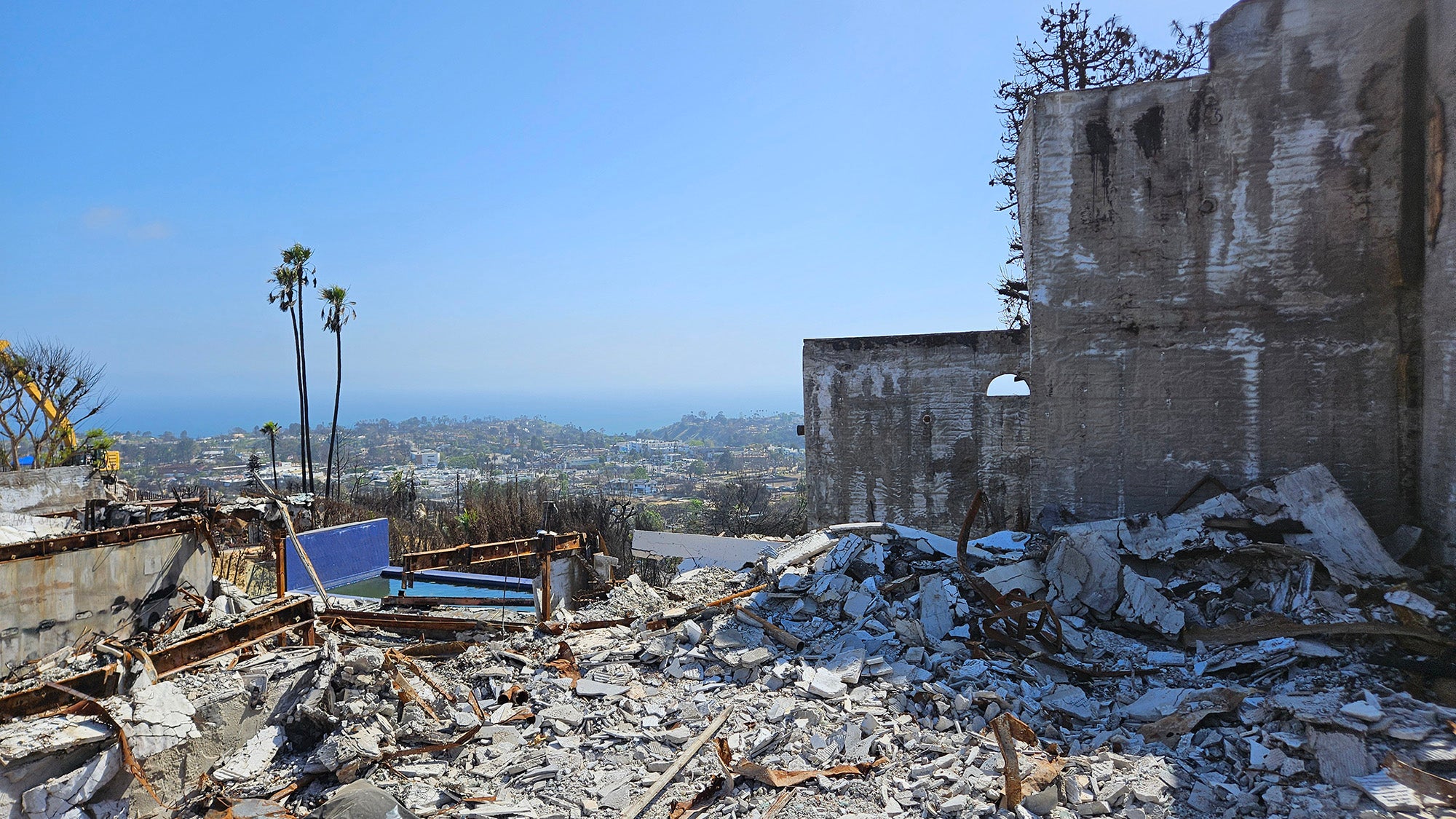
A year after the devastating Los Angeles-area wildfires—which killed at least 31 people and destroyed more than 16,000 structures over three weeks—researchers who have been assessing the disaster’s health impacts are taking stock of what they’ve learned, and of the work that lies ahead.
Experts from Harvard T.H. Chan School of Public Health and colleagues in the LA Fire HEALTH Study have uncovered a range of pollutants in air, soil, water, and debris in the burn zone, including inside homes left standing after the fire. Scientists have also found health issues among firefighters who fought the blazes as well as in the population at large.
The study—one of the largest disaster research projects ever— is a 10-year, multi-institutional collaboration funded by the Spiegel Family Fund and led by researchers from Harvard Chan School; University of California, Los Angeles; Cedars-Sinai; the Keck School of Medicine of USC; Stanford University; University of California, Davis; University of California, Irvine; University of Texas at Austin; and Yale University.
Fast action
Even before the fires were quelled in late January 2025, a number of Harvard Chan researchers who were part of the fire study, including Kari Nadeau and Joe Allen, flew to Los Angeles to begin work, spending days and sometimes weeks there, joining scores of colleagues from other universities to gather data and share information.
Nadeau, John Rock Professor of Climate and Population Studies and chair of the Department of Environmental Health, leads a team assessing health outcomes among people affected by the fire and the population at large; that team also includes Harvard Chan colleagues Francesca Dominici, Peng Gao, Mary Johnson, Amruta Nori-Sarma, Mary Rice, and Joel Schwartz.
“We knew that 2025 was going to be paramount for focusing on exposures, looking at air, water, soil, and debris,” said Nadeau. “Because things move around, toxins get dispersed. You’ve got to get there quickly to start assessing and to address the community’s needs. We went last January and February to work with others—it was a great example of team science, spanning across many disciplines; this allowed us to share exposure results and action items with the community in real time.”
Allen, professor of exposure assessment science and director of the Harvard Healthy Buildings Program, heads a group focused on measuring environmental exposures in the burn zone, aided by Harvard Chan colleagues Parham Azimi, Zahra Keshavarz, and Hannah Healy.
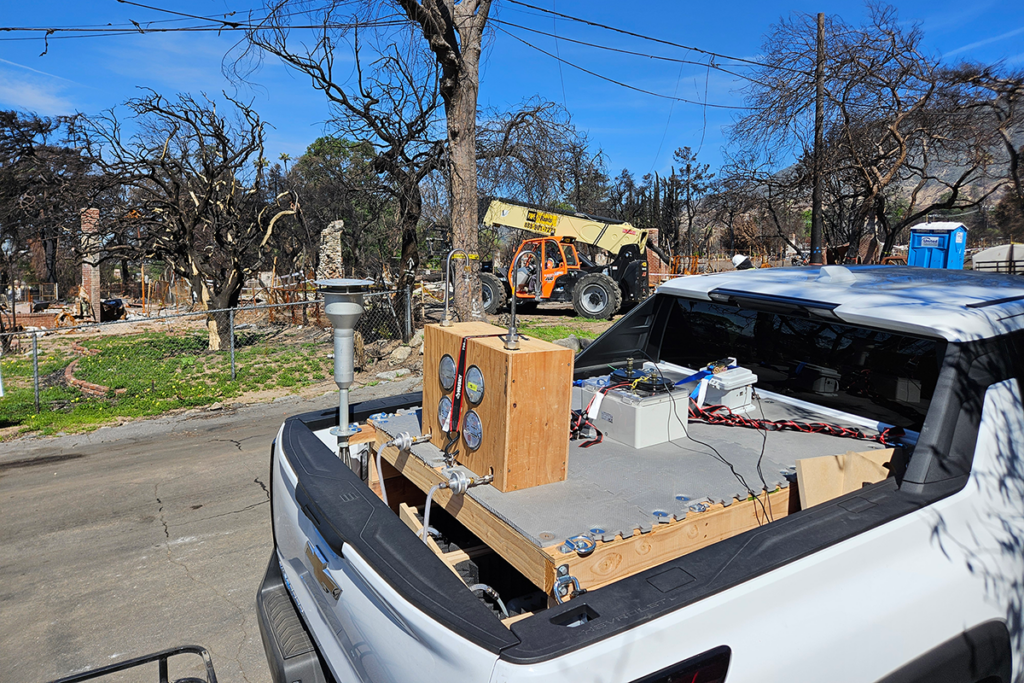
Speaking about the initial phase of the study in a recent Washington Post article, Allen said, “I’ve never seen the scientific community mobilize so fast just behind the scenes. People were borrowing equipment. We were asking, ‘What the best lab that does this? Who can get a truck out and sample the air?’”
Toxic mix
Exposure to wildfire smoke has been linked previously with respiratory issues such as asthma and COPD, as well as cardiovascular problems and dementia. But these wildfires were different. They burned not just trees and other vegetation, but everything found in an urban landscape, including homes, cars, and their contents, from plastics to electronics to synthetic textiles.
As a result, millions of people living in the Los Angeles area were exposed to toxins linked with a range of health issues, including cancer, respiratory ailments, cardiovascular disease, and birth defects.
Researchers involved with the LA Fire HEALTH Study—more than 40 experts in environmental exposure assessment, health outcomes, wildfire risk assessment and management, and data science—have worked to determine which pollutants are present and where, at what levels, and how they change over time, and are studying how these pollutants are impacting people’s health in both the short- and long-term.
Some of their preliminary findings include:
- Both short-term exposure and repeated exposure to toxic smoke can have long-lasting health impacts
- High lead levels were detected in air and soil in the burn zone, and firefighters who battled the blazes had high levels of lead and mercury in their blood afterwards
- In homes left standing after the fire, air quality actually worsened over time
- Levels of volatile organic chemicals (VOCs) were found to be four to five times higher inside homes in the burn zone than outdoors—and these levels could spike due to activity such as cleaning, disturbing ash and dust, or turning on HVAC systems
- The fires led to elevated PM2.5 (fine particulate) levels in homes, both within the burn zone and also miles away
- Heart attacks and lung conditions increased after the fires, as did abnormal blood tests
- Nanoparticles of a cancer-causing chemical called chromium-6, or hexavalent chromium, were found in the burn zone last spring—but levels have since diminished
In August 2025, as part of the LA Fire HEALTH Study, researchers including Allen, Nadeau, Lindsey Burghardt of Harvard’s Center on the Developing Child, and others published a Perspective article in the journal Nature calling for better testing and stricter standards for lead-contaminated soil. The article noted that elevated lead levels are particularly dangerous for young children.
Getting the word out
A top priority of the LA Fire HEALTH Study was to share actionable information with community members affected by the fire, as quickly as possible. As information became available, it was posted on the study’s website in a series of data briefs. The website also includes safety and health recommendations and news about the study.
Carly Stearnbourne, communications project manager in the Department of Environmental Health, developed the website, and she and Sarah Unninayar, senior program manager for the Harvard Chan NIEHS Center for Environmental Health, help with overall organizational matters.
In addition, Nadeau and Allen have spoken to the press on a regular basis about their findings and on how residents can stay safe. For example, Allen has advised people living in the burn zone to upgrade to MERV13 filters or higher in their HVAC systems; remove shoes before entering their homes so as to not track in soot or ash; regularly wipe indoor surfaces with a damp cloth; and consider installing an indoor air quality monitor.
Allen and his team also posted detailed information on the Healthy Buildings website about reducing risk from wildfire smoke at home, and choosing the right respirator after a wildfire. “I was extremely concerned to see people not wearing respirators when they were returning to their homes,” Allen recalled, noting that the guidance online makes clear that P100 respirators offer the best protection against dangerous gases in the burn zone after a fire—more so than the N95 masks that many people used during the COVID pandemic.
Throughout the study, Allen and Nadeau have been meeting weekly with community members and providing a steady stream of information to state and federal officials. Just recently, as Palisades Charter High School was about to reopen after a year of extensive remediation and testing, the Los Angeles Unified School District reached out to Allen’s team for help after a community member raised new questions about safety. Allen and colleagues worked for several days to confirm the safety data and to share that information with the school district—and the school reopened as planned on Jan. 27.
“This was a really tangible example of how you can bring together scientists from different disciplines to help the community answer urgent questions that can’t be answered by peer-reviewed science that takes months or years to get published,” Allen said. “The stakes are high here—it’s about kids getting back to school, and about people’s lives.”
Long-term commitment
Last month, members of the LA Fire HEALTH Study consortium, including about 10 Harvard Chan experts, gathered at a research conference at UCLA—along with policymakers, public officials, community leaders, and survivors—to share what they’ve learned and to discuss how to protect human health going forward, amid the growing threat of urban wildfires.
Over the next few months, the researchers expect to start publishing their first peer-reviewed papers. Noted Nadeau, “These scientific, evidence-based papers are critical to providing evidence to help the public and politicians understand what to do to protect against ongoing and future health threats from urban wildfires.”
The first 12 months of the study were focused heavily on measuring environmental exposures in burn-impacted areas before that data was lost, Nadeau said. That work will continue in the next year, but at a smaller scale. Going forward, researchers will increasingly focus on both short- and long-term health impacts over the next decade. “We have recruited cohort studies of first responders, residents, and even subgroups like pregnant women, so that we can understand what these exposures do to the body,” Nadeau said.
She added that being part of the LA Fire HEALTH Study has been motivating and inspiring. “It felt wonderful to help our School work with communities and other universities to bring science to the public and science to policy through our scholarship, research, and education,” she said, adding, “This is a great example of public health in action.”
On the ground in LA
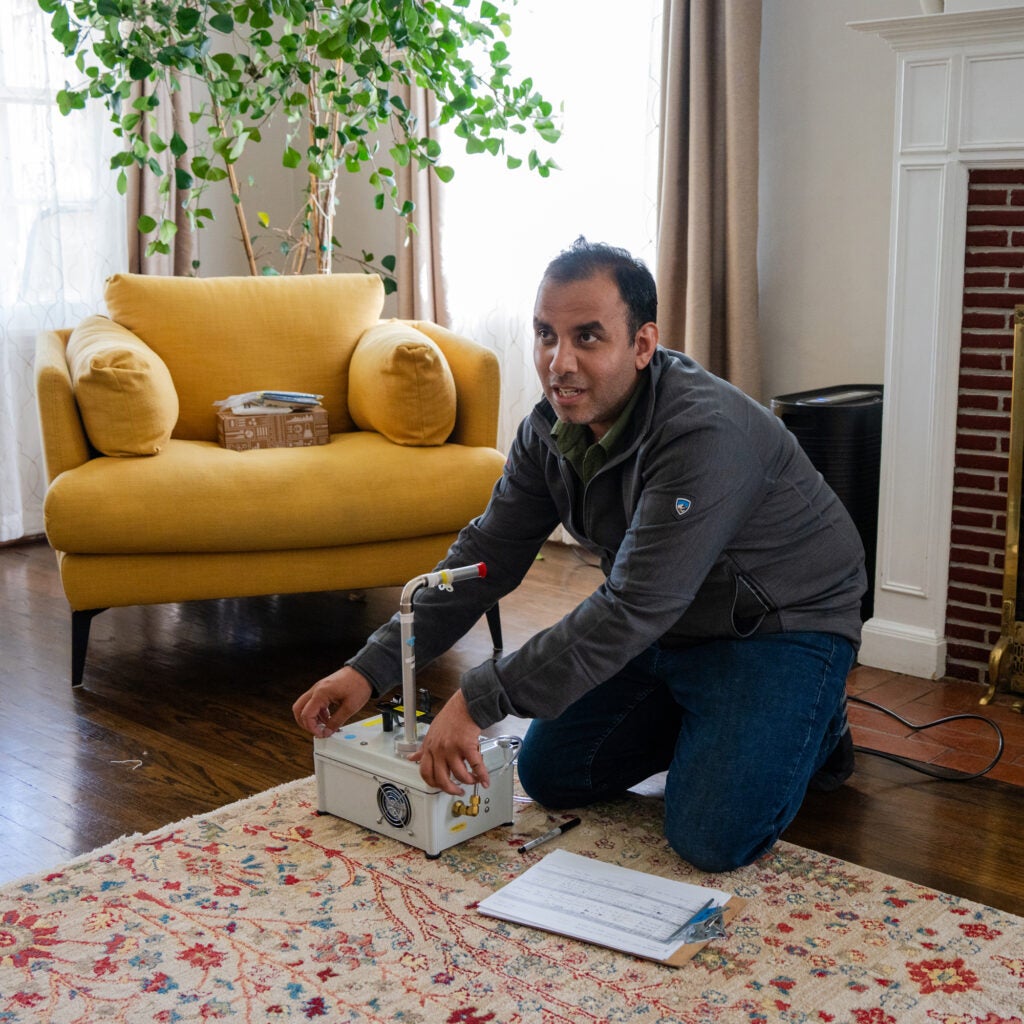
One key effort launched by the LA Fire HEALTH Study has been to collect samples from 50 homes in the burn zone that were left standing. More than 1,000 samples of soil, water, air, and ash and dust from inside the homes were gathered and sent off to labs across the country for evaluation.
Parham Azimi and Zahra Keshavarz—husband and wife researchers on the Healthy Buildings team who have worked together in the wake of other disasters, such as the Maui wildfire and Hurricanes Ian and Ida—were among those who hit the ground running in Los Angeles when the wildfires ended. They spent three months there last year, with their then-one-and-a-half-year-old daughter Alyssa in tow. They played tag-team to get their work done; when Azimi was collecting samples, his wife would keep an eye on Alyssa. And when Keshavarz was working, Azimi took over. “We had a perfect system,” he recalled. In May 2025, their work was featured in an article in Inside Climate News.
It was a bit of a challenge to work around homeowners’ schedules. Noted Azimi, “We needed people to open their homes for us, but we didn’t want to be another burden on them.” But the homeowners made it work, and they were extremely grateful when Azimi was able to quickly share data with them on toxin levels in their homes.
“They saw us as people who went there to help them, and they were really supportive,” he said. “The feedback and the interaction that we had from the participants was the most encouraging aspect of our work. We really wanted to help them, to provide data for them, and address their concerns. It was a great experience.”