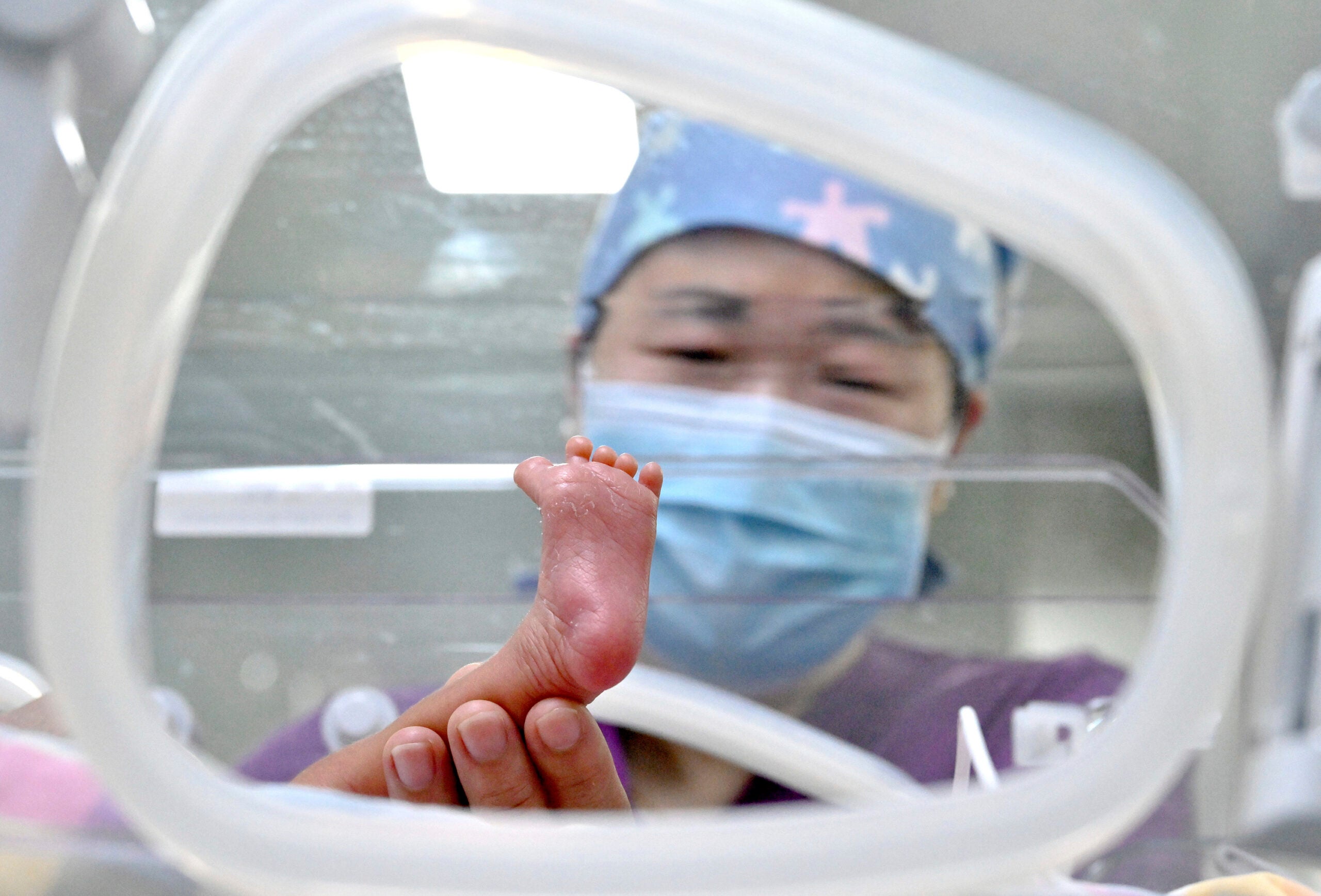
Making family life affordable matters more than boosting birthrates, expert says

Fertility rates have declined across the globe over the past few decades—from five children per woman in 1960 to 2.2 in 2024, according to the United Nations. In all regions of the world except for Sub-Saharan Africa, rates are now at or below replacement levels.
Policy efforts to increase fertility rates by governments including the U.S. and China have not done much to move the needle, according to Ana Langer, professor of the practice of public health, emerita, at Harvard T.H. Chan School of Public Health. She spoke as part of a Dec. 12 online panel discussion about population decline hosted by American Community Media.
The number of children a woman has—or if she chooses to have children at all—is influenced by a complex web of factors including the cost of childcare, cultural values, norms around work-life balance and division of labor in the home, and concerns about climate change and other issues, Langer said. She added that among U.S. women who don’t plan on having children, not wanting them is the biggest factor.
Langer argued that governments should pursue policies that make having children more affordable, but not simply for the goal of increasing the population. “It’s just what people deserve,” she said. “People need to be able to afford children and food and housing and childcare.”
Other panelists spoke about the impact of a declining population on the U.S. economy and possible implications for the environment.
Watch American Community Media panel: America’s Incredibly Shrinking Population
Learn more
America’s declining birth rate: A public health perspective (Harvard Chan School Studio event video)
![A vial of blood marked "VDRL- Test [syphilis, gonorrhea]"](https://hsph.harvard.edu/wp-content/uploads/2026/03/horizontal-1.jpg)