Beautiful shores, ugly truths: one environmental health researcher’s journey to better understanding plastic pollution
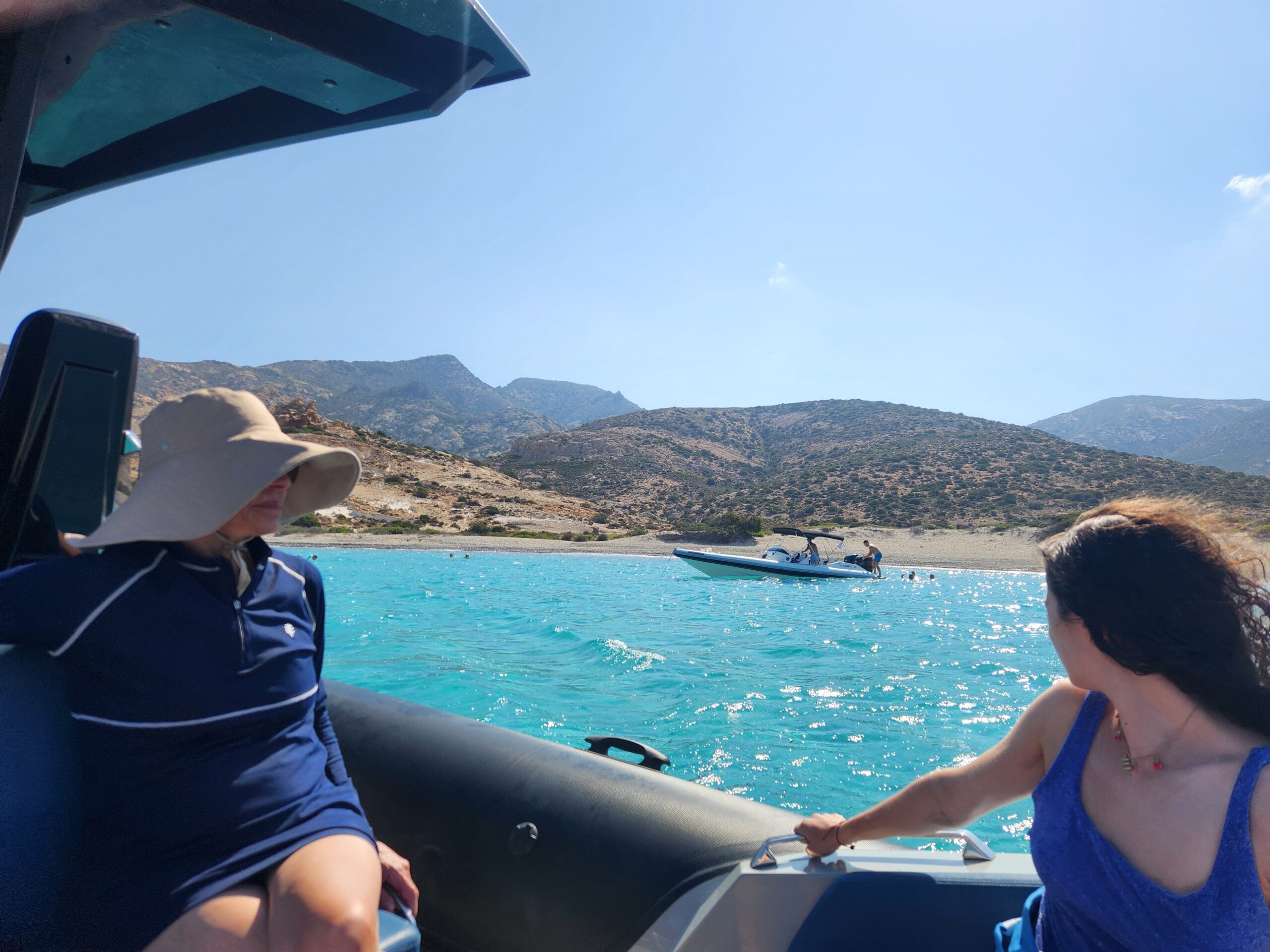
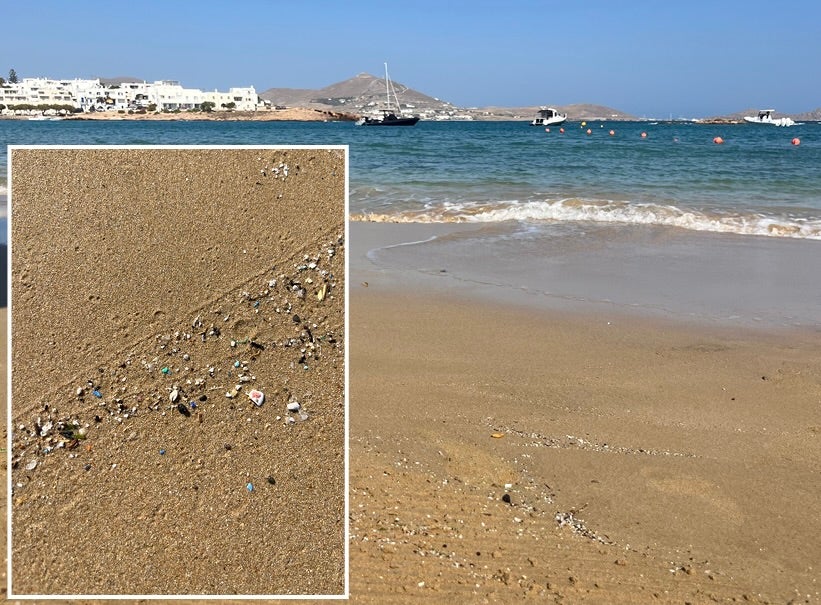
As an environmental health researcher, I often find myself struggling to process a conflicting reality: our natural world can be just as beautiful as it can be tainted. And worse, the problem is global – small, tiny pieces of plastics that have infiltrated so many previously pristine shores are now big, macro-level problems.
Between witnessing litter at home by the Charles River to watching the same issues unfold abroad on a family trip to Greece, I recently became motivated to research and better understand the gravity of the worldwide plastic pollution problem and why it has become so pervasive.
I started with Greece: one of the most naturally beautiful places I have been fortunate enough to see. Yet, my findings were disturbing; each year, 700,000 tons of plastics are produced within Greece1 – the equivalent of 51,000 full garbage trucks. Because of the immense amount of plastic, largely produced by the tourism industry, tons of plastic end up in landfills, and some is even exported to other countries like Bulgaria. This is of particular concern due to the multitude of health effects associated with microplastic exposure, including heart and brain health2.
Where plastic policy meets reality
As a member of the European Union (EU) and as a country known for their tourism, Greece adopted in 2021 the EU Single-Use Plastics Directive (SUPD), which was passed in June 2019. This directive focuses on preventing and reducing the impact of certain plastic products on the environment with an overarching goal to support a circular economy. Specifically, the SUPD focuses on legislation targeting marine littering and plastic waste, which is particularly relevant to Greece, whose beaches are a major tourist attraction.
During my travels, I saw the implementation of several of these different initiatives that aimed to reduce plastic waste firsthand. For example, I found myself noticing that all plastic water bottle caps were undetachable.
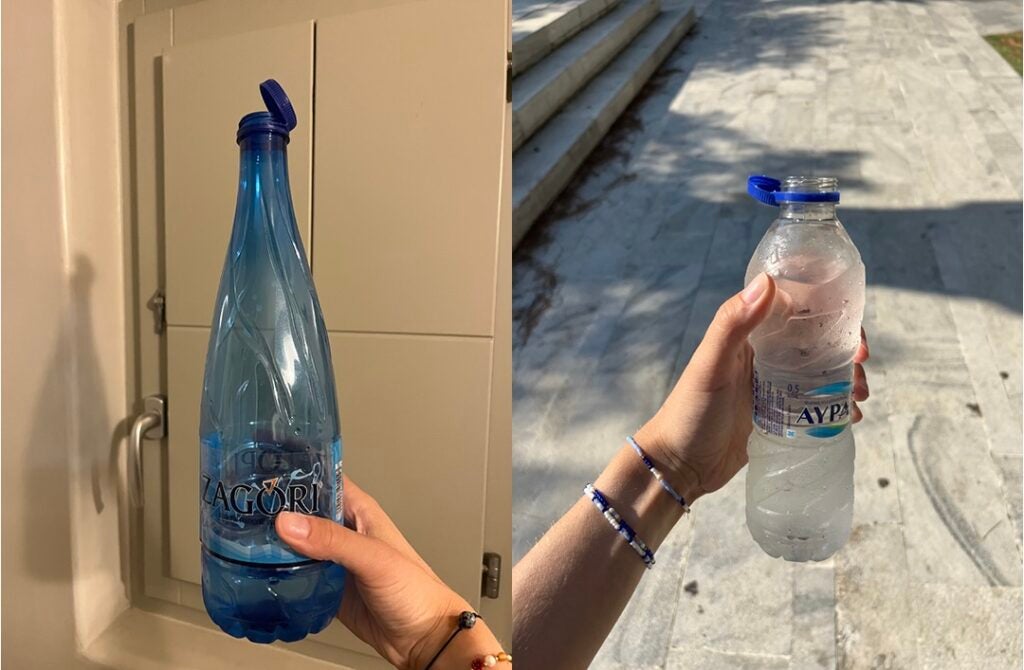
Coming from the United States, I had never seen this before. This small but effective way to ensure that bottle caps remain on the bottle when recycled/discarded helps to minimize the impact of microplastics on the environment3,4. Additionally, one hotel provided water in refillable, resealable glass containers rather than supplying water bottles. This trend seemed to be increasingly popular in hotels and other accommodations to reduce waste.
There were other island-specific initiatives that caught my eye, as well. While at the Paros airport, I was struck by an advertisement for the Clean Blue Paros initiative. It was the only sign in this tiny, one-gate airport, reading “Clean Blue Paros will support this Greek island in becoming the first plastic-waste free Mediterranean island and a global leader in the first against plastic in our seas.”
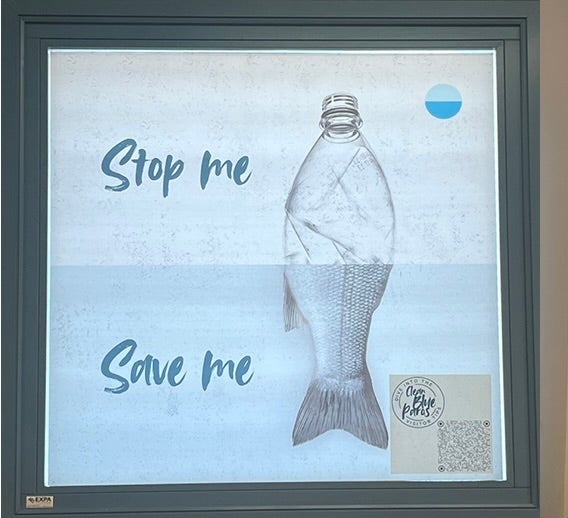
After doing some research, I learned the initiative had to change their goals due to the COVID-19 pandemic, and it shifted towards smaller scale change. The first plastic-waste free Mediterranean island goal was never achieved. Ironically, in front of the washed-out ad was a vending machine filled entirely with plastic water bottles.
A global health concern
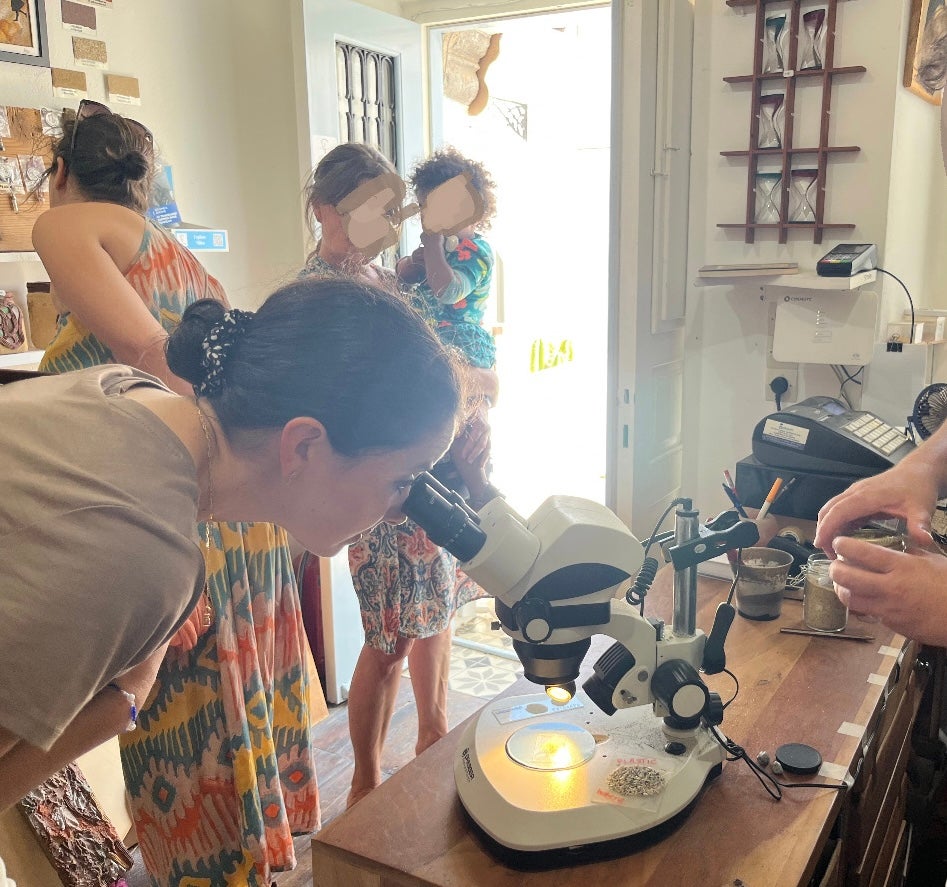
Despite noticing multiple initiatives in place aimed at reducing plastic waste, there were multiple times on the trip that I felt discouraged. In Milos, my family and I visited a small museum that collects sand from across the world. We had done our research and proudly brought sand from New Jersey, where I grew up, to contribute to the collection. The owner prepared our sand on a petri dish so we could look at it under a microscope. He also had a petri dish covered with plastic particles filtered out of sand collected from Milos.
It was jarring to see the artificial, brightly colored shapes next to the New Jersey sand; however, I knew that a larger sample of the New Jersey sand would also be littered with plastics. Unfortunately, they are everywhere.
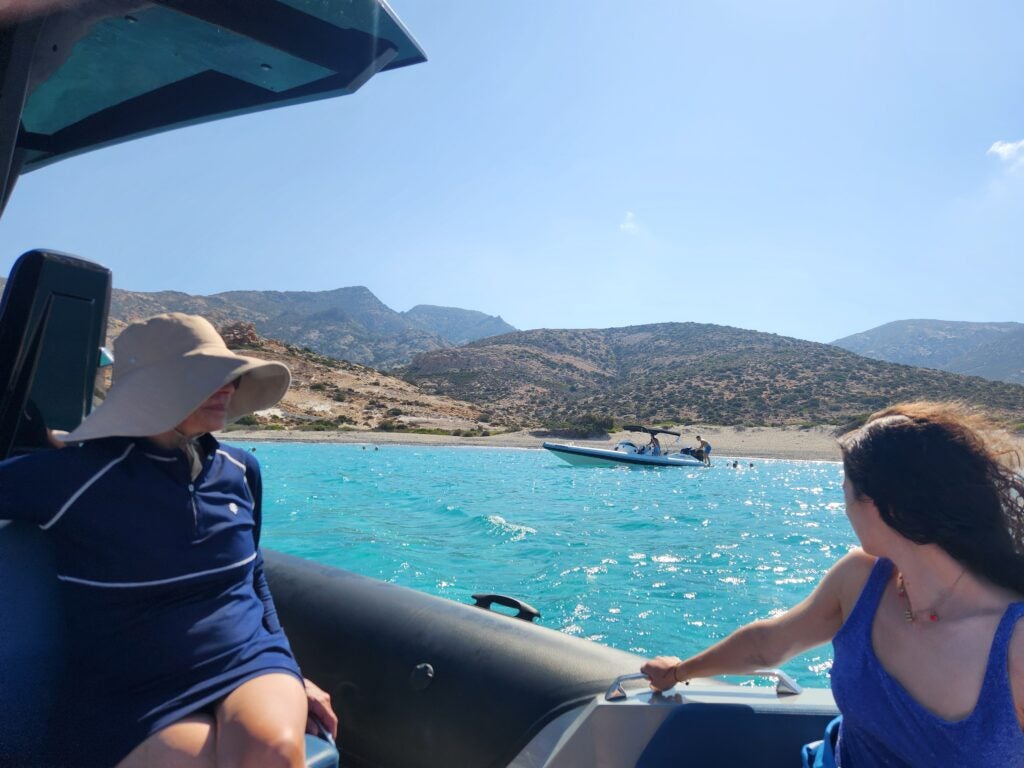
Upon continuing our journey, nowhere seemed to be spared from this pollution, actually; Polyaigos, a 7 mi2 uninhabited island, was also visibly afflicted. Immediately upon swimming up to its shores, I noticed that tucked away in the shrub was a degraded plastic bottle that had been washed up onto the land. A lack of human habitation on the island had not prevented us from leaving our footprint. These issues reflect a global reality, not just a Greek one.
What we can all do as individuals to combat plastic pollution
My experiences widened my eyes to the extent of this global problem, even in places with country-wide environmental initiatives. Many other places beyond Greece are also greatly afflicted, with human health at risk as a result. I feel more committed than ever to understand how microplastics impact human health.
Many of the ideas that have personally inspired me come from Matt Simon’s “A Poison Like No Other” book. Below are some realistic steps we can take to reduce both our contribution to plastic pollution and our personal exposure, without requiring extensive lifestyle changes:
1. Reduce single-use plastic waste
- Why: Single-use plastics are a primary source of environmental microplastics. Items like bags, straws, utensils, wrappers, and packaging quickly degrade into microplastic particles5.
- How: Opt for reusable shopping bags, produce bags, and containers. Choose products with minimal or plastic-free packaging. Avoid disposable cutlery and dishware and instead carry your own set or use alternatives made of metal or bamboo when you can. Participate in community cleanup events to help remove existing plastic litter from your local environment, or even just start with the area around your own residence.
2. Use a glass or stainless steel water bottle
- Why: Plastic bottles are a significant source of both macro- and microplastic pollution, especially when they degrade over time or are exposed to heat6.
- How: Replace single-use plastic bottles with glass or metal ones that can be used over and over again. Avoid storing hot liquids in plastic containers, as heat can increase microplastic shedding. Invest in a quality, durable reusable water bottle, such as one made from materials like glass or stainless steel (many options are usually available at your local thrift store if they are too pricey at regular retail). If your tap water tastes unpleasant, you can often find deals on various at-home filters to attach to your sink or keep in your fridge on platforms like Facebook Marketplace (many retail stores also have sales).
3. Choose clothing made from natural fibers
- Why: Synthetic fabrics like polyester, nylon, and acrylic shed microfibers, which enter the environment during washing and wearing7. Natural fibers are biodegradable and significantly less harmful.
- How: Select clothing made from natural fibers such as 100% cotton, wool, linen, or hemp whenever possible. Mainstream brands increasingly offer 100% cotton options; look for these, or browse secondhand stores for all-natural garments, which is even more sustainable and often more affordable. Avoid “blended” fabrics, which often have hidden synthetic content, when possible.
4. Wash and dry clothes responsibly
- Why: Washing and tumble-drying synthetic garments releases vast quantities of microfibers into wastewater and the air7. Most filters in washing machines and dryers are not equipped to capture these fibers.
- How: Use microfiber-catching laundry bags or install a filter on your washing machine to catch some microfibers before they enter wastewater (if you have one in your own residence). Consider in-drum devices, which collect fibers during washing cycles. Add an external filter or lint trap to your clothes dryer exhaust to prevent airborne fiber release. Wash synthetic clothing less frequently and in colder water; fill up each load to reduce the friction that causes fiber shedding.
5. Practice sustainable buying and upcycling
- Why: Purchasing less new clothing (especially synthetics) reduces demand for resource- and plastic-intensive manufacturing.
- How: Shop at thrift stores for pre-owned, natural fiber garments. Upcycle or repurpose existing items instead of discarding them. Repair clothing instead of replacing it.
6. Make informed choices in personal care and cleaning products
- Why: Many cosmetics and cleaning products may still contain microplastics (often called “microbeads”) or they are packaged in plastic8.
- How: Seek out “microplastic-free” certifications for toiletries and cosmetics when possible. Popular apps like Yuka, EWG, or similar can help identify common chemicals of concern, too. Make your own cleaning products or buy those packaged in non-plastic containers.
7. Spread awareness and advocate for change
- Why: Systemic change is most powerful when many people participate.
- How: Support policies and organizations aiming for stricter regulations on plastic use and improved waste management. Share knowledge discovered through research and books, such as A Poison Like No Other, to encourage others to take action.
It is exciting to see the rise in exposure science studies for micro- and nanoplastics. There are now even established journals focused solely on this exposure. As more people learn about the harmful health effects of plastics, there will be a greater incentive to address the issue. Ultimately, while individuals can all take steps to better the world around them, collective action at the policy level will better ensure lasting change that will improve outcomes for us all. New scientific research helps to inform policy and ensure that it meets our needs.
My hope is that the next time we stand on a beautiful shoreline, we can say we did something, however small, to keep it that way.
Additional resource
Check out a slideshow created by the Mahalingaiah Lab that elaborates on the women’s health implications of air, water, and plastic pollution here.
Learn about currently enrolling studies in reproductive and environmental health here.
References
1: World Wildlife Federation, 2019. [Online]. Available: https://wwfeu.awsassets.panda.org/downloads/05062019_wwf_greece_guidebook.pdf
2: M. a. H. Health, “Shruthi Mahalingaiah; Kari C. Nadeau; David C. Christiani,” JAMA Insights, vol. 334, no. 21, pp. 1941-1942, 2025
3: C. Wilcox, N. J. Mallos, G. H. Leonard, A. Rodriguez and B. D. Hardesty, “Using expert elicitation to estimate the impacts of plastic pollution on marine wildlife,” Marine Policy, vol. 65, pp. 107-114, 2016
4: A. Winkler, N. Santo, M. A. Ortenzi, E. Bolzoni, R. Bacchetta and P. Tremolada, “Does mechanical stress cause microplastic release from plastic water bottles?,” Water Research, vol. 166, 2019
5: K. Ziani, C.-B. Ioniță-Mîndrican, M. Mititelu, S. M. Neacșu, C. Negrei, E. Moroșan, D. Drăgănescu and O.-T. Preda, “Microplastics: A Real Global Threat for Environment and Food Safety: A State of the Art Review,” Nutrients, vol. 15, no. 3, p. 617, 2023
6: X. Liu, D. Li, Z. Li, A. S. Ball and C. Chen, “Release of microplastics from commonly used plastic containers: Combined meta-analysis and case study,” Journal of Hazardous Materials: Plastics, vol. 2, p. 100028, 2026
7: A. Šaravanja, T. Pušić and T. Dekanić, “Microplastics in Wastewater by Washing Polyester Fabrics,” Materials (Basel), vol. 15, no. 7, p. 2683, 2022
8: A. Kukkola, A. J. Chetwynd, S. Krause and I. Lynch, “Beyond microbeads: Examining the role of cosmetics in microplastic pollution and spotlighting unanswered questions,” Journal of Hazardous Materials, vol. 476