Alumni Spotlight: Dr. Mrinalini Darswal
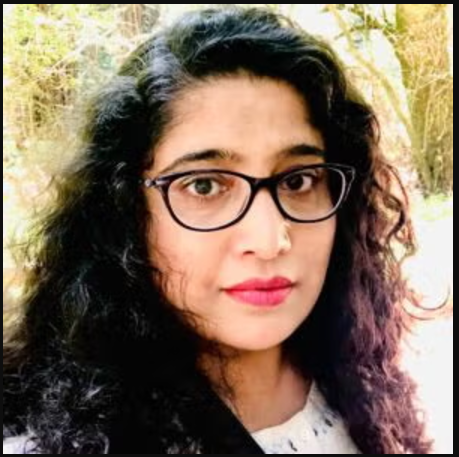
Dr. Mrinalini Darswal, IAS, Commissioner-cum-Secretary, Department of Women & Child Development, Government of Odisha
Dr. Darswal is an Indian Administrative Services Officer of 2002 batch borne on the Odisha cadre. She has an extensive background in public health, having served in the states of Jammu and Kashmir, Manipur, Odisha, and Delhi.
In Odisha, Dr. Darswal held the distinguished positions of Collector and District Magistrate across various districts for approximately eight years. She has also served as the Commissioner of Food Safety and Drugs Controller for Delhi, as well as Special Secretary of Health. Her portfolio includes oversight of the National AIDS Control Organization for Delhi, management of centralized trauma response services, and supervision of medical schools and hospitals, among other critical responsibilities.
Dr. Darswal is a Medical Doctor with a specialization in radio diagnosis. She furthered her expertise with a Doctorate in Public Health (DrPH) 2024 from the Harvard T. H. Chan School of Public Health, focusing her thesis on public-private partnerships for strategic health communications.
What was your experience at Harvard T.H. Chan School of Public Health?
I arrived at Harvard Chan after two decades in the Indian Administrative Service, having served as Collector and District Magistrate in Manipur and Odisha and later in health, food safety, drug regulation, and HIV/AIDS control in Delhi. District administration is a very fast tango. You face two hundred problems a day and rarely have the luxury of sitting down to analyse one properly. The DrPH was a slow dance by comparison, and that was precisely its value. I finally had the time to think.
The programme gave me a rigorous grounding in public health history, policy, research methods, and the social sciences. My coursework and research, guided by Professor Kasisomayajula Viswanath, focused on comparative health systems and strategic communications. I studied public systems in England and Canada, the private system of the United States, and mixed systems closer to our own in Egypt and Chile. My doctoral work examined public-private partnerships in India’s health sector, particularly using strategic communications to transform health behaviours. I know the Indian system intimately, but I had very little sense of how the rest of the world was approaching the same questions. That comparative lens was the point.
What was the most valuable takeaway for you?
The personal mastery sequence within the enabling change curriculum. Over several semesters, we were asked to look inward and consider who we are and who we wish to become as leaders. In twenty years of public service, no one had ever asked me to do that.
It clarified how much the expectation of leadership has shifted since I entered service. It was once ordinary to lead hierarchically, on a my-way-or-the-highway basis. That model no longer holds, and it shouldn’t. Leadership now means talking a problem through, sharing the solution rather than announcing it, and seeing whoever you work with as a whole person whose voice you are obliged to amplify, particularly when that voice has traditionally been quieted. Repeated instruction, practice, and reflection turned that from a proposition I agreed with into a habit I actually carry. It has changed how I chair a review meeting and how I read a file.
What would you advise others who are interested?
Come with a question, not merely a credential. The programme rewards those who arrive with a problem they have lived with long enough to find genuinely difficult. Mine was health financing and the impoverishing effect of sudden medical expenditure. Everything I read and every course I chose bent towards it, and the degree became an instrument rather than an ornament.
Second, treat the reflective components seriously. Long-standing practitioners are often impatient with them and want to get to the analytics. That impatience is a mistake. You can acquire the technical material anywhere; you can’t acquire structured self-examination.
Third, invest in the cohort. My classmates came from ministries, hospitals, and civil society across the world, and I learned as much from their systems and failures as from any syllabus. Finally, if you are mid-career, accept the discomfort of becoming a beginner again. Unless you actively pursue new knowledge, it will not land on your desk.
What is a public health challenge that you are currently working on or are passionate about?
Two, and they are connected.
The first is financial protection in health. In India, millions fall below the poverty line each year because of health expenditure they never budgeted for. A single illness can impoverish a middle-class family. As we face a rising burden of chronic disease alongside an unfinished infectious agenda, the question of how to extend genuine coverage, not nominal entitlement, remains the one closest to my heart.
The second is where I work now. As Commissioner-cum-Secretary for Women and Child Development in Odisha, my portfolio is essentially preventive public health delivered through a welfare architecture. Maternal and child nutrition, the first thousand days, early childhood care and education, and the transition from Anganwadi to school through our AAROHAN programme all determine adult health outcomes decades later. So is violence against women, which we treat as a public health problem and not only a law and order one, and which our SAMBEDANA mission is designed to address at scale. Investment here yields returns no clinical intervention can match.
That conviction is most concrete in our T2T2 (Target Two, Transform Two) initiative (Worst-performing Anganwadi Centres each project each month). Rather than spreading effort evenly across thousands of Anganwadi Centres, we identify the malnutrition hotspots where the burden is genuinely concentrated and put turnaround support into those centres first, tracking each one until its indicators move. The premise is unglamorous but sound: turn the tide one step at a time, one centre at a time, and let the aggregate show in the state’s numbers.
What are some of the biggest public health challenges you foresee in the next decade, and how do you think we should prepare for them?
Four stand out.
The epidemiological transition is the first. Low- and middle-income countries will carry the cost of chronic disease at a stage of development when their financing systems are least equipped for it, while communicable disease has not yet released its hold. Preparation means building financing and primary care capacity now, not after the curve has turned.
Climate and health is the second. Heat, shifting vector ranges, water stress, and their effects on nutrition and food security will be felt first by the poorest women and children. Health systems must be designed for this, not retrofitted to it.
Third is the governance of artificial intelligence in health and welfare. I am deploying AI in my own department, and I am persuaded of its promise, but it must be built on lawful data foundations, tested for bias against the populations it is meant to serve, and kept accountable to a human decision-maker.
Fourth, and underlying all of these, is trust. The pandemic showed how quickly good science fails when communication fails. We should treat health communication as core infrastructure rather than as a press function, and invest in it accordingly.