Alumni Spotlight: Dr. Ananya Awasthi
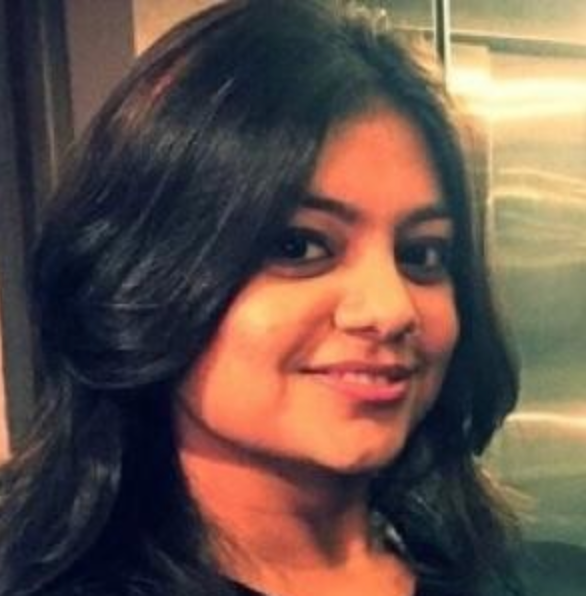
Dr. Ananya Awasthi is the Founder-Director of Anuvaad Solutions, which works closely with the Ministry of Women and Child Development in advancing India’s Poshan agenda through scientific and technical support. Her work focuses on translating scientific evidence to inform the national nutrition program, promoting data-driven strategies to address child malnutrition, strengthening the Anganwadi system, training and capacity building of community health workers, science communication and leveraging technology for nutrition promotion.
Before founding Anuvaad, Dr. Awasthi worked as the assistant director of the Harvard School of Public Health- India Research Center in Mumbai, where she managed global health research projects, spearheaded training programs, and built partnerships between Harvard faculty, Indian policymakers, and development partners. She also serves on the Managing Committee of the Harvard Business School–India Research Center. In the past she has also served as the secretary of the Harvard Club of India.
A dentist by training, Dr. Awasthi holds a Master’s degree in Public Health (MPH), specializing in Global Health and Population, from Harvard University. She frequently writes on translating nutrition science into policy action for advancing Poshan and child well-being in India. Dr. Awasthi has recently authored the book “Living the Vivekananda Way: Practical Spirituality for Modern India”, released by Rupa Publications. She is also a trained Hindustani Classical Singer & curates’ cultural programs and festivals for tribal and folk artists.
What was your experience at Harvard T.H. Chan School of Public Health?
Studying master’s in public health at the Harvard T.H. Chan School of Public Health in 2015-16 went on to lay my foundational understanding of public health—its interdisciplinary scope and the potential for impact at scale. Harvard offered a rare ecosystem where I got an opportunity to appreciate the wider scope of public health across different dimensions, including evidence generation, data analysis, systems design, implementation science, and behaviour change communication. It was a deeply humbling experience to expand my worldview everyday through interactions with students and faculty from across the world, learning immensely from our diverse GHP cohort. Those nine months felt like circling the globe through public health conversations—each day offering a new context, a new solution, and a new way of thinking.
What was the most valuable takeaway for you?
My valuable take-aways are two-fold. The first experience of MPH training taught me the centrality of scientific evidence in shaping public health policies and programs. It became clear that solutions must be rigorously tested, adapted to diverse contexts, and scaled with a focus on measurable outcomes. Second, Harvard sharpened my understanding that data is not just information; when communicated effectively, it becomes a catalyst for systems change. My mentor, Professor Vish Vishwanath, reinforced the importance of translating evidence into actionable policies and programs—an area I was able to explore while working for the Harvard T.H. Chan School of Public Health- India Research Center between 2016-2021, where I was hired right after my MPH. It gave me ground experience of translating science in ways that policymakers, frontline workers, and communities can use. Not surprisingly, I named my own start up in the public health space- Anuvaad, which literally means translation in Hindi.
What would you advise others who are interested?
Approach public health with both rigor and empathy. Harvard will equip you with analytical tools, but what you bring is your sense of purpose. For prospective students, I would say: be open to unlearning, seek mentors early, and immerse yourself in diverse field experiences, especially those that connect you directly with the communities you hope to serve. Public health should be more than a pathway to publications or job security—it lives in real communities, in lived experiences, and in the decisions that shape everyday systems. If you come with curiosity and a willingness to engage deeply, Harvard T.H. Chan School of Public Health will amplify your impact far beyond the classroom.
What is a public health challenge that you are currently working on or are passionate about?
As part of our all-women’s team at Anuvaad Solutions, we are currently working on providing scientific and technical support to the Ministry of Women and Child Development, Government of India on National Nutrition Mission aka POSHAN. And our team is passionate about having an opportunity to translate scientific evidence and data to inform policy action on malnutrition in India.
What are some of the biggest public health challenges you foresee in the next decade, and how do you think we should prepare for them?
Long term of impact of pollution on children’s health, unbated consumption of junk foods and its impact on non-communicable diseases and the rising scepticism around scientific evidence and public health institutions across the globe, are some of the urgent challenges that the public health community needs to address urgently, collectively and consciously.