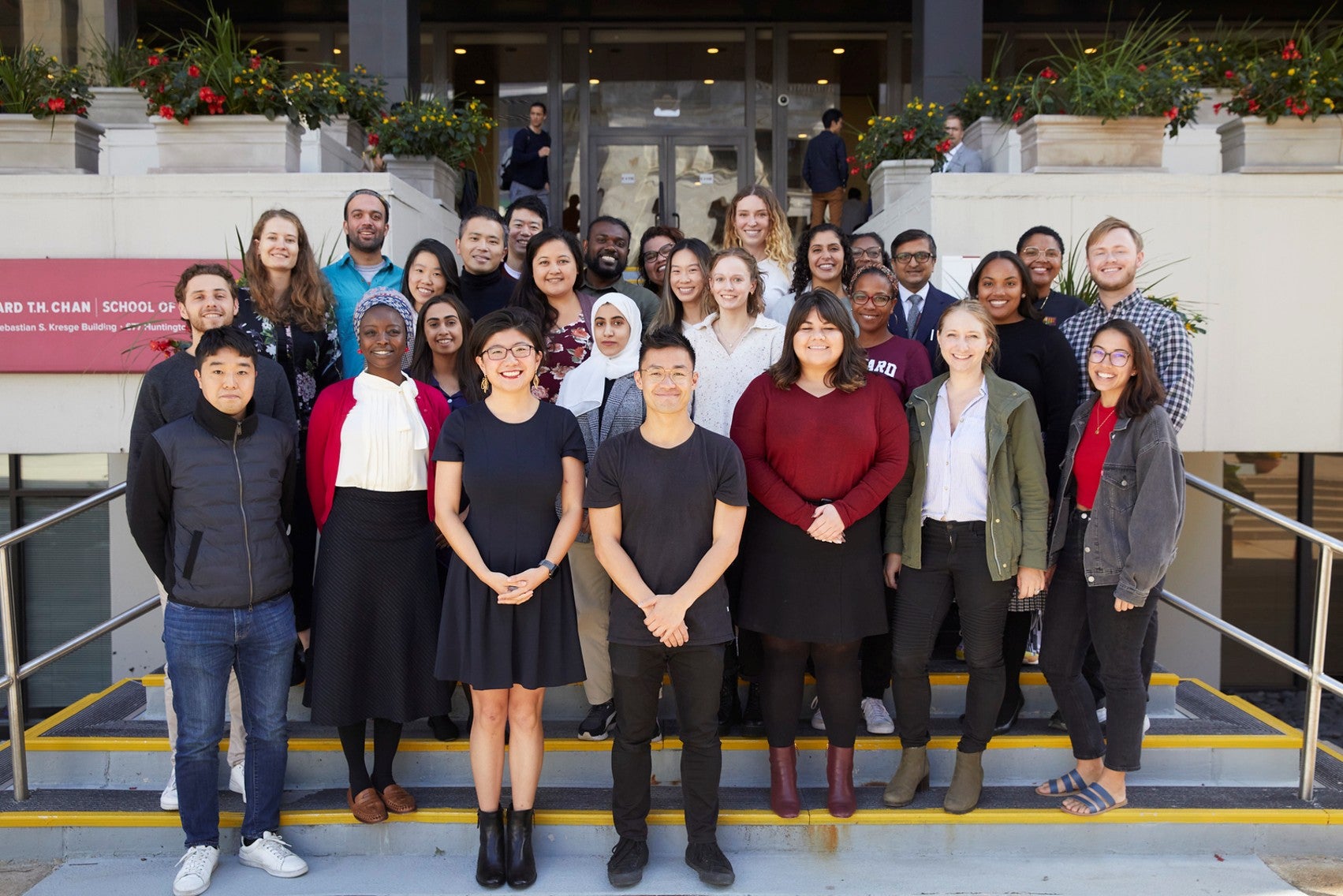
Alumi Spotlight: Dr. Vipul Aggarwal
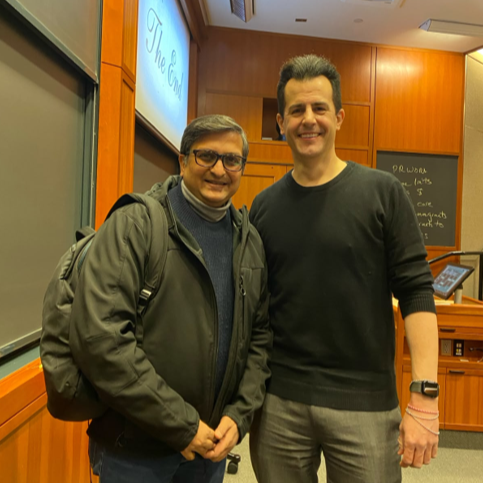
At Harvard Chan: a moment from the journey
Dr. Vipul Aggarwal, IPS (MPH ’23) is a physician, public administrator and Harvard Chan MPH ’23 alumnus. He also holds a PhD in Human Resource Management from Gujarat University and currently serves as Joint Secretary (Infrastructure) in India’s Ministry of Development of North Eastern Region. His career spans district policing, healthcare administration, medical education, urban development and infrastructure. As Managing Director of the Gujarat Medical Services Corporation, he supplied medicines and equipment to over 10,000 health facilities. As Deputy CEO of the National Health Authority, he led the world’s largest public funded health assurance scheme, Ayushman Bharat PM-JAY, covering over 540 million people. He later served as Joint Secretary (Medical Education) and Principal Commissioner at the Delhi Development Authority (DDA), overseeing 16,000+ acres of green assets and the digitization of over 30 million legacy records. His continuing interest is in making public systems more accessible, responsive and useful to people.
How would you describe your experience at the Harvard T.H. Chan School of Public Health?
After years of working on large healthcare programs in India, I came to Harvard with practical questions about how health systems function and how they can be improved. The MPH year gave me something that public administration rarely allows: time to step back and examine those questions systematically. Courses such as ‘Doing Health Reform Better’ and ‘Comparative Health Systems’ helped me understand how health systems are organized, financed and improved in different countries. Economic Analysis and Decision Analysis introduced useful ways of weighing costs, benefits and choices. Two courses left a particularly strong impression on me.
Studying infectious diseases with the late Professor Richard Cash was a privilege. He was one of the pioneers of oral rehydration therapy, a simple intervention that has saved millions of lives. What made his teaching special was his deep understanding of public health realities in South Asia, including India, and his ability to connect scientific knowledge with the conditions in which people actually live.
Professor Vish Viswanath’s course on health communication was equally valuable, but in a different way. It helped me appreciate how thoughtful communication can build awareness, encourage participation and greatly extend the reach and impact of public programs. As a public administrator, I have found that learning particularly useful. Even a well-designed program can fall short if people do not understand or trust it.
Two experiences made the year especially rewarding. As a Policy Fellow with the India Health Systems Project, I worked with Professor Winnie Yip and her team, whose extensive research in Odisha had examined health-system performance, financing, access and quality of care. I learned a great deal from seeing how a complex health system could be studied so thoroughly, using evidence from the field to understand what shapes its performance.
For my practicum, I worked with Professor Rifat Atun’s team at the Health Systems Innovation Lab on a comparative assessment of cancer care in India and Brazil. Our work examined challenges in addressing the growing burden of cancer in India and explored possible approaches to screening, diagnosis, treatment and the organization of care. Moving from the problems I had seen as an administrator to studying them systematically with an international research team was both challenging and deeply satisfying. It was one of the most memorable parts of my time at Harvard.
What was the most valuable takeaway from your time at the Harvard T.H. Chan School of Public Health?
Harvard taught me to approach administrative problems with the curiosity and rigor of a researcher and to recognize connections between issues that may initially seem unrelated.
As administrators, we are often required to find solutions quickly. My time at Harvard taught me the value of examining the underlying causes of a problem, questioning existing assumptions and looking at evidence before arriving at a solution.
During my subsequent assignment at the Delhi Development Authority, for instance, I began to look at the development of parks and green spaces beyond the conventional objectives of urban planning and beautification. Their distribution and accessibility have implications for physical activity, mental wellbeing, air quality and, ultimately, public health. Similarly, before digitizing DDA’s legacy records, I wanted to understand why citizens needed them and where files got stuck. Scanning 30 million documents would only have moved the same delays onto a screen. The real work was cleaning and indexing the records and reworking the process, so that a citizen’s request could be answered from one reliable record.
This ability to approach issues from multiple perspectives has stayed with me and continues to influence the way I work, irrespective of the sector in which I serve.
What would you advise others who are interested?
“Do not let your professional experience become the boundary of your education”
Mid-career professionals naturally gravitate towards familiar subjects. Yet some of the most valuable learning comes from disciplines that challenge established ways of thinking.
In practice, I would suggest three things:
First, take courses outside your comfort zone, even when their immediate professional utility is not obvious. They can offer fresh perspectives on problems you have encountered throughout your career.
Second, seek out faculty and participate in research. Working alongside people who have studied the problems you have spent years dealing with is an extraordinary opportunity.
Third, engage with classmates whose experiences differ from your own. Some of my most valuable learning at Harvard came from conversations with classmates about how similar challenges were being addressed in their own countries.
What is a public health challenge that you are currently working on or are passionate about?
I am particularly interested in bridging the gap between the availability of healthcare and its actual accessibility, especially in developing countries.
For a patient, access means more than the existence of a hospital or eligibility under a government scheme. It means finding the right facility, navigating the system and receiving timely care without unnecessary financial or administrative hardship.
My work at the National Health Authority gave me an opportunity to address two aspects of this problem: financial protection through Ayushman Bharat PM-JAY, which offers cover of up to ₹5 lakh per family per year for hospitalization, and the use of technology through the Ayushman Bharat Digital Mission. The Digital Mission was launched during my tenure, and it has been exciting to watch it expand since then. Digital health accounts and linked medical records can help patients navigate services with less paperwork and inconvenience. Technology alone is not the answer. We also need good healthcare facilities, trained professionals and better physical connectivity. In my current role in the North East, this question now arises for infrastructure: a road, a bridge or a telecom link is, in effect, a health intervention, because it decides whether a patient can reach care in time.
What are some of the biggest public health challenges you foresee in the next decade, and how do you think we should prepare for them?
The changing burden of disease. Non-communicable diseases, including cancer, diabetes and cardiovascular disease, will place increasing demands on health systems, while infectious diseases and malnutrition will continue to need sustained attention. Prevention, early diagnosis, effective primary care and continuity of treatment will be increasingly important.
People and geography. Shortages and uneven distribution of trained healthcare professionals, particularly specialists, remain a major challenge in many developing countries. My current work in the North East has reinforced how terrain, distance and connectivity can affect access to essential services, even where facilities are available. Better infrastructure, appropriate use of telemedicine and stronger local healthcare capacity can help extend the reach of care.
Environment and health. Air pollution, extreme heat and other climate-related risks are becoming more important public health concerns. During my assignment at the Delhi Development Authority, working with the city’s parks, biodiversity areas and green infrastructure gave me a closer appreciation of the link between the environment and wellbeing. Building more resilient communities will require public health, urban planning and infrastructure development to work together.
Digital health and AI governance. As health records move online and AI tools enter healthcare, the benefits will depend on strong data protection, sound standards and public trust. My experience with the Ayushman Bharat Digital Mission suggests that digital systems must be built around what patients and providers actually need.
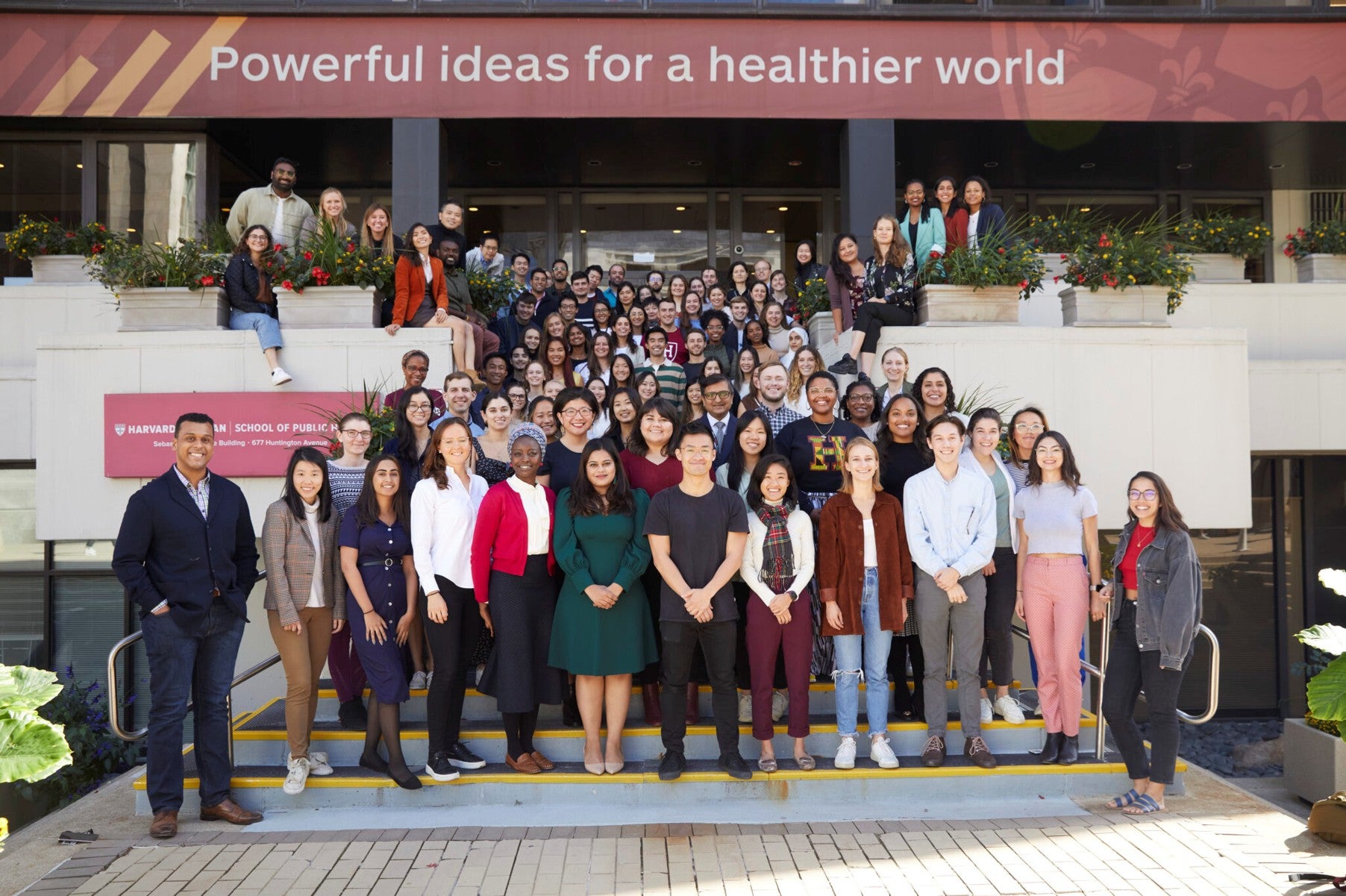
<em>The HPM Class of 2023</em>