What Global Mental Health Taught Me Outside the Classroom
Hervet Randriamady is a Rose Service Learning Fellow and a PhD candidate in Population Health Sciences.
I am thankful to have received the Rose Learning Service Fellowship. This summer, I co-led a participatory workshop training on mental health with Omena, “Empowering Non–Mental Health Workers for Mental Health in Southwestern Madagascar.” Omena is a local Malagasy NGO that offers mental health prevention training throughout the country. Omena’s mission is to break the cycle of emotional, verbal, and psychological abuse through mental health prevention and social-emotional learning.
In a few months, I will graduate from Harvard University with a PhD in Population Health Sciences. I still remember writing my Harvard personal statement, which included a paragraph stating my interest in conducting public health research and explaining how my research could benefit local communities in Madagascar. I was so fortunate to have my two mentors, Professors Chris Golden and Karestan Koenen, who fully supported my research interests in climate change, food insecurity, and mental health research in southwestern Madagascar as part of an ongoing HIARA cohort study.
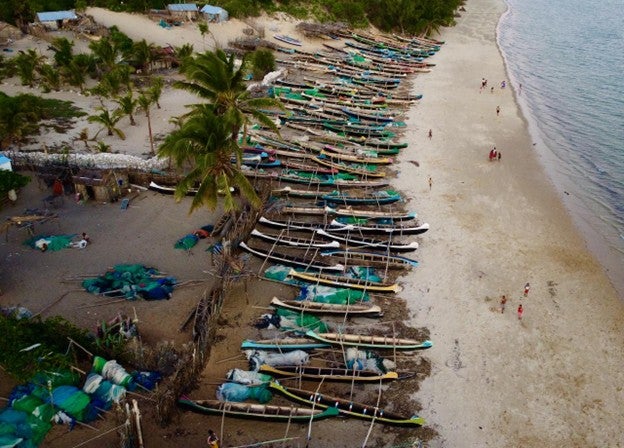
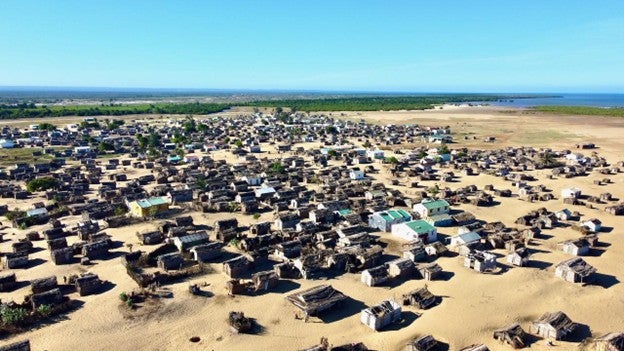
Madagascar lacks trained mental health care specialists. There are only 24 psychiatrists for 30 million people. In the southwestern region of Madagascar, where I have been conducting my dissertation fieldwork since 2022, there is only one psychiatrist for approximately two million people. There were no tools to screen for depression and anxiety disorders. One of my dissertation chapters was to develop and adapt culturally validated tools to screen for mental health in southwestern Madagascar. The first step in developing and adapting tools is to conduct a quantitative study of mental health conceptualization in local communities, as the concept of mental health can differ from cultures and countries. In 2021 and 2022, I conducted key informant interviews with people knowledgeable on mental health in the region, including traditional healers, faith-healing centers, community health workers, nurses, and midwives. Throughout that study, I learned about local mental health syndromes specific to the communities, local idioms to describe psychological distress, coping strategies, and where people seek care when experiencing mental health issues. The interaction with these key informants was my first introduction to global mental health. Each interview felt like a lecture. Yet instead of taking place in the ivory tower at Harvard Chan, these lectures unfolded in a hut, a public clinic, under a tamarind tree, or on a mat, accompanied by the salty breeze of the Mozambican Channel. I came to realize that I learned far more from these informal conversations—by listening to the lived experiences of key informants—than from case studies built around directed questions and anticipated answers.
At the end of my interview, some participants asked whether I planned to provide mental health prevention training in the future. That was a daunting question, as I just started my global mental health journey with the interaction I had with them.
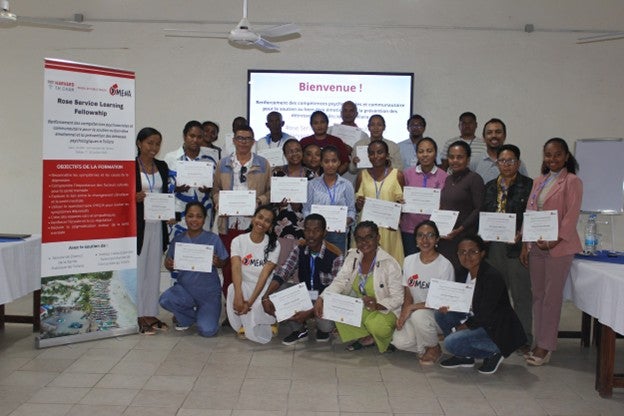
A few years later, I decided to apply for the Rose Service Learning Fellowship to give back to my community. With Omena, we organized a two-day participatory workshop in Toliara, in southwestern Madagascar. Participants included nurses, midwives, physicians, educators, community health volunteers, and academics in the southwestern region of Madagascar. A few participants I interviewed three years ago were among the key informants who provided me with my first “lecture” on global mental health. Participants received training on recognizing emotional abuse and trauma, strengthening emotional intelligence, and applying practical emotional regulation techniques, skills they can now integrate into everyday patient care. Most importantly, participants learnt how to administer the culturally adapted 8-item Patient Health Questionnaire (PHQ-8) to screen for depression in southwestern Madagascar. Some of the participants co-authored the article I published in the Global Mental Health journal related to the validation of the PHQ-8 in southwestern Madagascar. Some clinics in southwestern Madagascar have been administering the PHQ-8 since then.
In sum, my global mental health journey—and my time as a Rose Fellow—taught me humility as a learner. I learned far more from participants when I first allowed myself to be vulnerable. I let them know that I did not have all the answers and that the answers emerged from them. I made the effort to speak their local dialects throughout my presentations. I still remember being corrected when I used the local word manenty (“looking”) instead of mijanjy (“listening”).
As I approach the completion of my academic training at Harvard, I realize that earning a PhD in Population Health Sciences is not about knowledge and prestige, but about becoming more humble—committing myself to lifelong learning in the pursuit of VERITAS.
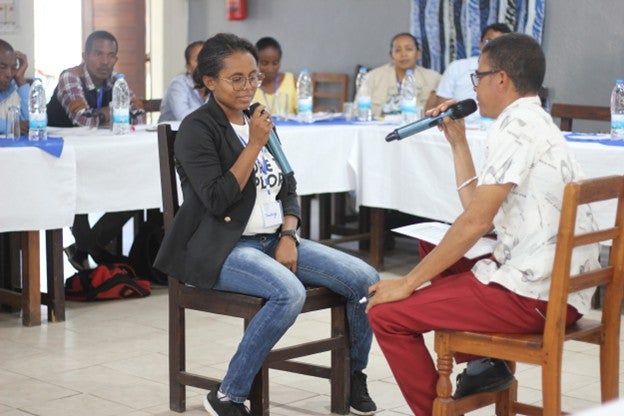
Hervet Randriamady was among 19 fellows and students who shared their community engaged learning experiences at Stories from the Field. Read more about the event here!