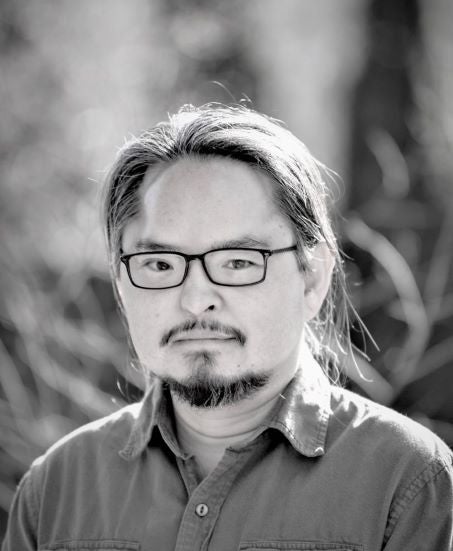
Monday Nutrition Seminar | Harnessing planetary health data science approaches to understanding food safety and food security in Madagascar
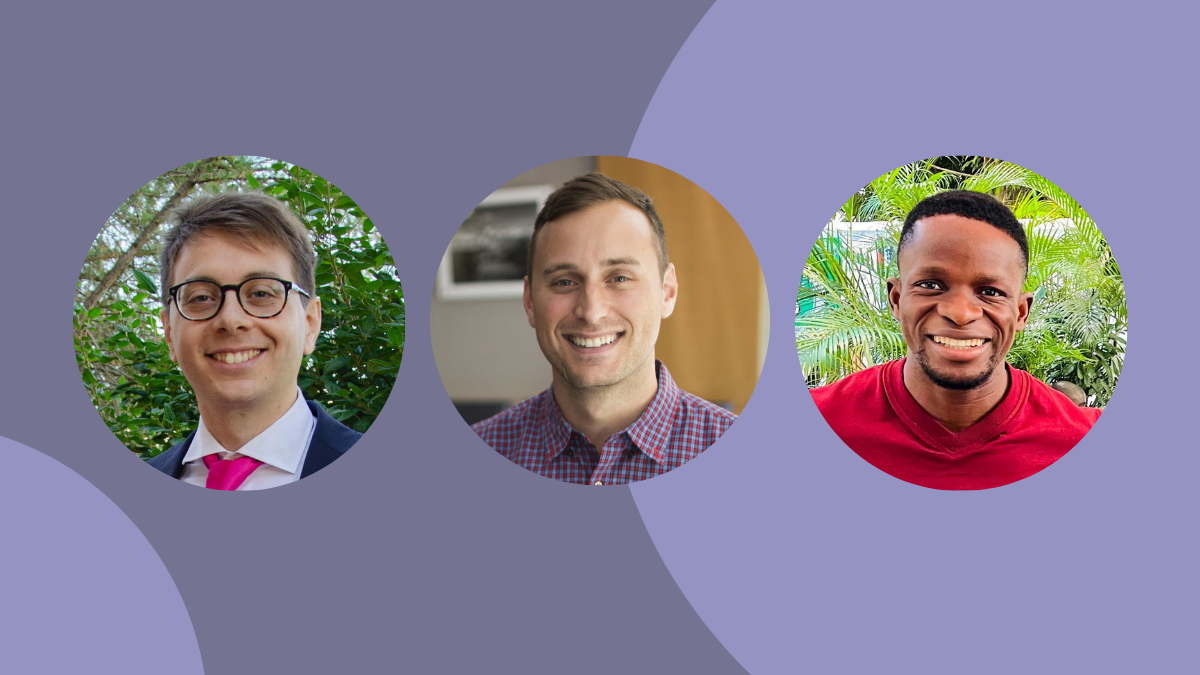
Please join the Department of Nutrition for the Monday Nutrition Seminar featuring Christopher Golden, PhD, MPH, Associate Professor of Nutrition and Planetary Health, Director of the MPH in Nutrition Program, Co-Director of the Concentration in Climate Change and Planetary Health; Giacomo De Nicola, PhD, Postdoctoral Fellow; Oladimeji Mudele, PhD, Postdoctoral Fellow at the Harvard T.H. Chan School of Public Health. The speakers will present their talk on “Harnessing planetary health data science approaches to understanding food safety and food security in Madagascar” on December 1, 2025 at 1:00 p.m. ET. This seminar will take place in FXB G-13 and via Zoom (registration is required in advance).
The Monday Nutrition Seminar Series is free and open to the public. If you plan to attend this event and do not have an active HUID, please fill out this registration form by 3:00 p.m. ET on the Friday before the seminar to request a visitor pass to access the building.
Seminar speakers share their perspectives, they do not speak for Harvard.
Speaker Information
Organizers
Monday Nutrition Seminar | Biomarkers as an essential instrument in nutritional research
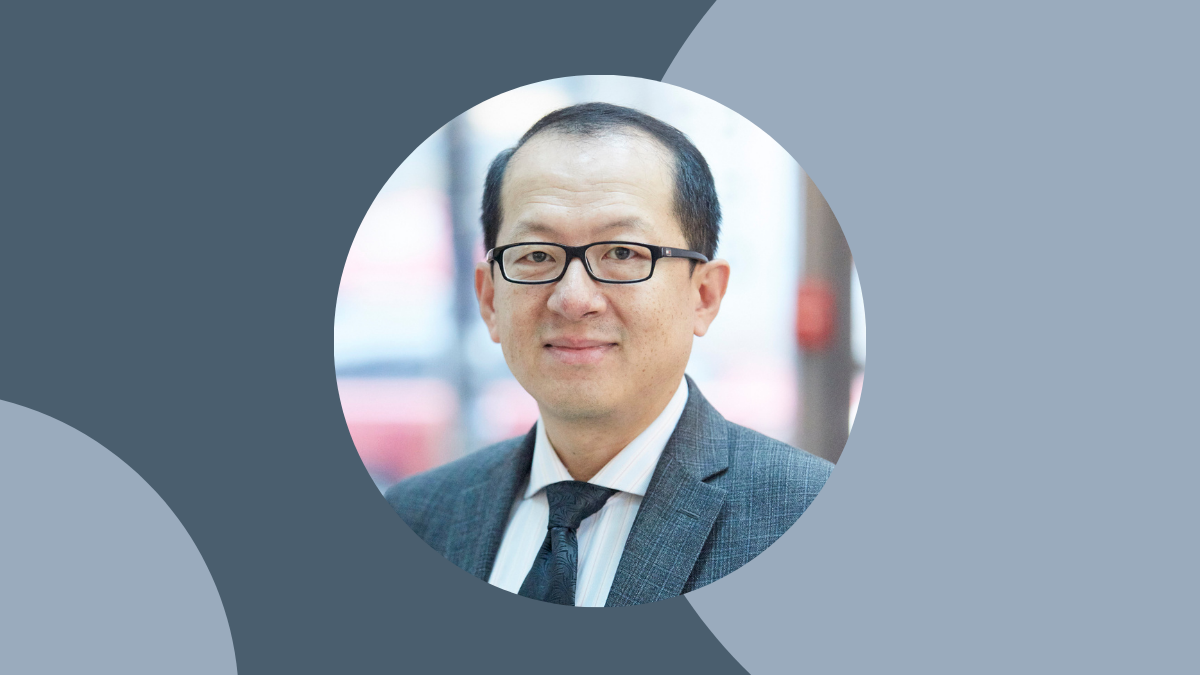
Please join the Department of Nutrition for the Monday Nutrition Seminar featuring at Qi Sun, MD, DSc, Associate Professor at the Departments of Nutrition and Epidemiology, Director of Nutritional Biomarker Laboratory at the Harvard T.H. Chan School of Public Health, Associate Professor of Medicine at Brigham and Women’s Hospital, Harvard Medical School. Dr. Sun will present his talk on “Biomarkers as an Essential Instrument in Nutritional Research” on November 24, 2025 at 1:00 p.m. ET. This seminar will take place in FXB G-13 and via Zoom (registration is required).
The Monday Nutrition Seminar Series is free and open to the public. If you plan to attend this event and do not have an active HUID, please fill out the registration form by 3:00pm ET on the Friday before the seminar to request a visitor pass to access the building.
Seminar speakers share their perspectives, they do not speak for Harvard.
Speaker Information
Qi Sun, MD, DSc
Organizers
From Clinical Insight to Preclinical Innovation: Advancing Next-Generation CAR T-Cell Therapies
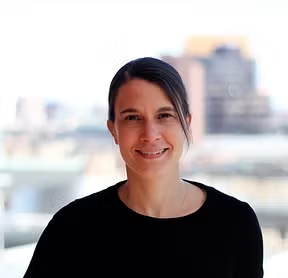
Title Talk
“From Clinical Insight to Preclinical Innovation: Advancing Next-Generation CAR T-Cell Therapies”
THIS SPEAKER WILL BE IN PERSON IN FXB 301.
The event will be hybrid.
Speaker Information
This seminar will present an integrated clinical and translational investigation into the mechanisms that govern CAR T-cell efficacy and therapeutic resistance. We will discuss high-dimensional transcriptional and functional analyses of CAR T cells collected from patients, aimed at defining molecular programs that distinguish durable responders from those who experience relapse or non-response. Complementing these patient-based studies, we will highlight our translational preclinical work using an immunocompetent non-human primate model to experimentally interrogate causal pathways and evaluate targeted genetic modifications that enhance in vivo CAR T-cell persistence, trafficking, and antitumor activity. Together, these complementary approaches aim to establish a mechanistic foundation for the rational engineering of next-generation CAR T-cell therapies with improved clinical outcomes.
Related Events
What’s at stake for health care reform? Insights from Florida and Massachusetts

Health care access, costs, and coverage – particularly for lower-income Americans – are expected to undergo dramatic changes in the next few years. Enhanced subsidies that make coverage through the Affordable Care Act marketplace more affordable are set to expire at the end of 2025. Meanwhile, Medicaid faces billions in cuts and a high probability that people will lose coverage due to new work requirements, stricter eligibility rules, and more frequent eligibility reviews. In addition, changes in Medicaid reimbursement rules and new rural health grants could have nationwide effects. In this event, former health care leaders from Florida and Massachusetts share their perspectives on how state officials and health care providers will respond in this shifting policy environment.
Register for free to submit your questions.
An on-demand video will be posted after the event.
Speaker Information
Justin Senior
Moderator
About The Studio
Community-Engaged Research Working Group in Environmental Health
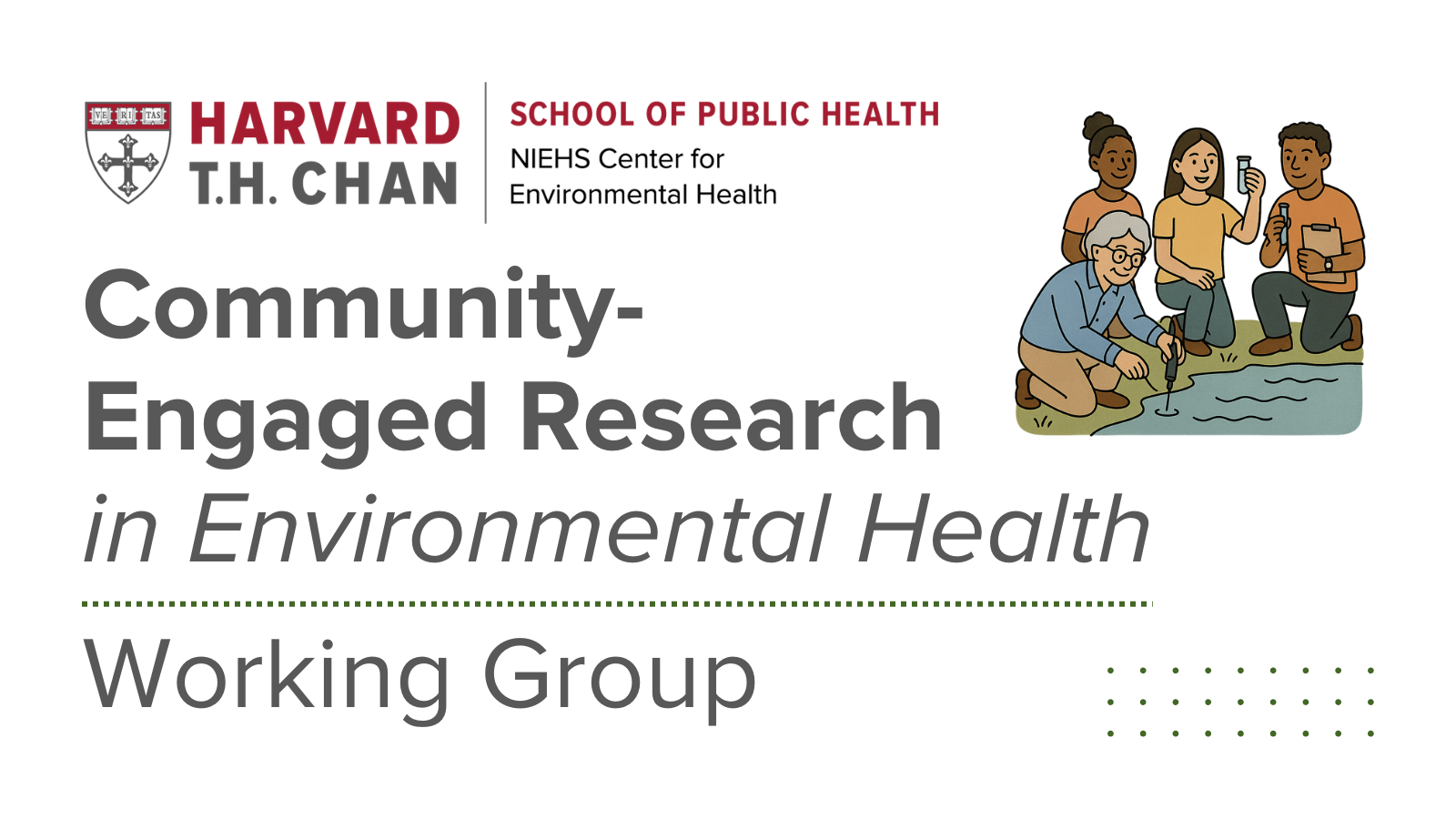
Join the Harvard Chan NIEHS Center’s working group on community-engaged research in environmental health!
This working group brings together faculty, trainees, students, and staff to discuss the methods and practice of conducting community-engaged research with a focus on environmental health.
We’ll meet in person in Building 1, 1110 on December 1, 1-1:50 pm. Bring your own lunch. Light refreshments will be provided.
Please email niehsctr@hsph.harvard.edu to RSVP!
Speaker Information
Organizers
The Prevalence and Policy Consequences of “mRNA Vaccine Stigmatization” in the US
Despite their life saving potential, many prominent voices in American public life have used their social and political platforms to spread misinformation about mRNA vaccine safety and efficacy. In this talk, Dr. Motta provides new evidence that “mRNA vaccine stigmatization” is evident in the actions of policymakers across multiple levels of government. He also reviews the state of public opinion about mRNA vaccines, drawing on both original and secondary survey research. He argues that although it is presently unclear whether elites’ efforts to stigmatize mRNA vaccines has spilled over to impact broader US public opinion, there is growing reason to believe that it will. Ultimately, Motta concludes that mRNA vaccine stigmatization could come at an important cost; both by eroding public confidence in mRNA vaccination, and by limiting access to life-saving vaccines.
Registration is required in advance. Event is open to the public. To attend in person, use the Wexner Building entrance at Harvard Kennedy School to locate the Rubenstein Building – R-414-AB David Ellwood Democracy Lab.
Lunch will be provided!
Speaker Information
Matt Motta, PhD
Organizers
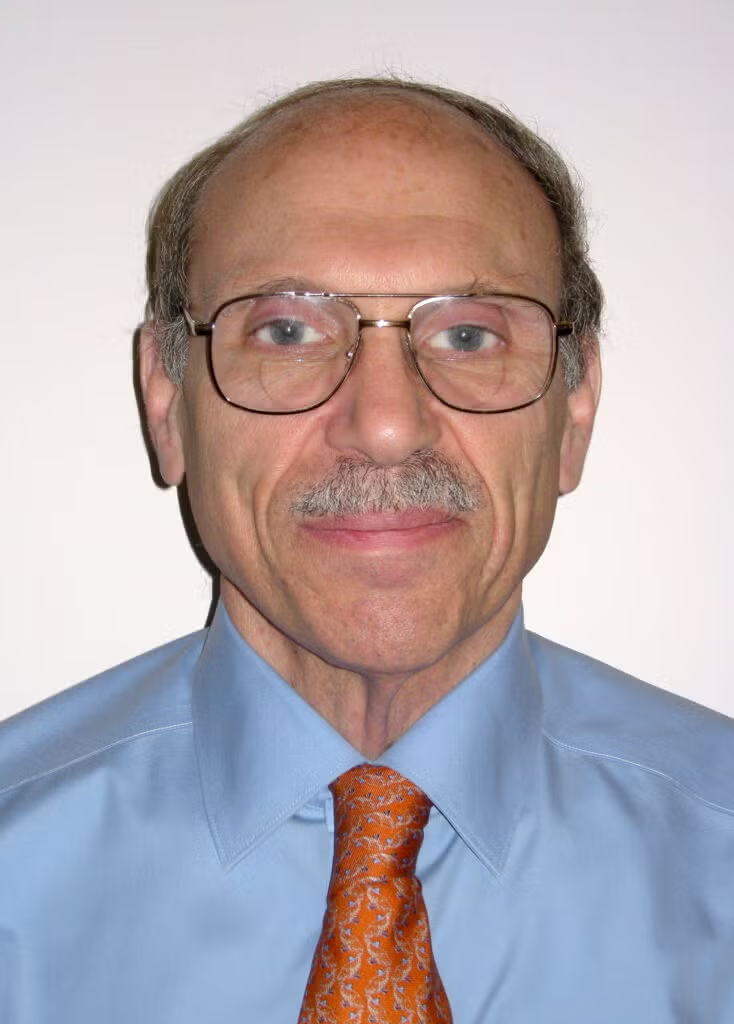
Guidelines for Laboratory Design: Health and Safety Considerations

Join us for a webinar on the Guidelines for Laboratory Design: Health and Safety Considerations program, offered by Harvard Chan School Executive and Continuing Education.
Program Director Lou DiBerardinis will share how this program helps professionals design and manage laboratories that prioritize health, safety, and sustainability while balancing the needs of multiple stakeholders.
If you’re looking to enhance your understanding of safe and effective lab design—from new construction to renovation and decommissioning—this webinar is a great opportunity to see how the program can support your goals.
Speaker Information
Organizers
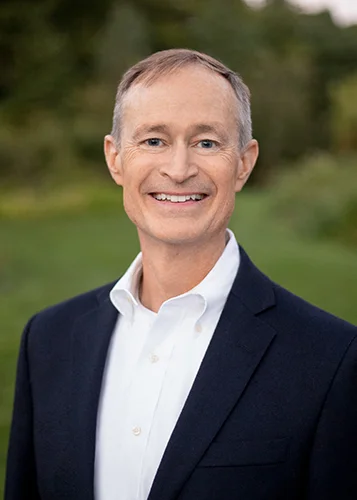
Conflict, Feedback, and Negotiation in Health Care

Join us for a webinar on the Conflict, Feedback, and Negotiation in Health Care program, offered by Harvard Chan School Executive and Continuing Education.
Program Director Ted Witherell will share how this program helps health care leaders build confidence and skill in managing conflict, providing feedback, and navigating complex negotiations.
If you’re looking to strengthen your leadership and communication skills to handle challenging conversations more effectively, this webinar is a great opportunity to see how the program can support your goals.
Speaker Information
Organizers
CHDS Seminar With Kayoko Shioda of Boston University
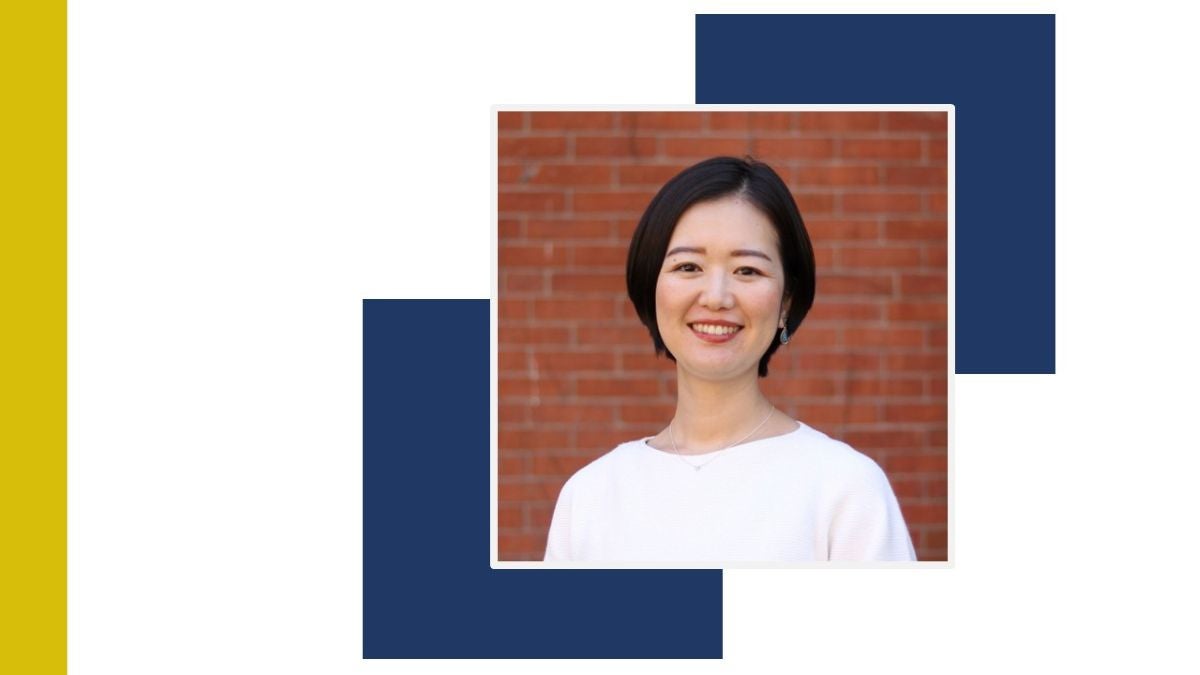
Join the Center for Health Decision Science for a seminar with Kayoko Shioda of Boston University, “Target Trial Emulation for Vaccine Dosing Schedule Evaluation.” Target trial emulation (TTE) is a causal inference framework that uses observational data to emulate a randomized trial. It has become a valuable tool for evaluating treatments and health interventions when randomized trials are not feasible. However, applying TTE to infectious diseases requires caution due to transmission-related interference. In this talk, Dr. Shioda will illustrate how TTE can identify optimal vaccine dosing schedules, including for COVID-19, and discuss current methodological limitations and possible solutions.
Dr. Shioda is an infectious disease epidemiologist and veterinarian focusing on two research areas: (1) One Health and climate change, and (2) vaccine epidemiology. For vaccine epidemiology, she aims to inform vaccine policy by developing novel analytic methods for intervention evaluation, especially in resource-limited settings where public health data often have various challenges that make it difficult to draw reliable conclusions. She has collaborated with partners across local, national, and international organizations in more than 30 countries worldwide.PhD, DVM, MPH
Speaker Information
Kayoko Shioda, PhD, DVM, MPH
Organizers
Social Connection and Health Across Adulthood and Later Life

Please join us for an SBS seminar session led by Visiting Professor, Dr. Anthony Ong, as he discusses the importance of social connection, a central determinant of health across the life course. This talk synthesizes evidence on age-related patterns in loneliness and social isolation, the ways pandemic conditions disrupted connection, and why mismatches between objective isolation and subjective loneliness (social asymmetry) carry distinct health risks. Comments on the construct of cumulative social advantage—a multidimensional profile of sustained connections across family, community, religious/civic, and emotional domains—will be made, showing that stronger profiles are associated with slower biological aging and a lower inflammatory burden.
Speaker Information
Anthony Ong