Q&A with Alumnus Julie Buring
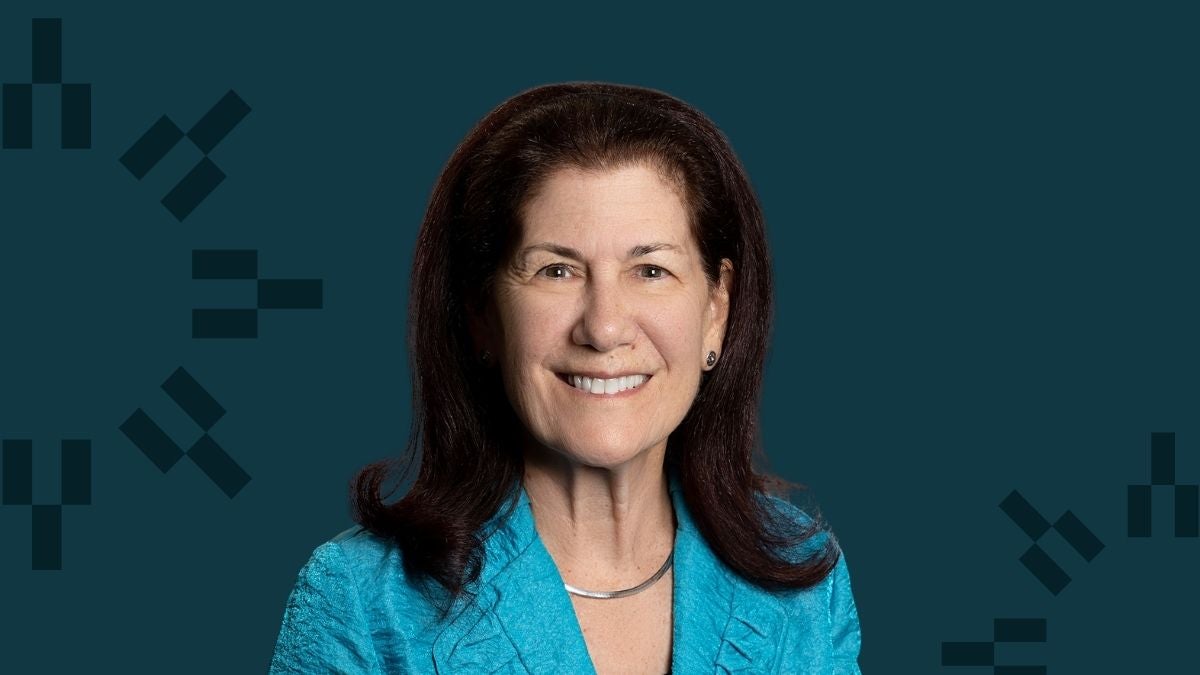
Julie Elizabeth Buring, ScD ’83, has devoted her career to the prevention of chronic disease, particularly cardiovascular disease and cancer in women. Through appointments at Harvard Medical School, Harvard T.H. Chan School of Public Health, and Brigham and Women’s Hospital, she helped lead major randomized clinical trials, including the Women’s Health Study and VITAL. Her life’s work also reflects a deep commitment to teaching, mentorship, career development, and research ethics, including more than 20 years as chair of the Harvard Medical School Institutional Review Board. Now Professor of Medicine and Epidemiology Emerita, she continues her work in research, education, and the training of epidemiologists and clinical investigators.
- How did you first come to the Harvard Chan School and what drew you to the field of epidemiology?
I was an undergraduate math major at Pomona College, and my mentor was an applied statistician who brought me into his clinical consulting projects, analyzing and interpreting data from an industry study on adverse outcomes during pregnancy. I loved the application of statistical tools to clinical questions, and this led me to a master’s degree in biostatistics at the University of Washington. But I also realized that I was strongly drawn to the “medical detective” components of a study — defining the question, collecting the data, interpreting the results, and considering alternative explanations. At that time, the doctoral program in chronic disease epidemiology at the University of Washington was just being developed, so the faculty there recommended that I go to Boston and get my doctorate where they themselves had trained—the Department of Epidemiology at the then named, Harvard School of Public Health (HSPH). - Can you describe the environment at HSPH during that time, and in particular, the epidemiology department?
When I began the doctoral program in epidemiology at HSPH in 1975, I was among the first cohorts who were accepted without having an MD or relevant prior doctorate. Without that prior background, we needed to gain a strong foundation in basic science as well as clinical knowledge to actively participate in our own research as well as to interpret the published literature. The epidemiology department worked closely with us to identify the key additional courses we needed to fill these knowledge gaps and expedited our enrolling in these courses not only from HSPH but also from Harvard Medical School.
What I appreciated the most during those years was the collegial support of my fellow students. Studying with my peers was invaluable throughout the program — for classes, projects, presentations, and preparing for qualifying exams. I am still proud to be a colleague and friend of those who were in my cohort of doctoral students 50 years ago. - What was the thesis writing process like for you? How did you pick the topic for your thesis “Female Hormone Use and Breast and Uterine Cancer?” Were there any challenges? Any unexpected surprises? What advice would you give to students just starting the thesis writing process?
When I began at HSPH, I had not even identified a content area in which to focus, let alone a specific topic or project. One day my mentor stopped me in the hall and said the department had just received funding to conduct a case-control study of female hormone use and breast and uterine cancer, and asked whether I would be interested in doing this study for my thesis. These questions were timely and important, funding was available, the data could be used for first authored papers for my thesis, and it would allow me to learn a new skill set regarding case-control studies. So, I jumped at this unexpected offer and learned a lesson about always being open and flexible to new opportunities which has served me well over my career.
My biggest challenge was completing my thesis in a reasonable time while also needing to work on other research projects for financial support. One unexpected surprise that was not good news was that at the last stages of my thesis, my committee found a subtle but serious problem in my study design that required additional data and time to rectify, thus postponing the completion of my thesis. But I never gave up, and I received my ScD one year later —better late than never! - How would you link the work you did in your thesis to what you would go on to do in your later years as an epidemiologist?
Everything I have done in my career has been a natural extension of what I began with my thesis work. The risk factors for cancer that I first looked at evolved to a focus on prevention, specifically evaluating the primary prevention of chronic diseases and the effect of potential beneficial interventions, particularly for cardiometabolic disease and cancer, and especially in women. My methodologic tools also expanded, from observational studies to the design and conduct of large-scale randomized clinical trials evaluating primary prevention interventions. Over my research career, I developed a critical way of thinking and an epidemiologic skill set that I can now apply broadly to other scientifically important, timely, and fundable questions.
- Curious to hear your thoughts on the development of epidemiology from when you first started in the field onwards, what would you say are some recent developments that you are most excited about?
One of the greatest differences over these years has been the increasing complexity of the design, conduct, analysis, and interpretation of epidemiologic studies. This increased complexity in the biomedical sciences has led to a research environment which demands highly interdisciplinary and novel components, such as genomics, metabolomics, or microbiomics. This led to a large difference in how I approached my research, namely that epidemiologic studies, particularly randomized trials, are a team sport. No one investigator can have all the expertise needed to address the complexity of the design, conduct, analysis, and interpretation of a study. But with the careful formulation of a team, the team itself can be leveraged to support our (plural) ability to do the study. - What advice would you give to current students in the department? Is there something you wished you’d known during your time as a student?
When I first began, I believed that my job was just to do the science, in a robust and scientifically valid way. But I learned through experience that increasingly, our responsibility is also to translate and communicate our findings for the public, media, researchers, clinicians, professional organizations, and regulatory agencies. For us not to do so is now scientifically irresponsible, because we understand the strengths and limitations of our own studies better than anyone else. I had to work to develop the skills to communicate effectively, while learning that communication is rarely a one-shot experience, but rather an ongoing campaign. Communication — in print, at conferences, and online — does get better with practice, so any opportunities you have to communicate your studies, your findings, and your message will help to develop this critical skill.
I would also recommend that students take any opportunity to do some hands-on epidemiology, even just collecting data from an electronic medical record or designing a questionnaire. While Harvard Chan epidemiology doctoral students are highly proficient in cutting edge methodology, there is an advantage to also having direct experience in the nuts and bolts of the design and conduct of a study. These experiences often have to be sought out, but they are totally worthwhile as you begin designing your own studies.
And finally, remember to be patient. Few of our faculty have had a straight-line path to success. Your career will often feel like a circuitous journey with lots of turns and dead ends, but that journey will still lead to a rich and fulfilling career in epidemiology.