Get to Know: Karestan Koenen
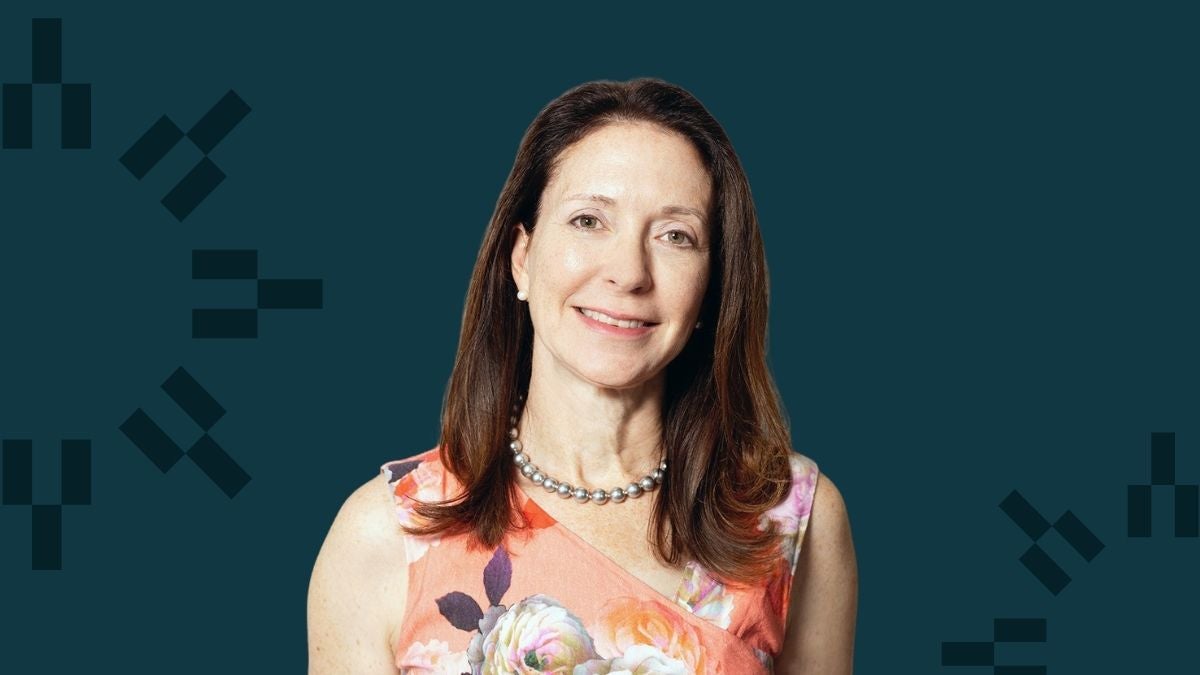
Karestan C. Koenen, PhD, is Professor of Psychiatric Epidemiology, Department of Epidemiology at Harvard T.H. Chan School of Public Health and director of its Population Mental Health Lab and Concentration. She also directs the Broad Trauma Initiative at the Broad Institute of MIT and Harvard. Her research examines why some people develop PTSD and related health problems after trauma while others remain resilient, how trauma affects long-term physical health and aging, and how to expand access to evidence-based treatment. Koenen also leads federally funded training in psychiatric epidemiology and biostatistics and advocates for survivors of violence and trauma. In this new series, get to know more about her and her latest work.
- What are some things you’re working on currently that you’re most excited about?
I am especially excited about the collaboration between the Broad Trauma Initiative, which I lead, and the Biology of Adversity Project, led by Jason Buenrostro. Throughout my career, I have wanted to understand how trauma, adversity, and protective experiences get in our bodies and shape how we think, feel, behave, and age. Working with Jason, a molecular biologist and MacArthur Fellow, has been a dream. His lab has developed a scalable, DNA-based epigenetic assay that may allow us to measure how cells change and adapt in response to diverse life experiences. This could be transformative, connecting rigorous epidemiology with mechanistic biology at a scale not previously possible. My lab is collaborating with his group on the first proof-of-concept study in an epidemiologic cohort, and we hope to have data by the time this interview is published.
We are fortunate to have support from the Treehouse Family Foundation. Building this collaboration required us to learn each other’s scientific languages and ways of thinking. That investment is now allowing us to ask questions neither field could answer alone and that is what excites me most. - Recently you have been featured in a number of podcasts. How has that experience been like? What surprised you about sharing your work and personal stories through this medium?
I love doing podcasts because they offer the opportunity to jump straight into deep conversations about topics I care about with people I might never otherwise meet. I study mental health and trauma, issues that affect most people. Epidemiologic data show that roughly 80% of people will experience a traumatic event at some point in their lives, so I know the work my group does is relevant to a wide audience. Podcasts give me the chance to share what we are learning with people who are genuinely hungry for that information.
What continues to surprise me is how often what we know as scientists fails to reach the public. For people who have experienced trauma, we have a substantial body of evidence about what can help. As academics, it can be easier and more comfortable to stay in our bubble and complain that no one listens to us. But we also have a responsibility to get out there and talk to people. The good news is that people really do want to hear what we have to say. - What’s one misconception of your field that you would like to clear up?
One misconception I would like to clear up is that trauma is something that happens to other people and that its effects are limited to PTSD or other mental health problems. Trauma is much more common than many people realize. Most of us have experienced something that felt threatening, unpredictable, uncontrollable, or overwhelming, whether directly or through someone we love.
Its effects also extend far beyond mental health. Decades of research show that experiences such as violence, serious accidents, disasters, or sexual harassment are linked to long-term physical health outcomes, including high blood pressure, heart disease, autoimmune conditions, and dementia.
At the same time, there is no single way people respond. Even after severe trauma, some people struggle, some adapt, and many fall somewhere in between. Those differences are shaped by earlier experiences, supportive relationships, social conditions, and biology, including genetics. Trauma is both more common and more complex than people often assume, and understanding that complexity is central to my field. - What’s giving you hope right how about the future of public health?
What gives me hope is the opportunity to bring together forms of knowledge that have too often been kept separate. Advances in genomics, and especially epigenetics, are making it possible to study at a molecular level how social conditions, trauma, adversity, and protective experiences become embedded in the body and shape health across the life course.
Through the Broad Trauma Initiative, we are working to integrate lived experience, rigorous epidemiology, and molecular biology. Each contributes something essential. Lived experience helps us ask the right questions, epidemiology shows us patterns across populations, and molecular biology may help us understand the mechanisms underlying those patterns. Together, they create the possibility of a more molecularly informed public health that never loses sight of the people behind the data.
I am also continually inspired by our students and trainees. They bring passion, intellectual rigor, and a strong sense of responsibility to their work. Their willingness to cross disciplines, question assumptions, and think seriously about whom science serves gives me enormous hope for the future of public health.
Recent Selected Publications & Media
- “Healing Trauma: Integrating Lived Experience & Research.” On Trauma & Power podcast, April 2026
- “The Things We Carry.” Harvard Thinking podcast, 2026
- “Genome-Wide Association Analyses Identify 95 Risk Loci and Provide Insights Into the Neurobiology of Post-Traumatic Stress Disorder.” Nature Genetics, 2024
- “Experiences of Stalking and Obtaining a Restraining Order Are Associated With Onset of Cardiovascular Events in Women.” Circulation, 2025;152(9):570–581
- “Towards Scalable Biomarker Discovery in Posttraumatic Stress Disorder: Triangulating Genomic and Phenotypic Evidence From a Health System Biobank.” Molecular Psychiatry, 2026;31(8):4777–4786.