Announcing the New Harvard-Oxford Program in Epidemiology (HOPE) Fellows
The Harvard-Oxford Program in Epidemiology (HOPE) was established in 2017 to promote collaboration between the Harvard Chan School’s Department of Epidemiology and the Nuffield Department of Population Health (NDPH) at the University of Oxford. NDPH is Oxford’s home for Epidemiology, and the base for cohorts such as the British Doctors Study, the Million Women’s Study and the UK Biobank. Led by David Hunter, Professor Emeritus in the Department and the Richard Doll Professor of Epidemiology and Medicine in Oxford, the program has sponsored postdoctoral fellows such as alumnae Iris Kim and Tian-Shin Yeh, as well as joint symposia and visiting faculty to Oxford. As part of the collaboration, HOPE has also established an exchange of access to the Richard Doll Seminars in NDPH for epidemiology department members and affiliates.
Due to the funding crisis last year HOPE was delighted to extend funding to four epidemiology graduate students for this year. HOPE will also cover the data access fees for the new large cohort study in the UK, Our Future Health, under a joint department protocol led by Yuan Ma and Mingyang Song.
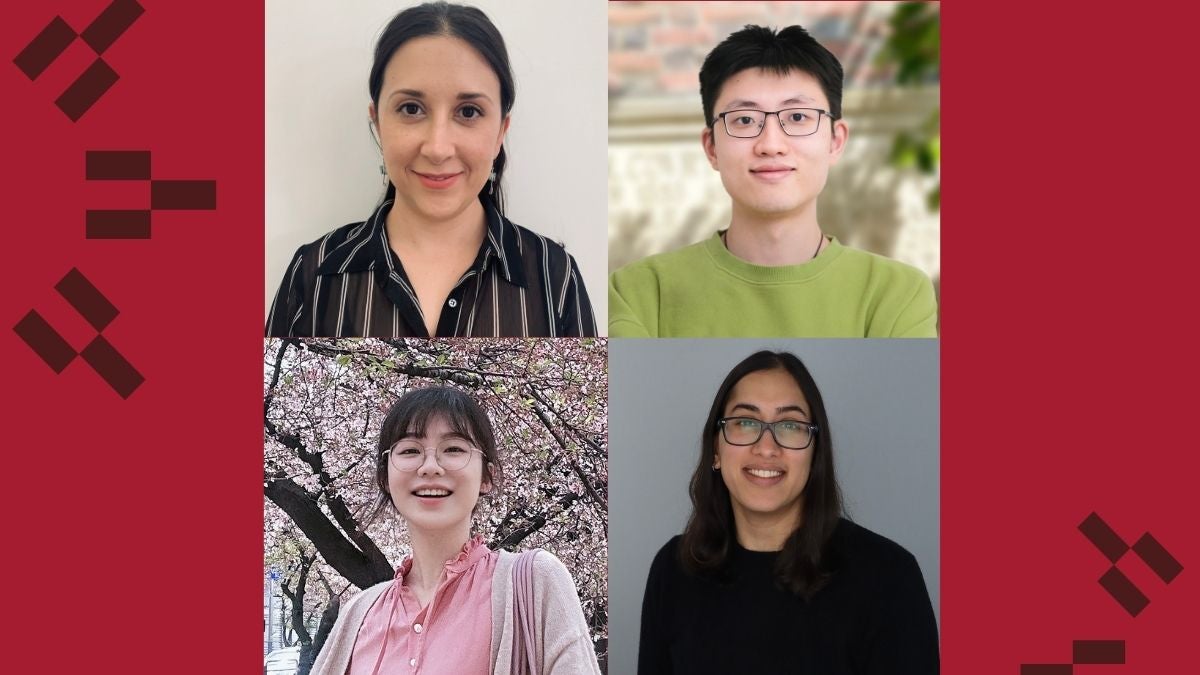
Learn more about our four HOPE fellows below:
- Anali Castellanos is a doctoral candidate in the Nutritional Epidemiology track of the Population Health Sciences program, advised by Stephanie Smith-Warner and Walter Willett. She holds a medical degree from the Autonomous University of Guadalajara and a Master of Science in Public Health Nutrition from Mexico’s National Institute of Public Health. Her research examines the relationships between diet and chronic disease risk, with a focus on cancer epidemiology and the environmental sustainability of dietary patterns.
- Sunan Gao is a first-year PhD student in Population Health Sciences (Epidemiology) at the Harvard T.H. Chan School of Public Health, supervised by Yuan Ma. He holds a B.Eng. from Zhejiang University and a Master’s in Epidemiology from Johns Hopkins University. His research experience spans wearable devices, multi-omics analysis, causal inference, and machine learning. These experiences have shaped his passion for measuring, understanding, and intervening in aging-related processes, as well as methodology development.
- Fangyuan Jiang is a PhD student in Cancer Epidemiology at the Harvard T.H. Chan School of Public Health, advised by Mingyang Song. She earned her Bachelor of Medicine and Master of Public Health from Zhejiang University in China. Her research focuses on uncovering the etiology of colorectal cancer (CRC), particularly the role of modifiable risk factors and multi-omic mechanisms, including genomic, epigenetic, and metabolic pathways, that link lifestyle and environmental exposures to CRC initiation and early onset.
- Adviti Sarang is a first-year Population Health Sciences PhD student in the Department of Epidemiology, advised by Lorelei Mucci. Her research interests include modifiable risk factors for cancer prevention, interactions between genetic and lifestyle factors in shaping cancer risk, and applications of causal inference methods to cancer epidemiology. Currently, she is conducting research investigating whether the high genetic burden of prostate cancer can be offset by adherence to an environmentally sustainable, plant-forward dietary pattern.