Briana Stephenson receives the 2026 COPSS Emerging Leader Award
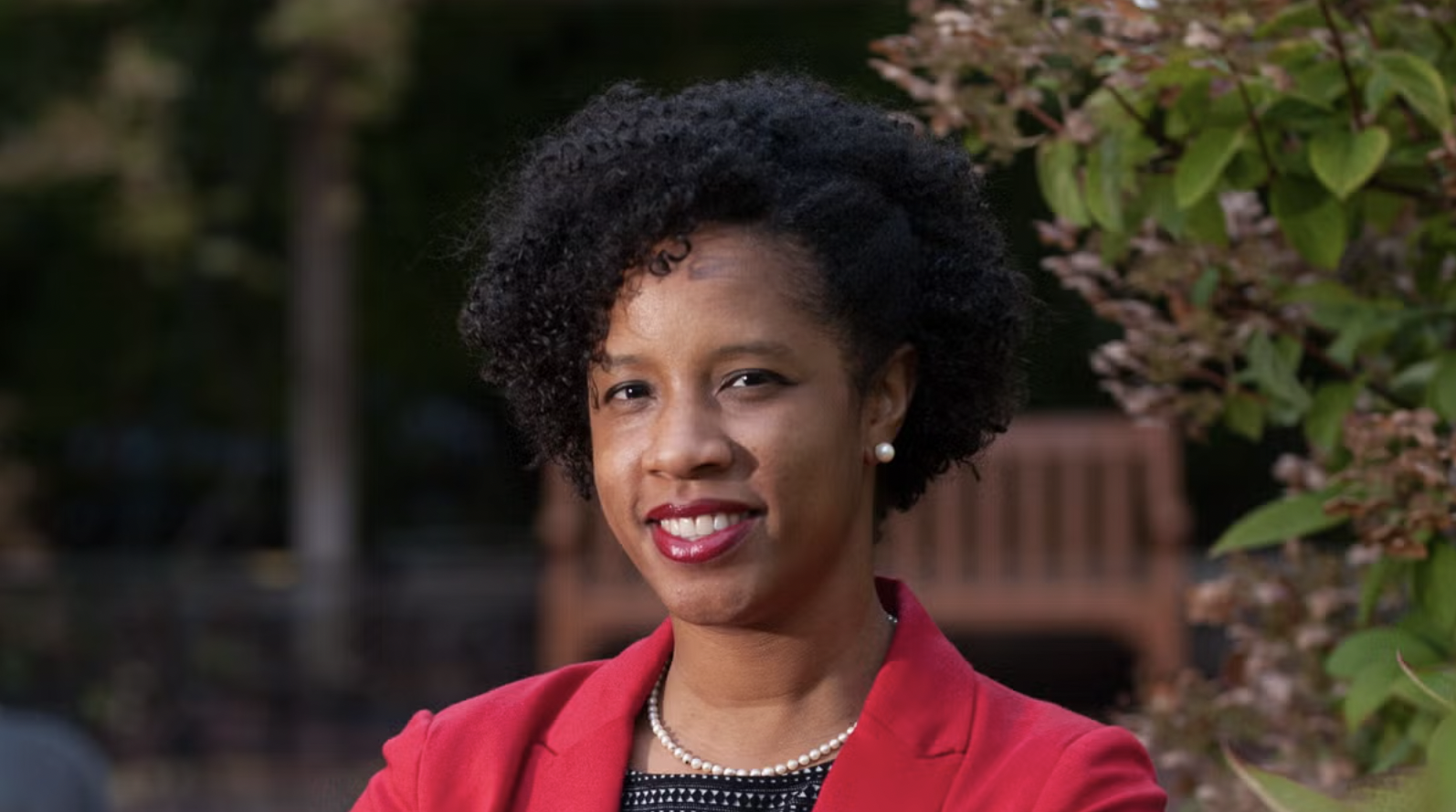
We are excited to share that Dr. Briana Stephenson has received the 2026 COPSS Emerging Leader Award! This award recognizes early-career statisticians who are already making a meaningful impact in their field,
Dr. Stephenson is an Assistant Professor of Biostatistics. Her research focuses on developing statistical tools that help us better understand complex health data. Her work supports important research in public health and health equity, helping ensure that data is used in thoughtful and impactful ways.
Beyond her research, Dr. Stephenson is a dedicated mentor and teacher, and we are proud to see her contributions recognized at this national level. Congratulations!
Dr. Stephenson was recently interviewed by her colleague, Associate Professors Rong Ma on her career path, current research interests, and lessons learned along the way.
See interview below:
How did you arrive at your current research focus in statistics, and what experiences or turning points most shaped your path?
My current research focuses on developing and applying statistical methods for the equitable analysis of population data. I arrived at this focus through a series of experiences where I repeatedly saw how standard analytical approaches could obscure the very populations I cared most about.
Early in my training, I was struck by how often I did not see myself—or communities like mine—reflected in the analytical pipeline. Standard methods were routinely applied to heterogeneous cohorts, and the resulting inference largely reflected the majority demographic. Important patterns for smaller groups were either masked or dismissed as “underpowered.”
A key turning point came when I began collaborating on studies with pronounced imbalance in representation. In meetings with investigators, it was common to see the least represented demographic simply omitted from the analysis, either because of small sample sizes or methodological convenience. Watching those data—and by extension, those communities—effectively disappear from the results was deeply frustrating. I hated to see data go to waste and to know that the study design and analysis were reinforcing inequities rather than addressing them.
Those experiences pushed me to pivot my focus toward developing flexible models that could explicitly account for unequal representation arising from study design, recruitment, and sampling, and that would allow us to recover meaningful, stable information for smaller groups instead of defaulting to exclusion.
What aspects of your work do you find most intellectually exciting today?
The emergence of new data that lets us tell richer, more accurate stories about populations that have historically been underrepresented or excluded from biomedical research. I am intentional about working with cohorts that center around these very demographics. These datasets provide the opportunity to better understand the health and lived experiences of these communities in ways that were not previously possible.
I also find it exciting when long-standing national surveys evolve to reflect the country’s rapidly changing demographic more accurately. For example, when NHANES updated their sampling strategy and design such that they were able to refine their racial and ethnic categories—separating “non-Hispanic Asian” from “Other,” or “Mexican” from “Other Hispanic”—it enabled us to generate more precise, population-based inferences and to align analyses more closely with the current landscape.
No cohort is perfect. There are still studies where certain demographics are underrepresented. However, I welcome the challenge of developing methods that can bring those very demographics from the background of the analysis to the foreground. Today, data are becoming richer and more accessible. I am excited about the methodological opportunities this creates to develop approaches that support more inclusive and nuanced storytelling with public health data.
Looking back, what has been the most important lesson you have learned thus far in your career—either scientifically or professionally?
If you focus on the work you are truly passionate about, you’re more likely to do it well, sustain the energy it requires, and make an impactful contribution. Challenges and setbacks are part of the journey, so it is important for me to stay anchored to the questions that matter most to me. When I’m working on research I genuinely care about, it’s easier to absorb the setbacks, learn from them, and keep going. Loving the underlying questions doesn’t make the challenges disappear but it does give them context. At the end of the day, what endures is whether you can stand behind the questions you’re asking and the communities your work is meant to serve.
![A vial of blood marked "VDRL- Test [syphilis, gonorrhea]"](https://hsph.harvard.edu/wp-content/uploads/2026/03/horizontal-1.jpg)