Alumni Perspective: Shaping practices that promote equity, prevent disability, and make critical care more humane
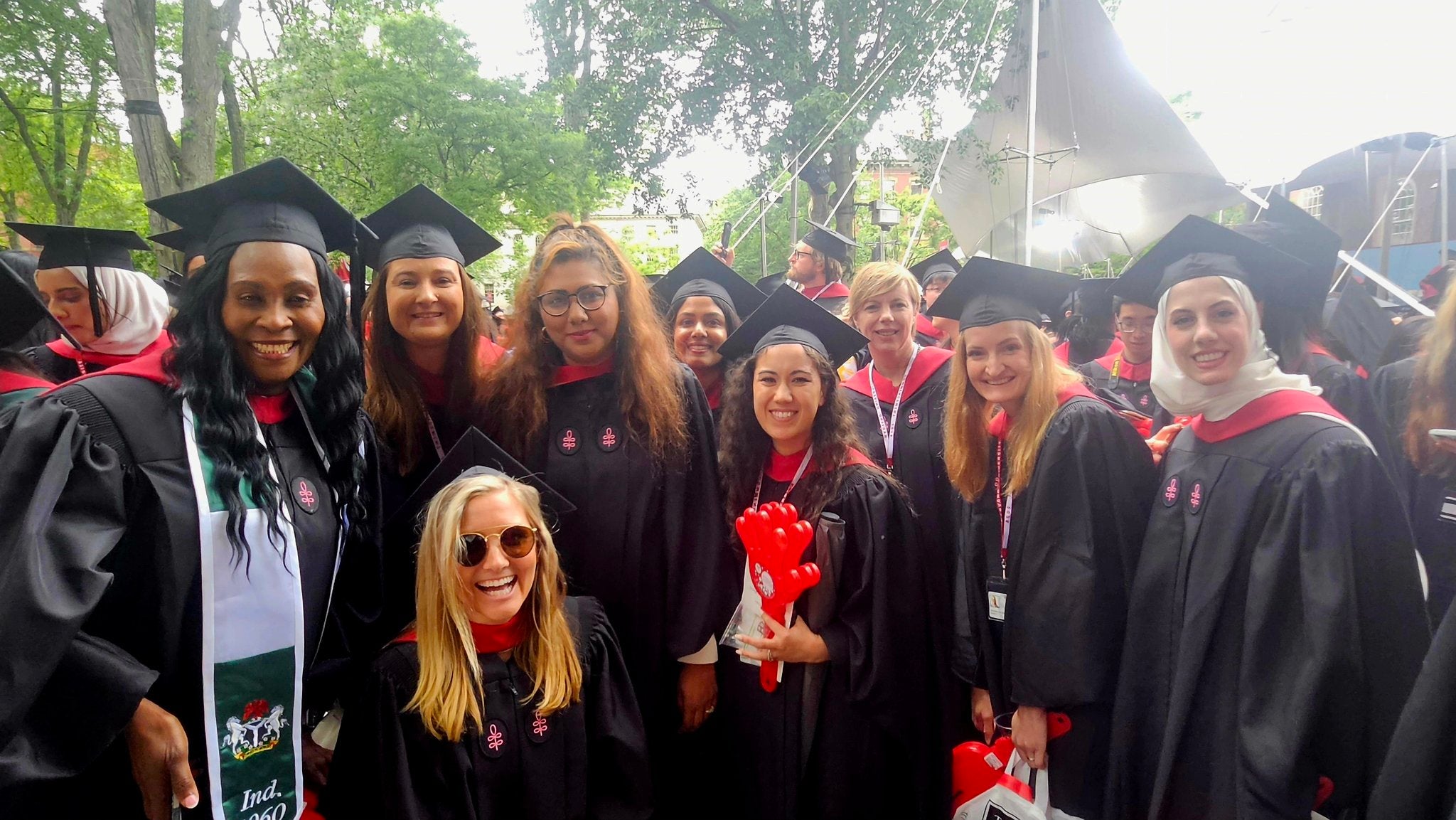
Arooj Fatima, MPH ’25, a recent grad, is driven by the resilience of caregivers who inspired her to pursue education, advocate for vulnerable patients, and help families navigate critical illness
At 13, I sat on the cold floor of a hospital hallway in Lahore, Pakistan, clutching my schoolbag and waiting for my mother to finish her first dialysis session. That night, while I did my homework and watched the uncertainty around her health unfold, I began, without realizing it, a lifelong commitment to patient advocacy.
For the next 15 years, my studies often took place in ICUs and waiting rooms—moving between classrooms and hospital corridors as a caregiver and a student. My mother contracted hepatitis from a compromised dialysis machine and became critically ill. After that, we barely spent a day outside a hospital or ICU during the day, I’d be in class, and at night I’d be studying in a hospital waiting room.
During my mother’s last ICU admission, she told me, “Arooj, your journey to educate yourself does not end yet. Never give up. Stay focused on education.” This message—one of her last—stuck with me ever since.
In 2017, after a few diversions and a move from Pakistan to the U.S., I began working in research—and eventually landed on Johns Hopkins Outcomes After Critical Illness and Surgery (OACIS) team as a research assistant. Various opportunities to continue my education followed, and I seized them, staying true to the commitment of ongoing learning. Each year, I expanded my abilities—adding research methodology, ICU research, and critical communication skills for patients and families facing end-of-life decisions—to my toolkit, which helped me support others more meaningfully. I had gone through these stages myself as a caregiver, and now I wanted to ensure I practiced compassion toward families volunteering their loved ones to be part of our research. With grit and passion, I rose through the ranks in clinical research at Hopkins.
In 2023, I decided to resume graduate education part-time. When I received my acceptance to Harvard Chan School, it was one of the happiest days of my life. Studying at the School for the two years that followed earned me more than a credential; it was the fulfillment of a promise and a commitment to lifelong learning. It also gave me access to exceptional faculty and mentors, and I made every minute count. A lecture in Natalie Slopen’s course, Social, Behavioral, and Structural Determinants of Health, stays with me. Each student drew a slip assigning a birthplace, gender, and socioeconomic status.
That assignment made one truth impossible to ignore—the zip code and circumstances into which you are born heavily influence access to care, safety, education, and ultimately your health. It took me back to the corridors of those hospitals in Pakistan and highlighted the core ideas that shape population health—fair distribution of resources, prioritizing those who are worst off, and balancing collective benefit with individual rights.
During my time at the School, I also had the opportunity to teach incoming public health students. Teaching sharpened my leadership and communication, taught me to translate complex ideas into practical steps, and reinforced humility—being open to admitting what I don’t know, creating space for students to challenge assumptions, andpreparing them to leave ready to apply what they had learned, just as I did.
After graduation in 2025, my Hopkins team was eager to utilize my newly minted analytical and leadership skills and public health expertise. Today, I am serving as research faculty and a senior leader on the OACIS team back where I began. We study recovery after ICU stays through longitudinal observational studies and clinical trials; run the Johns Hopkins Critical Care Rehabilitation Program in the medical ICU, which promotes physical, cognitive, and mental health recovery after critical illness through targeted sedation and delirium management, sleep improvement measures, and early intensive ICU rehabilitation interventions; organize the international Annual Johns Hopkins Critical Care Rehabilitation Conference; and prioritize education to translate all our collected evidence into practice.
As a faculty member, I play an important role in start-up studies involving ICU patients and contribute to the ongoing operations of federally funded projects at local and national levels. I find this work focused on critically ill patients to be deeply satisfying because it combines rigorous science with tangible impact—and I get to see our research findings translate into better care that reduces suffering and improves long-term recovery for patients!
I get to shape practices that promote equity, prevent disability, and make critical care more humane every day.. I think back to when I was in hospital hallways in Pakistan and saw caregivers doing the same. Their resilience drove me to pursue education, advocate for vulnerable patients, and help families navigate critical illness.
My current role feels like a full‑circle moment—with renewed purpose and practical knowledge my Harvard Chan education gave me, I am serving those who first inspired me to do this work.