A lifelong commitment to solving what seems impossible
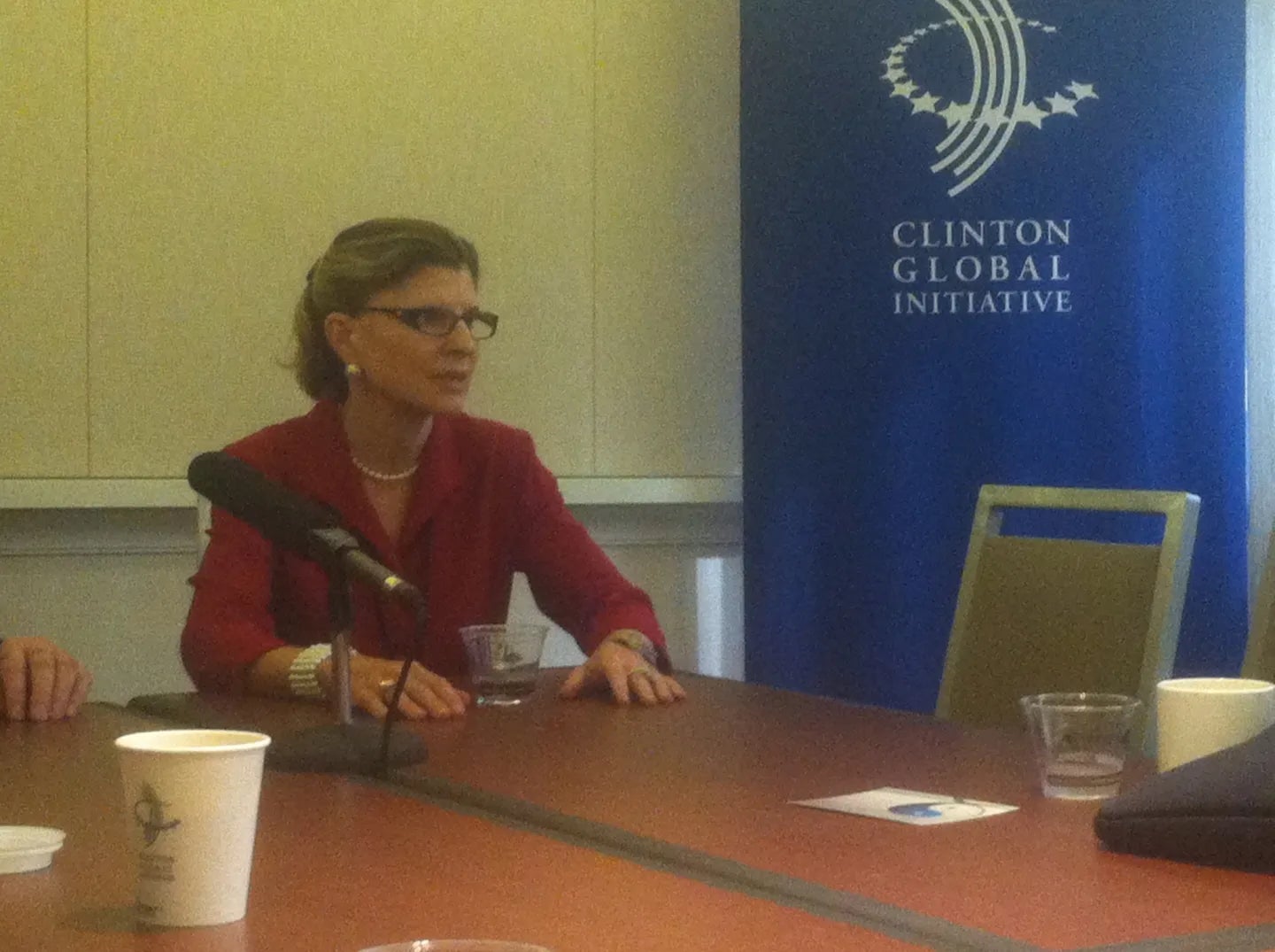
For Dr. Kathleen Ruddy, supporting Harvard Chan School has been about giving back—by investing in the kind of leadership, research, and global collaboration she believes changes lives.
In 2013, as the Ebola epidemic unfolded across West Africa, Ruddy joined the School’s Leadership Council. The timing proved transformative. Through conversations with faculty, researchers, and fellow council members, she witnessed how Harvard School of Public Health brought together experts across disciplines to confront one of the world’s most urgent public health crises.
“I saw firsthand how these terrific Harvard doctors and researchers seized Ebola head-on and crushed it,” Ruddy said. “It reinforced my belief that when you bring together exceptional people with different expertise and a shared purpose, you can solve problems that once seemed impossible.”
For Ruddy, the Leadership Council offered more than a window into the School’s work—it became an opportunity to help advance it. She found herself inspired not only by the groundbreaking research taking place, but also by the community of fellow donors, faculty, alumni, and public health leaders united by a common mission. “The Leadership Council was the best example I knew of how a small group of outstanding and committed professionals can change the world,” she said.
Those experiences would prove invaluable years later. Having completed a master’s degree in international healthcare leadership and built relationships with physicians, nurses, World Health Organization leaders, and humanitarian organizations around the globe, Ruddy entered the COVID-19 pandemic with a deep appreciation for the importance of evidence-based leadership and international collaboration, at a time when she had planned to retire.
“My education and the friendships I had made with healthcare leaders around the world gave me the compass and map that I needed to navigate the emerging, dynamic, and frequently confusing landscape of COVID,” she said.
That perspective was rooted in a career defined by curiosity and lifelong learning. Ruddy began her career as a unit clerk before becoming a medical secretary and physician assistant. At age 33, she entered medical school, eventually becoming a breast cancer surgeon and leading the Breast Service at Clara Mass Medical Center in New Jersey for more than two decades, caring for thousands of patients.
Personal experiences—including her mother’s breast cancer diagnosis and later the loss of her brother to complications following treatment for lymphoma—deepened her commitment to understanding disease beyond the bedside. Her interests expanded into public health, healthcare leadership, infectious disease, and cancer research, leading to the publication of The End of Breast Cancer: A Virus and the Hope for a Vaccine.
When COVID-19 emerged, retirement gave way to a renewed purpose. Working with a molecular pathologist, Ruddy helped develop a patented testing technology that enables researchers to identify and track different strains of the virus that causes COVID-19. She has since offered the technology to Harvard Chan to help advance research into the long-term health impacts of the disease.
For Ruddy, that collaboration reflects the same reason she first joined the Leadership Council more than a decade ago, the belief that Harvard Chan School is uniquely positioned to translate scientific discovery into better health for people around the world.
“Supporting Harvard Chan means supporting the people who are asking—and answering—the questions that matter most,” she said. “It’s an investment in science, in collaboration, and in the next generation of public health leaders.”
Throughout her relationship with the School, Ruddy has seen philanthropy as an extension of her life’s work. Whether through leadership, partnership, or generosity, she believes meaningful progress begins when people come together around a shared purpose to solve a challenge. As she often reflects, borrowing from the Parsifal legend, the most meaningful journeys begin “where it was darkest, and there was no path.”