A legacy for the School and its people
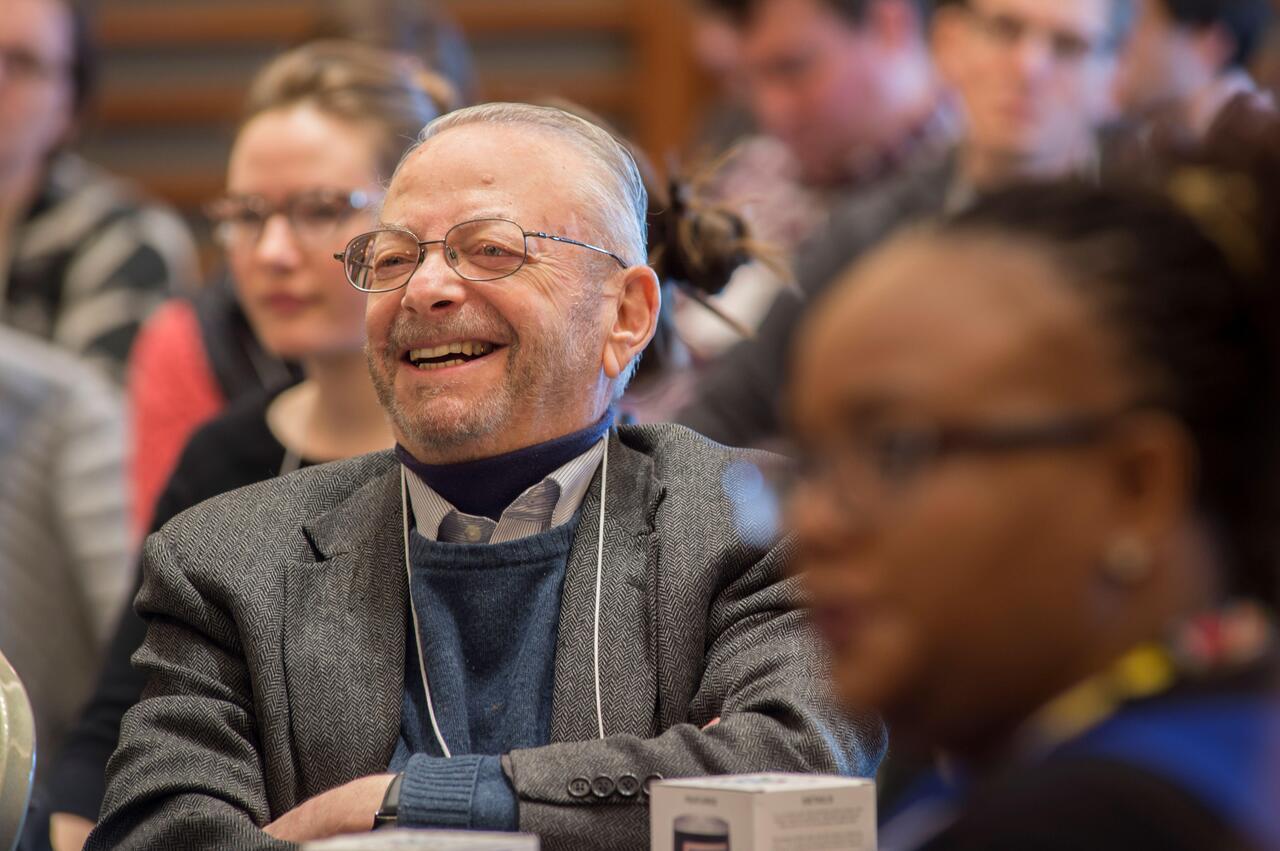
Years ago, in an interview with the American Association of Immunologists, the late Barry Bloom, Joan L. and Julius H. Jacobson Professor of Public Health Emeritus, reflected on one of the principles that guided his career:
“I believe in institutions. I think science only flourishes if the institutions that enable intellectual life and interactions flourish.”
For Bloom, that belief was more than an idea. It shaped how he led, taught, mentored, and ultimately gave. A global health pioneer and renowned immunologist, Bloom devoted his career to understanding and combating infectious diseases, including tuberculosis, leprosy, malaria, and COVID-19. As Dean of Harvard Chan School from 1999 to 2010, he championed scientific discovery, intellectual exchange, and the development of the next generation of public health leaders.
His commitment to Harvard Chan School continued long after his tenure as Dean—and, through thoughtful philanthropy, will continue beyond his lifetime. By including Harvard Chan in his will, he created a lasting expression of confidence in the institution and its ability to advance public health for generations to come.
Bloom was a strong believer in investing in people. In 2008, family, friends, and colleagues established the Barry R. and Irene Tilenius Bloom Fellowship in recognition of his leadership as Dean and his wife’s commitment to supporting the School’s mission and vision. Over the years, Bloom himself contributed significantly to the fellowship, helping ensure that talented students with academic promise, leadership potential, and a commitment to improving public health in communities around the world would have the opportunity to pursue their work. Today, the total principal of the fund has grown to exceed $2.8M.
Recent fellows Nicole Almanzar, PhD ’27, and Anna Shchetinina, PhD ’27 exemplify the spirit Bloom championed throughout his personal and professional life. Their work reflects his belief in supporting those with curiosity and courage to ask difficult questions and pursue solutions to the world’s most pressing health challenges. Almanzar is working to uncover why diseases like asthma and viral infections manifest differently across communities and Shchetinina is exploring intersections between alcohol use disorder and comorbid mental health conditions, aiming to develop culturally appropriate diagnostic tools and prevention strategies.
Bloom’s commitment to the School’s future also took the form of planned giving. By including Harvard Chan in his bequest, he created a lasting expression of confidence in the institution and its ability to advance public health for generations to come.
For Bloom, that vision extended to faculty and scientific discovery. Before his passing, he established the Infectious Disease Initiative Fund to support the work of Yonatan Grad, focused on understanding the emergence, evolution, and spread of infectious diseases.
As former dean, Bloom understood intimately what it takes to sustain a world-class research institution, along with the importance of giving exceptional scientists the resources and freedom to pursue consequential questions. His investment in Grad’s work reflects that understanding, providing support for research that could help inform how the world anticipates and responds to infectious disease threats.
His legacy also lives on through the faculty. Recently, Brendan Manning was appointed the inaugural Barry R. and Irene T. Bloom Professor of Public Health. Manning, chair of the Department of Molecular Metabolism, is a leading scientist whose research examines how cells and tumors sense growth signals and rewire their metabolism.
Together, these investments tell a larger story about Bloom’s philanthropy. He gave not simply to preserve what existed, but to strengthen the institution he believed in and equip its people to shape what comes next.
That is the promise of planned giving. A bequest can transform a donor’s lifetime of values into a resource for the future and for many—supporting students who have yet to arrive, faculty who have yet to make their discoveries, and scientific questions that have yet to be asked. Bloom understood that science advances through people and institutions working together. His philanthropy reflects that conviction, creating opportunities for the next generation to learn, discover, and lead.
His most enduring legacy may be the one he helped build beyond himself: a stronger Harvard Chan School, equipped to nurture exceptional minds and pursue bold ideas in service of a world where everyone can thrive.