Radiation Medical Countermeasures Are Expanding. Are Hospitals Ready to Use Them?
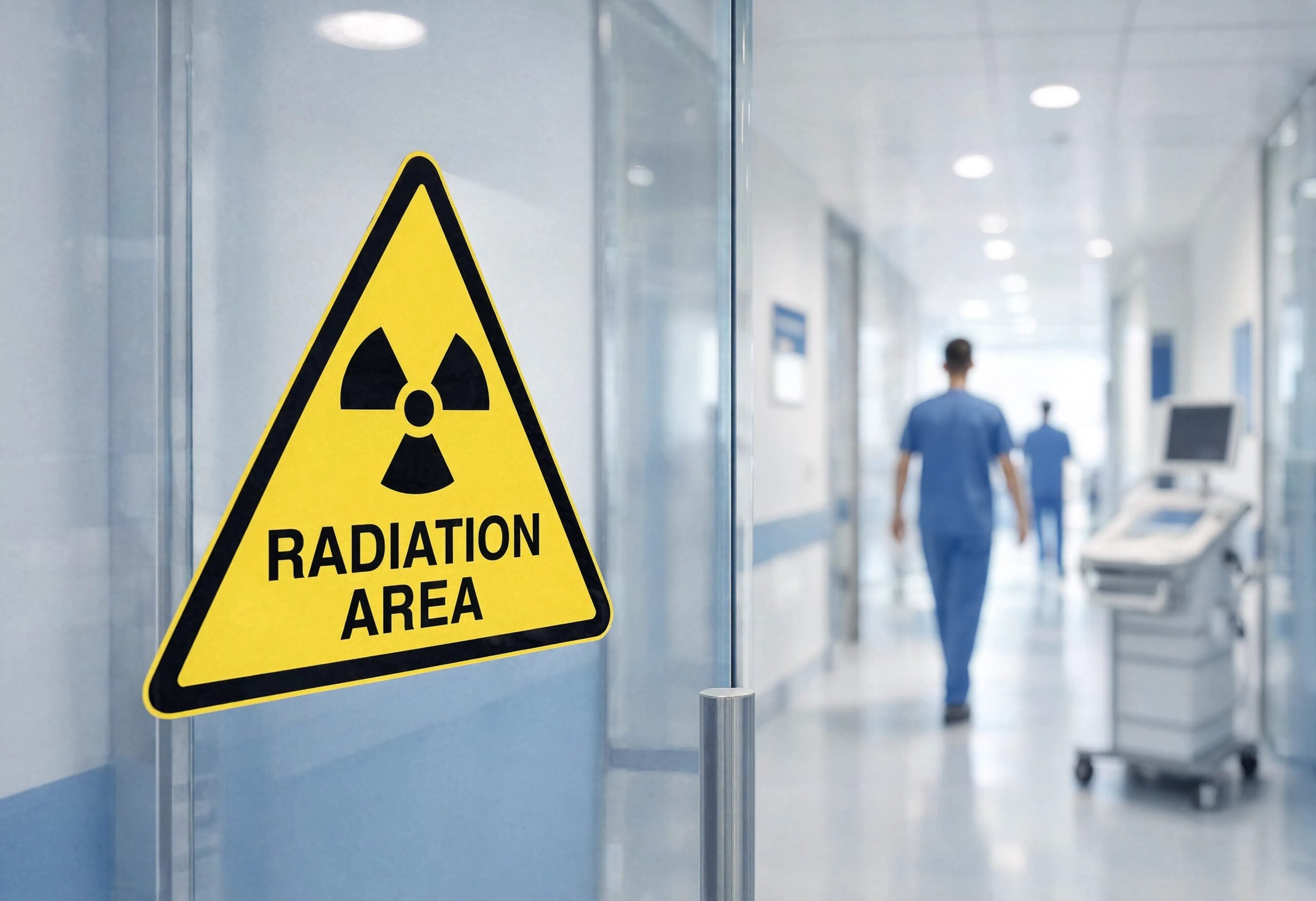
FDA approvals are expanding treatment options for acute radiation syndrome, but medical readiness depends on recognition, triage, dose assessment, treatment protocols, access to countermeasures, and regional coordination. Harvard Chan’s Radiological Emergency Management: Regulations, Planning, Response, and Recovery program examines medical management within the broader systems required for radiological emergency response.
A radiological or nuclear emergency can confront hospitals with an unusual clinical problem: patients may need highly specialized treatment even when the clinicians receiving them have little or no experience treating radiation injury.
The number of approved treatment options is growing. Between April 2025 and May 2026, the U.S. Food and Drug Administration recorded five approvals adding indications to increase survival after myelosuppressive radiation exposure, or the hematopoietic syndrome of acute radiation syndrome (H-ARS): Fylnetra, Releuko, Armlupeg, Filkri, and Ennumo. These additions build on an existing group of FDA-approved medical countermeasures for H-ARS.
That regulatory progress is significant. But approval alone does not ensure that a countermeasure will reach the right patient at the right time during a mass-casualty event.
For hospitals, emergency managers, health departments, and health care coalitions, the preparedness challenge lies in what happens after approval: recognizing radiation injury, estimating exposure, selecting an appropriate treatment pathway, locating needed products, obtaining specialist guidance, and deciding whether a patient can be managed locally or needs transfer to another facility.
Acute Radiation Syndrome Treatment Depends on Early Recognition
Effective acute radiation syndrome treatment begins with identifying patients who may actually have ARS.
That is not necessarily straightforward. ARS occurs after a high dose of penetrating radiation reaches all or most of the body over a short period. Early symptoms can include nausea, vomiting, anorexia, and diarrhea—findings that are not unique to radiation exposure. Patients may subsequently enter a latent phase in which they appear and feel relatively well even as radiation injury develops. CDC guidance notes that the absence of a distinctive sign or symptom can make ARS difficult to diagnose.
In a known radiological incident, exposure history provides crucial context. In a less obvious event, however, an emergency department may initially be evaluating nonspecific symptoms, traumatic injury, burns, or contamination without knowing the magnitude of a patient’s radiation exposure.
That creates a preparedness question that extends beyond individual clinical knowledge: Does the hospital have a process that prompts clinicians to consider radiation injury when the incident or symptom pattern warrants it?
CDC guidance for suspected ARS calls for immediate attention to airway, breathing, circulation, trauma, and burns, while also obtaining serial complete blood counts with attention to lymphocyte counts and documenting the timing of clinical symptoms. It also recommends consultation with radiation experts when evaluating significant suspected exposure.
Protocols developed before an emergency can make those steps easier to initiate when patient volume and uncertainty are high.
Biodosimetry Connects Exposure Assessment to Treatment Decisions
Knowing that radiation exposure occurred is only part of the problem. Clinicians also need information about the likely absorbed dose and resulting injury.
Radiation Emergency Medical Management (REMM), an HHS resource for clinicians and responders, identifies several inputs for estimating radiation dose, including lymphocyte depletion kinetics, the timing of vomiting and other prodromal symptoms, chromosome analysis, and reconstruction of a person’s location during an event. REMM notes that biodosimetry can help predict the severity and course of ARS and support decisions about triage and where a patient should be treated.
The federal countermeasure enterprise is still working on this part of the response system. FDA’s FY2025 Medical Countermeasure Program Update describes continued collaboration on radiation biodosimetry devices, including review activities involving pre-submissions and pre-Emergency Use Authorization submissions. It also notes ongoing work on additional radiological and nuclear countermeasures, including decorporation therapies and approaches addressing radiation injury to immune function.
For hospitals, the operational issue is therefore not simply whether sophisticated biodosimetry technology exists. Plans need to establish what information can be collected immediately, which laboratories or external capabilities can support more definitive dose assessment, how results will reach the treating team, and how those findings affect triage and acute radiation syndrome treatment decisions.
Treatment Protocols Need to Distinguish Different Radiation Problems
“Radiation treatment” is not one intervention.
Patients may have external exposure, external contamination, internal contamination, traumatic injuries, ARS, cutaneous radiation injury, or combinations of these conditions. Medical countermeasures are correspondingly different. FDA identifies treatments for H-ARS as well as agents used for certain forms of internal radioactive contamination.
For H-ARS, radiation damage to bone marrow can suppress production of white blood cells, red blood cells, and platelets, increasing risks including infection and bleeding. FDA-approved H-ARS products can support recovery of bone-marrow cell populations, while broader management can involve infection prevention and treatment, blood-product support, hydration, management of other injuries, and repeated reassessment as ARS evolves.
The practical consequence is that a hospital plan cannot stop at a list of approved products. It should make clinical decision pathways usable under emergency conditions.
Preparedness teams can test those pathways by asking: What triggers an H-ARS evaluation? Who is authorized to initiate specialized countermeasures? Where are current protocols maintained? How will pharmacy, emergency medicine, hematology, radiation safety, laboratory services, and incident command communicate? When should an outside radiation expert be consulted? And which decisions change when resources become scarce?
Those are implementation questions, but in a radiation mass-casualty event, implementation determines whether an available therapy becomes an accessible treatment.
Formulary Knowledge Is Not the Same as Countermeasure Access
The growing list of radiation medical countermeasures also raises a logistics question: where will the needed treatment come from?
A hospital may have some relevant products routinely available, may need additional quantities during a surge, or may depend on external supply and coordination mechanisms. Preparedness planning should therefore distinguish between knowing that an FDA-approved treatment exists and knowing how that treatment would actually reach a bedside during an emergency.
A useful readiness review can identify which relevant products are routinely carried, how pharmacy inventories would be assessed during an incident, who monitors regional or other external supply options, how additional resources would be requested, and what contingency plans apply if the preferred product cannot be obtained quickly.
These questions should not be answered by each hospital in isolation. ASPR’s Hospital Preparedness Program operates largely through health care coalitions, which bring health care and emergency-response organizations together within geographic areas to conduct preparedness activities, coordinate systems, and share resources and information during emergencies.
For radiation emergency hospital preparedness, that regional perspective matters because a large event can create simultaneous demands for specialized clinical expertise, laboratory services, medications, patient movement, and beds capable of managing complex casualties.
Readiness Must Be Exercised Before the Patient Arrives
A written plan can identify responsibilities. An exercise reveals whether they work together.
Radiological casualty exercises can test more than decontamination procedures. A realistic scenario can require participants to recognize possible ARS, initiate serial laboratory testing, obtain expert consultation, estimate dose, locate a countermeasure, determine treatment priority, communicate with public health and emergency management partners, and arrange referral or transfer when local capability is exceeded.
That kind of exercise also exposes dependencies that may otherwise remain invisible: an outdated phone number, uncertainty over who can release medication, incompatible information systems, a laboratory turnaround time that does not match the clinical plan, or different assumptions among hospitals about which facility will accept a specialized patient.
The goal is not for every clinician to become a radiation-medicine specialist. It is for organizations to create a reliable path from first recognition to appropriate expertise and treatment.
Connecting clinical readiness with radiological emergency management
The expansion of FDA-approved H-ARS indications is a reminder that advances in medical countermeasures have to be matched by advances in operational preparedness.
Harvard T.H. Chan School of Public Health’s Radiological Emergency Management: Regulations, Planning, Response, and Recovery program approaches radiological incidents across that wider system. Its current agenda includes a dedicated session on Medical Management of Radiological Casualties, along with sessions on the federal emergency-planning framework, responder protocols for radiological dispersal devices and improvised nuclear devices, nuclear-detonation planning, communication, recovery, and interactive radiological-event exercises. The program is designed for professionals involved in radiological emergency planning, response, and recovery, including health departments, public-safety professionals, first responders, environmental health and safety groups, and emergency-management organizations.
For those professionals, the latest countermeasure approvals create a concrete planning question: not simply What treatments are available for acute radiation syndrome?, but what has to be in place before an organization can use them reliably during a real emergency?
Regulatory approval expands the clinical toolkit. Preparedness determines whether that toolkit can be put to work.