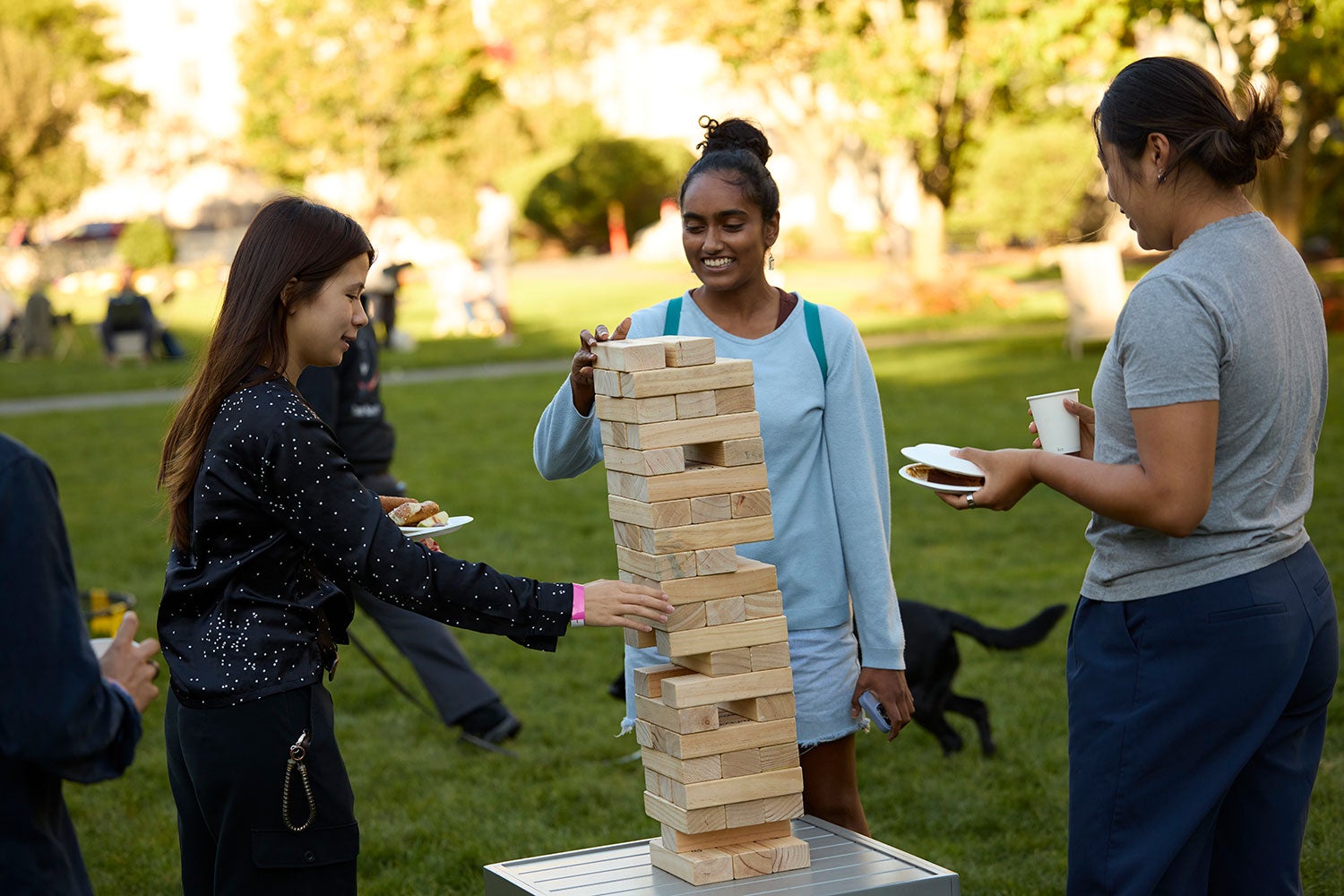
In this edition of Harvard Chan Student Scoop, we explore what it’s really like to be part of the student community at Harvard Chan School—covering the workload students can expect, the extracurriculars offered, and whether it’s easy to make connections.
How do students manage the intensity of the workload while maintaining a social life?
Alysha Jhaveri: I found that everyone here wants to support you, help you, and guide you the best they can. When I was a first-year, there were many opportunities to connect with second-year students. They were open and welcoming and found time to tell me about their experience and career goals.
Kate Majzoub Morgan: I’ve been continuously impressed by the community of people who are genuinely trying to improve access to high-quality health care and more generally to improve the health of populations. I’ve been inspired to see the energy and passion that my classmates bring to their research, and it has made me more hopeful about the future of health care. On the faculty side, I’ve been impressed by the caliber of expertise that’s available at the School. It’s been incredible to be able to work with and learn from them.
Moises Salgado: I was surprised by how inclusive and friendly everyone is, including all the faculty and the teaching fellows. Everyone has a great attitude and is happy to help you, whether you have a personal or professional issue. I wasn’t used to that but was impressed by how helpful and resourceful the Harvard community is.
Nellie Darling: I love the people here. This community of learners has a culture of excellence at its core. And when the world feels so upside-down, it’s humbling and motivating to go to class and be surrounded by people who are so driven to make their corner of the world a better place.
Aleah Jensen: First, I love the diversity of the community. I’ve never had so many friends from so many different countries around the world. It’s really been an eye-opening and humbling experience to learn from them. And the balance of personalities and interests is just incredible. It feels like we’re all pieces of the same puzzle. Everyone is so welcoming and eager to make connections.
Belen Herce-Hagiwara: People are so open and warm. They really care about health, and that translates to how they are as peers. I was really surprised by how supportive professors and other classmates are of your professional development and general well-being.
How do students manage the intensity of the workload while maintaining a social life?
Michelle Yang: I’m not going to lie, it is a lot of work— especially if you’re doing the nine- or 12-month programs. Those are quite condensed. Keeping up with all the material, attending lectures, and doing a good job on your assignments is time-consuming, but luckily social life is not that hard to keep up with. There’s always something going on. Every day there are luncheons, seminars, or club gatherings after classes, and it’s easy to schedule a quick coffee or lunch with a friend between classes.
Moises Salgado: It is really hard. My program, which started in the summer, had a very heavy workload during the first six weeks. But we created a community. Sometimes even talking to your classmates at school or at the library, or making small plans for the weekend, can help you manage the stress and clear your mind a little bit, which then helps you with the coursework.
Ygor Junqueira: It’s tough because you really want to enroll in 200 courses at the same time, because they’re really interesting, but if you don’t put boundaries, it’s too much. It’s better to enroll in fewer courses, but make the most of it and have time to build connections.
Belen Herce-Hagiwara: We combine the two, which works pretty well. Most of the time I spend with my friends from the cohort is at the library or cafes to do assignments together, or grabbing coffee between classes, or catching up in the cafeteria. And of course, we have time to hang out outside of school and homework as well.
What is the community like for international students?
Moises Salgado: I think it’s very friendly for international students. There are plenty of international peers within the program, so you never feel out of place, and students who are from the U.S. are also very friendly and collaborative. Everyone comes from different backgrounds and appreciates the different strengths we bring.
Ygor Junqueira: It’s very easy for us to connect with other international students.
Princess Magor Agbozo: It’s a very open and diverse community here. There are many international students, so you’ll take classes with people from all over the world who are doing so many interesting things. You get to learn from them, but also work with them, because classes are very collaborative, with many group assignments and projects. It was easy for me to build community with other students.
What student activities or events did you enjoy the most?
Alysha Jhaveri: I was involved in several different extracurriculars. I was on my department’s Community and Belonging Committee. We got to organize activities to bring people together, such as a dinner for students and faculty. I’m also a part of the South Asian Student Association, where I hosted fireside chats and cultural events like our Diwali celebration. I really loved finding these opportunities to get more involved in my community, get to know those around me, and help with planning different events around our many shared interests.
Kate Majzoub Morgan: There was a series of fireside chats I attended during my first summer. It included guests like Drs. Rochelle Walensky and Zirui Song. It was very inspiring to hear about their experiences and advice for current students.
Moises Salgado: I took part in a soccer tournament with teams from other schools at Harvard, which was a lot of fun. And I loved some of the social events organized by the program’s administrator at the Puddingstone Tavern, which is a pub near here. It’s a good way to socialize, meet new people, and just clear your mind and relax a little.
Nellie Darling: I loved the Summer Lunch Speakers Series. One that stuck out to me was about how to write your Institutional Review Board application. These applications can be hard because you have to lay out the specific aims of your project and what’s new about it in a concise and appealing way. It’s a tall order for something that’s supposed to be half a page. It was great to hear a panel of folks who had done that before talk about what they had learned from it. Now that I’m working on my applications, I notice myself drawing on that summer lunch session.
Owen Gow: I’m one of the facilitators of a student-run group called the Climate Leaders Program for Professional Students at Harvard. We have about 30 members from 11 Harvard schools. It’s been a special experience as someone who’s focused on climate and wants to talk to other people who have similar interests across disciplines. I get to interact with these folks and hear how they’re thinking about things from different perspectives, including law, business or design. We meet every other week to bring an outside speaker or host a workshop, but it’s also a chance to sit and have dinner together as a community. That has been a core experience for me at Harvard.
Ygor Junqueira: I enjoyed the happy hours with other MPH students. It’s a great way to get to know other people. I’ve also attended some picnics hosted by student organizations which are very nice.
Belen Herce-Hagiwara: There are so many things you can get involved in, from helping professors with research to becoming a Teaching Fellow or mentoring other students. It’s nice to be able to ground what you’re learning at the School in something with real-world application.
Is it easy to connect with students across concentrations or outside your program?
Moises Salgado: Yeah, it is easy because we are sharing some of the courses with some students from other MPH programs. And most courses include working in teams, so you’re able to meet new people that way.
Aleah Jensen: Yes, it’s very easy. I have friends from all other degree programs too. Taking classes outside your degree program really helps.
Belen Herce-Hagiwara: I would definitely say so. We have a lot of classes with people from different cohorts, and it’s super easy to sit next to a new person and just start chatting. People are very open at Chan. And then the ability to cross-register at other schools is convenient for meeting new people. I made some really good friends at the Harvard Kennedy School while taking a J-term class there.
What surprised you most about the culture or community at Harvard Chan School?
Alysha Jhaveri: I found that everyone here wants to support you, help you, and guide you the best they can. When I was a first year, there were many opportunities to connect with second-year students. They were open and welcoming and found time to tell me about their experience and career goals.
Kate Majzoub Morgan: I’ve been continuously impressed by the community of people who are genuinely trying to improve access to high-quality health care and more generally to improve the health of populations. I’ve been inspired to see the energy and passion that my classmates bring to their research, and it has made me more hopeful about the future of health care. On the faculty side, I’ve been impressed by the caliber of expertise that’s available at the School. It’s been incredible to be able to work with and learn from them.
Moises Salgado: I was surprised by how inclusive and friendly everyone is, including all the faculty and the teaching fellows. Everyone has a great attitude and is happy to help you, whether you have a personal or professional issue. I wasn’t used to that but was impressed by how helpful and resourceful the Harvard community is.
Nellie Darling: I love the people here. This community of learners has a culture of excellence at its core. And when the world feels so upside-down, it’s humbling and motivating to go to class and be surrounded by people who are so driven to make their corner of the world a better place.
Aleah Jensen: First, I love the diversity of the community. I’ve never had so many friends from so many different countries around the world. It’s really been an eye-opening and humbling experience to learn from them. And the balance of personalities and interests is just incredible. It feels like we’re all pieces of the same puzzle. Everyone is so welcoming and eager to make connections.
Belen Herce-Hagiwara: People are so open and warm. They really care about health, and that translates to how they are as peers. I was really surprised by how supportive professors and other classmates are of your professional development and general well-being.